Integrating procurement, prescription, and resistance data to strengthen antimicrobial stewardship: insights from a public health institution in India
Vinay Modgil, Sundeep Sahay, Arunima Mukherjee, Rashi Banta, Neha Joshi, Rashmi Surial, Subhash Thakur, Suvodeep Mazumdar, Sneha Roychowdhury, Neelam Taneja

TL;DR
This study explores how antimicrobial use and resistance are linked in an Indian hospital, using data on drug procurement, prescriptions, and resistance to improve stewardship.
Contribution
The study integrates procurement, prescription, and resistance data to identify inefficiencies in antimicrobial use and guide stewardship interventions.
Findings
Amoxicillin-clavulanate, ciprofloxacin, and doxycycline were highly procured, with high resistance rates observed in Escherichia coli.
Over 50% of prescribed antimicrobials were broad-spectrum, and most belonged to the WHO AWaRe 'Access' category.
A weak positive association was found between antimicrobial procurement and sensitivity, suggesting higher procurement does not necessarily increase resistance.
Abstract
Sustained and sub-optimal antimicrobial use drives antimicrobial resistance (AMR), a major health systems challenge in low- and middle-income countries (LMICs) such as India. This study examined the relationship between institutional antimicrobial procurement and outpatient prescribing patterns, and how these influence resistance trends identified through antibiotic susceptibility testing (AST) in a public community hospital. Data were collected from three sources: (i) procurement records (2018–2022), (ii) AST results from urine, pus, and stool samples (2023–2024), and (iii) outpatient prescriptions (2023–2024). Each dataset was analyzed individually and in an integrated framework to assess interrelationships between antimicrobial use and resistance. Amoxicillin-clavulanate, ciprofloxacin, and doxycycline were among the most procured drugs, with Escherichia coli (urine) resistance…
Genes, proteins, chemicals, diseases, species, mutations and cell lines named across the full text — each resolved to its canonical identifier and authoritative record.
Click any figure to enlarge with its caption.
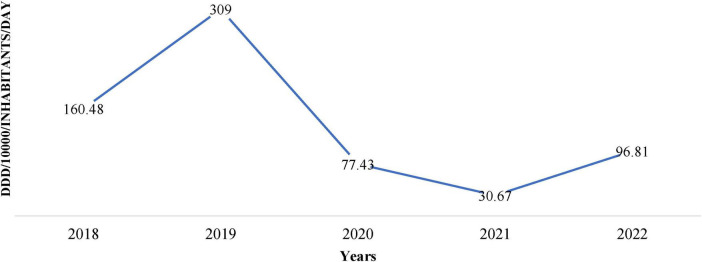 Figure 1
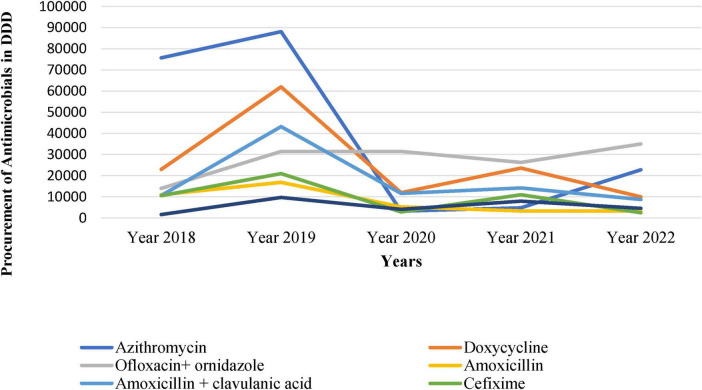 Figure 2
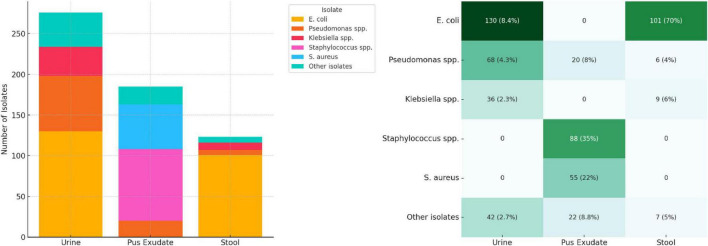 Figure 3
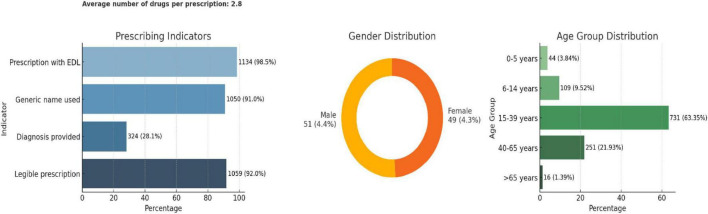 Figure 4
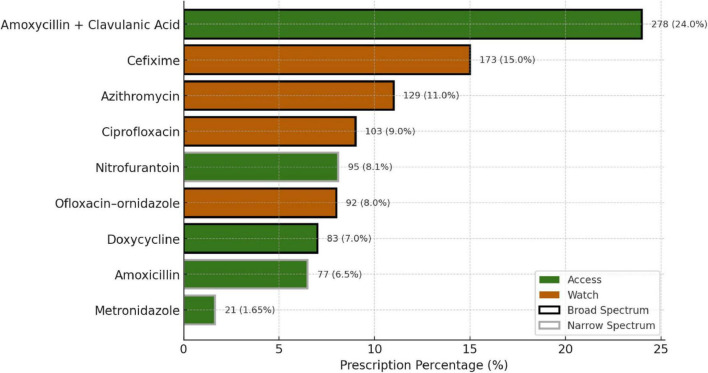 Figure 5
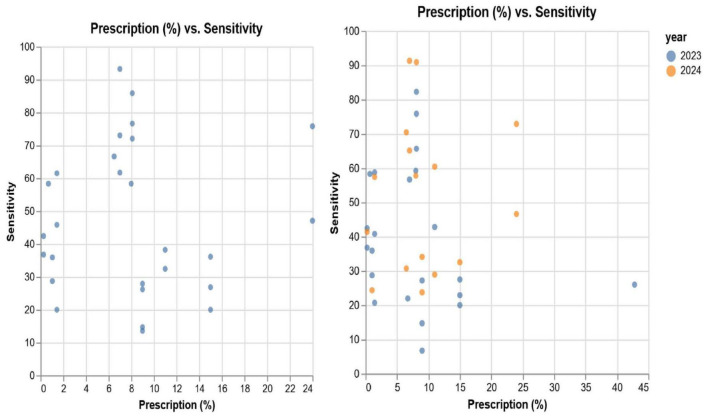 Figure 6
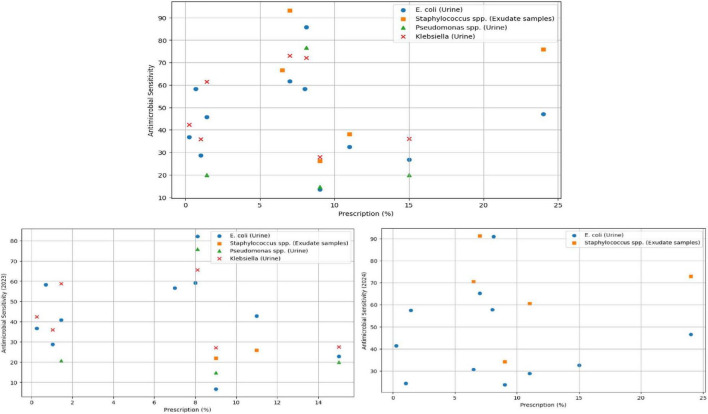 Figure 7
Peer Reviews
No public reviews on file for this paper yet. If you reviewed it on a platform where reviews are public (OpenReview, ICLR, NeurIPS, ICML), you can paste yours below so the community can read it here.
Videos
No videos yet. Explain this paper in a talk, walkthrough, or lecture? Add one.
Taxonomy
TopicsAntibiotic Use and Resistance · Global Maternal and Child Health · Antibiotic Resistance in Bacteria