Fournier’s gangrene as initial presentation of rectal cancer
Saúl Sánchez Iglesias, Cristina de la Cruz Cuadrado, Julián de Pedro Conal

TL;DR
A 47-year-old man presented with Fournier’s gangrene, which was later found to be the first sign of early-stage rectal cancer.
Contribution
This case highlights the rare presentation of rectal cancer as Fournier’s gangrene in a young patient with an early pathological stage.
Findings
Fournier’s gangrene can be the initial manifestation of rectal cancer in young patients.
Despite severe clinical presentation, the cancer was diagnosed at an early stage (pT2N0).
Early multidisciplinary evaluation is crucial in such cases for better outcomes.
Abstract
Fournier’s gangrene is a necrotizing fasciitis of the perineum that can occur due to a loss of integrity of the gastrointestinal or urethral mucosa. Its appearance as the debut of a perforated rectal neoplasm is unusual, more uncommon in young patients, leading to an advanced stage of the disease. Therefore, we present the case of a 47-year-old male with Fournier’s gangrene as the debut of a rectal cancer that, despite severe presentation, the pathological stage was early (pT2N0), highlighting the importance of considering neoplastic etiology in perineal gangrene and the need for an early multidisciplinary approach.
Genes, proteins, chemicals, diseases, species, mutations and cell lines named across the full text — each resolved to its canonical identifier and authoritative record.
Click any figure to enlarge with its caption.
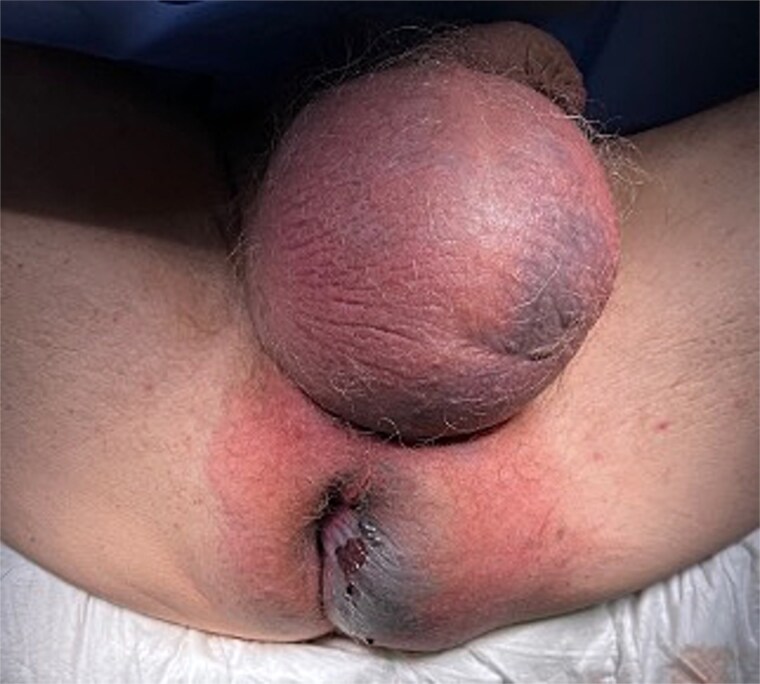 Figure 1
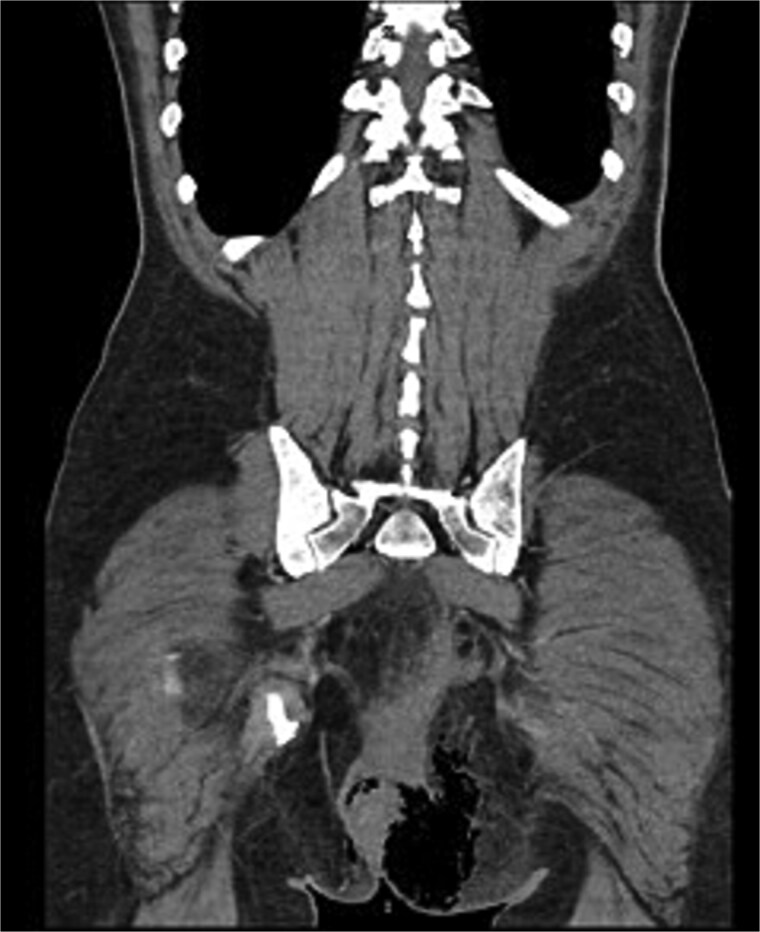 Figure 2
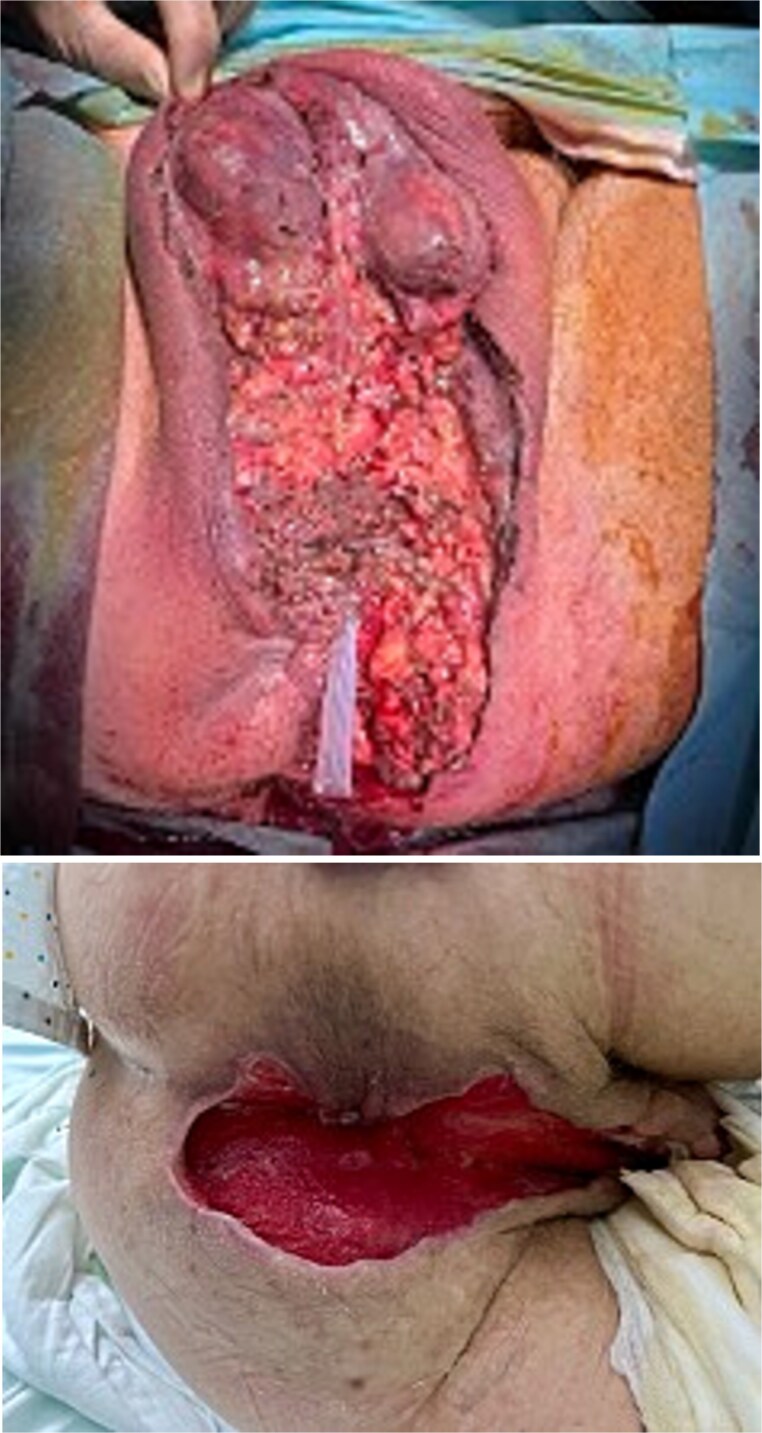 Figure 3
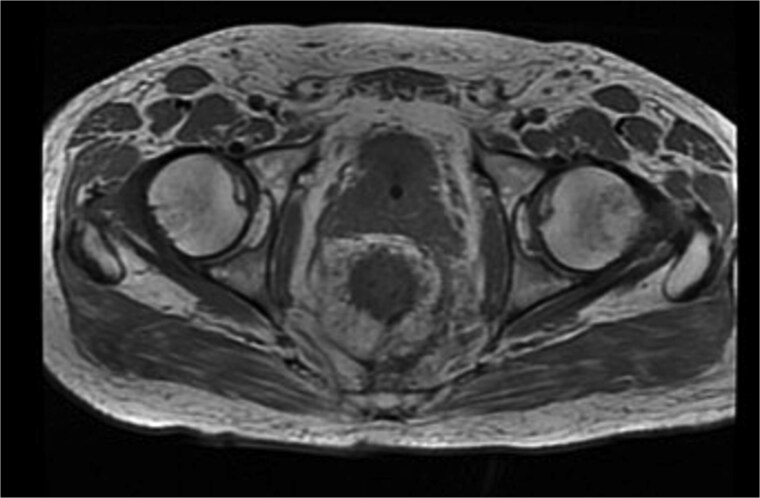 Figure 4
 Figure 5
Peer Reviews
No public reviews on file for this paper yet. If you reviewed it on a platform where reviews are public (OpenReview, ICLR, NeurIPS, ICML), you can paste yours below so the community can read it here.
Videos
No videos yet. Explain this paper in a talk, walkthrough, or lecture? Add one.
Taxonomy
TopicsStreptococcal Infections and Treatments · Pelvic floor disorders treatments · Diverticular Disease and Complications