Complete genome sequence of Streptococcus oralis subsp. tigurinus J22, a model strain for antagonistic interaction against Streptococcus mutans
Hee-Young Jung, Jina-Na Cai, Dongyeop Kim

TL;DR
This paper reports the complete genome sequence of a bacteria that can fight tooth decay-causing microbes.
Contribution
The study provides the complete genome sequence of Streptococcus oralis subsp. tigurinus J22, a model for antagonistic interactions.
Findings
The genome of S. oralis subsp. tigurinus J22 is 1,967,320 bp with 41.1% GC content.
The strain produces hydrogen peroxide and antagonizes Streptococcus mutans.
It serves as a model for studying microbial antagonism in the oral cavity.
Abstract
Streptococcus oralis subsp. tigurinus strain J22, a potent hydrogen peroxide-producing oral commensal. Given the antagonistic action against a cariogenic pathogen, this strain can be used as a model bacterium to characterize microbial antagonistic interactions. S. oralis J22 has a genome sequence of 1,967,320 bp along with 41.1% GC content.
Genes, proteins, chemicals, diseases, species, mutations and cell lines named across the full text — each resolved to its canonical identifier and authoritative record.
Click any figure to enlarge with its caption.
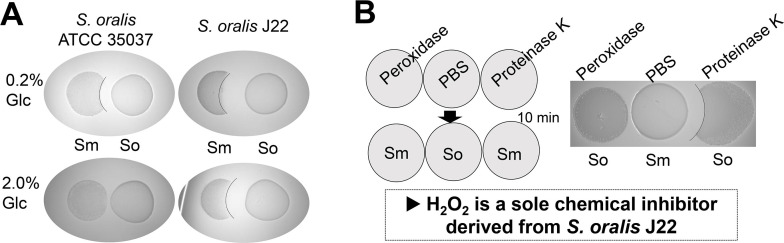 Fig 1
Fig 1| Category | Feature | |
|---|---|---|
| HiFi reads | No. of reads | 30,781 |
| Total bases (bp) | 209,722,659 | |
| 7,641 | ||
| Filtered Illumina reads | No. of reads | 11,951,272 |
| Total bases (bp) | 1,803,548,598 | |
| Assembly | No. of contig | 1 |
| Total | Genome size (bp) | 1,967,320 |
| 1,967,320 | ||
| GC content (%) | 41.1 | |
| Mean depth (×) | 106.4 | |
| No. of CDs | 1,861 | |
| Coding ratio (%) | 98.5 | |
| No. of tRNAs | 61 | |
| No. of rRNAs | 12 |
- —National Research Foundation of Koreahttp://dx.doi.org/10.13039/501100003725
Peer Reviews
No public reviews on file for this paper yet. If you reviewed it on a platform where reviews are public (OpenReview, ICLR, NeurIPS, ICML), you can paste yours below so the community can read it here.
Videos
No videos yet. Explain this paper in a talk, walkthrough, or lecture? Add one.
Taxonomy
TopicsOral microbiology and periodontitis research · Genomics and Phylogenetic Studies · Infective Endocarditis Diagnosis and Management
ANNOUNCEMENT
Streptococcus oralis subsp. tigurinus strain J22 is a potent hydrogen peroxide (H_2_O_2_)-producing oral commensal. It has been used as a model bacterium to study bacterial antagonistic interactions against oral pathogens and to evaluate the inhibitory capacity of oral isolates in suppressing cariogenic biofilm formation (1–4). Its antagonistic activity is mediated by H_2_O_2_ production rather than proteinaceous compounds (e.g., bacteriocins) (Fig. 1).
Representative antagonistic activity of S. oralis J22 against S. mutans. (A) S. oralis J22 consistently inhibited S. mutans growth regardless of sugar concentration in the agar medium. In contrast, S. oralis ATCC 35037 exhibited sugar-dependent inhibition, with markedly reduced activity under high-glucose conditions (at 2% glucose compared to 0.2% glucose). (B) To test whether H2O2 is a sole chemical weapon generated by S. oralis J22, either peroxidase or protease was applied for 10 min prior to spotting of S. mutans in the proximity of S. oralis. Interestingly, the peroxidase completely diminished the inhibitory zone mediated by S. oralis, whereas the protease did not show any drastic changes in the growth inhibition when compared to the medium without treatments.
Compared to other oral commensal streptococci such as S. oralis ATCC 35037 (Fig. 1), strain J22 exhibits stronger inhibition of Streptococcus mutans under varying sugar conditions (3, 5). Despite its functional relevance, the whole genome sequence of strain J22 had not been available, limiting mechanistic studies, such as metatranscriptomics.
Strain J22, originally isolated from a human oral cavity (2), was kindly provided by Dr. Jens Kreth (Oregon Health & Science University). The glycerol stock was streaked onto brain heart infusion agar plates supplemented with 5% sheep blood and incubated at 37°C under 5% CO_2_ for 48 h. Genomic DNA was extracted using the MasterPure DNA Purification Kit (Epicenter, USA), beginning with enzymatic lysis using lysozyme and mutanolysin in TE buffer, followed by Proteinase K digestion and RNase A treatment (6). The purified gDNA was subjected to quality assessment using Agilent ScreenTape analysis (Agilent, USA).
The genome of S. oralis J22 was sequenced using both PacBio Sequel IIe (Pacific Biosciences, USA) and Illumina NovaSeq X (Illumina, USA) platforms operated at Microgen Inc. (Republic of Korea). For PacBio sequencing, 4 µg of genomic DNA was sheared using Megaruptor 3 (Diagenode), size-selected (7–12 kb fragments) with AMPure PB beads, and prepared with the PacBio SMRTbell prep kit 3.0. The libraries were annealed and sequenced using Sequel II Bind Kit 3.2 and SMRT Cell 8M with 15-h movie time on the PacBio Sequel IIe system. For Illumina sequencing, the TruSeq DNA Nano Kit (Illumina) was used to prepare the libraries, with 100 ng of fragmented DNA, and paired-end sequencing (2 × 150 bp) was performed on the NovaSeq X (Illumina). HiFi reads generated from PacBio were de novo assembled using the Microbial Genome Assembly pipeline in SMRT Link v13.0.0.207600, based on the Hierarchical Genome Assembly Process (7). Illumina reads were processed with Trimmomatic v0.38 (ILLUMINACLIP:Adapter.fasta:2:30:10:8:true LEADING:15 TRAILING:15 SLIDINGWINDOW:4:15MINLEN:36) (8). Reads with Phred score ≥30 were retained and used for three rounds of polishing with Pilon v1.22 (9). Circularization was confirmed by identifying overlapping terminal regions, and the genome was rotated to start at the origin of replication based on dnaA coordinates.
Genome annotation was performed using Prokka v1.14.6 (10) to predict coding sequences (CDSs), tRNAs, and rRNAs, while InterProScan v5.34-73.0 (11) and PSI-BLAST v2.6.0 (12) were used for further functional annotation, utilizing the EggNOG database v4.5 (13) for orthology.
The S. oralis J22 sequence was deposited at GenBank as one circular contig comprised of 1,967,320 bp along with 41.1% GC content, 1,861 CDSs, 61 tRNAs, and 12 rRNAs (Table 1).
The reference list from the paper itself. Each links out to its DOI / PubMed record.
- 1Redanz S, Cheng X, Giacaman RA, Pfeifer CS, Merritt J, Kreth J. 2018. Live and let die: hydrogen peroxide production by the commensal flora and its role in maintaining a symbiotic microbiome. Mol Oral Microbiol 33:337–352. doi:10.1111/omi.1223129897662 PMC 6158098 · doi ↗ · pubmed ↗
- 2Abeygunawardana C, Bush CA, Cisar JO. 1990. Complete structure of the polysaccharide from Streptococcus sanguis J 22. Biochemistry 29:234–248. doi:10.1021/bi 00453 a 0322157479 · doi ↗ · pubmed ↗
- 3Kim D, Ito T, Hara A, Li Y, Kreth J, Koo H. 2022. Antagonistic interactions by a high H 2O 2-producing commensal Streptococcus modulate caries development by Streptococcus mutans. Mol Oral Microbiol 37:244–255. doi:10.1111/omi.1239436156446 · doi ↗ · pubmed ↗
- 4Huang Y, Liu Y, Shah S, Kim D, Simon-Soro A, Ito T, Hajfathalian M, Li Y, Hsu JC, Nieves LM, Alawi F, Naha PC, Cormode DP, Koo H. 2021. Precision targeting of bacterial pathogen via bi-functional nanozyme activated by biofilm microenvironment. Biomaterials 268:120581. doi:10.1016/j.biomaterials.2020.12058133302119 PMC 8182968 · doi ↗ · pubmed ↗
- 5Redanz S, Treerat P, Mu R, Redanz U, Zou Z, Koley D, Merritt J, Kreth J. 2020. Pyruvate secretion by oral Streptococci modulates hydrogen peroxide dependent antagonism. ISME J 14:1074–1088. doi:10.1038/s 41396-020-0592-831988475 PMC 7174352 · doi ↗ · pubmed ↗
- 6Klein MI, Scott-Anne KM, Gregoire S, Rosalen PL, Koo H. 2012. Molecular approaches for viable bacterial population and transcriptional analyses in a rodent model of dental caries. Mol Oral Microbiol 27:350–361. doi:10.1111/j.2041-1014.2012.00647.x 22958384 PMC 3442936 · doi ↗ · pubmed ↗
- 7Chin CS, Alexander DH, Marks P, Klammer AA, Drake J, Heiner C, Clum A, Copeland A, Huddleston J, Eichler EE, Turner SW, Korlach J. 2013. Nonhybrid, finished microbial genome assemblies from long-read SMRT sequencing data. Nat Methods 10:563–569. doi:10.1038/nmeth.247423644548 · doi ↗ · pubmed ↗
- 8Bolger AM, Lohse M, Usadel B. 2014. Trimmomatic: a flexible trimmer for illumina sequence data. Bioinformatics 30:2114–2120. doi:10.1093/bioinformatics/btu 17024695404 PMC 4103590 · doi ↗ · pubmed ↗