Cranial Morphological Patterns Based on Cranial Index and Petrous Ridge–Midline Angle in Koreans: Implications for Clinical and Forensic Applications
Digud Kim, Jeonghyun Park, Jaeho Cho, Yu-Jin Choi, Hyung-Wook Kwon, Yunil Choe, Sookyoung Lee, Kwang-Rak Park

TL;DR
This study analyzes skull shapes in Koreans using CT scans to identify patterns useful for clinical and forensic applications.
Contribution
The study provides new insights into Korean cranial morphology using PMCT and two key measurements.
Findings
The brachycranic type was the most common skull shape in Koreans.
PMA showed significant sex and age differences in cranial morphology.
CI did not show significant differences by sex or age.
Abstract
Background: The human skull has a very complex and diverse structure, and morphological characteristics vary by population. The purpose of this study is to comprehensively analyze the cranial morphology using postmortem computed tomography (PMCT), and to identify anatomical characteristics through a multifaceted approach in Koreans. Methods: 358 PMCT cross-sectional images (179 males, 179 females) provided by the National Forensic Service were analyzed, and the average age was 55.1 ± 18.9 years. The maximum cranial length was divided by the maximum cranial width and multiplied by 100 to calculate the cranial index (CI). Petrous ridge–midline angle (PMA) was measured as the angle between the petrous ridge and the midline. Results: In both the classification of skull shape using CI and PMA, the brachycranic type showed the highest frequency (p < 0.001). Classified by CI, there were no…
Genes, proteins, chemicals, diseases, species, mutations and cell lines named across the full text — each resolved to its canonical identifier and authoritative record.
Click any figure to enlarge with its caption.
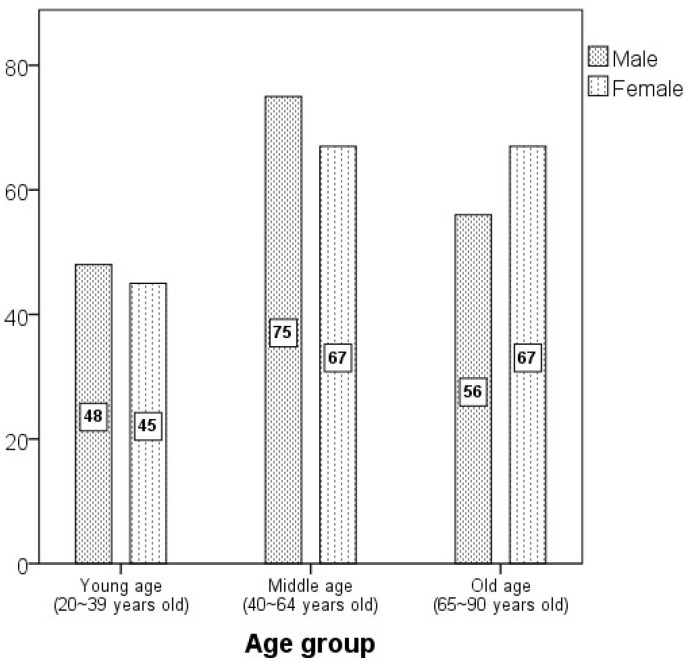 Figure 1
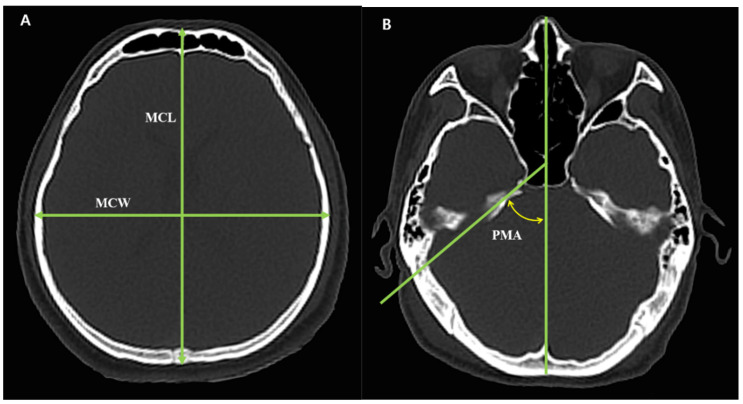 Figure 2
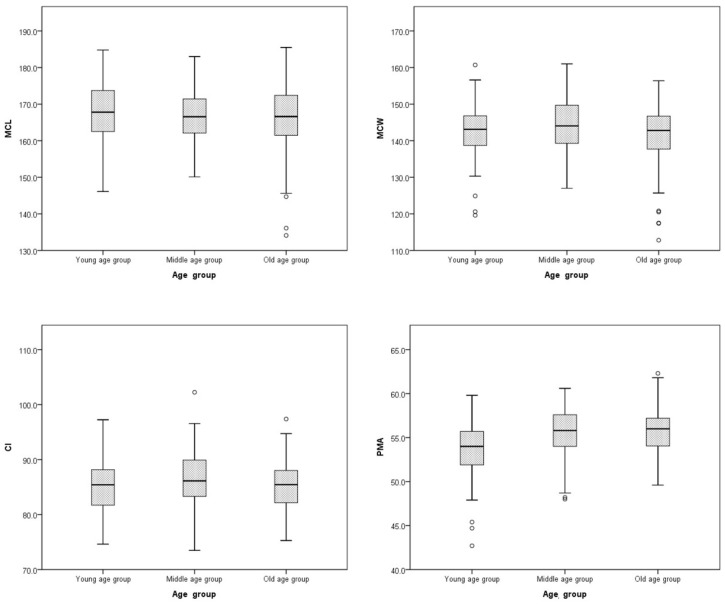 Figure 3
Peer Reviews
No public reviews on file for this paper yet. If you reviewed it on a platform where reviews are public (OpenReview, ICLR, NeurIPS, ICML), you can paste yours below so the community can read it here.
Videos
No videos yet. Explain this paper in a talk, walkthrough, or lecture? Add one.
Taxonomy
TopicsForensic Anthropology and Bioarchaeology Studies · Morphological variations and asymmetry · Dental Radiography and Imaging