Lipidomic Signature of Patients with Familial Hypercholesterolemia Carrying Pathogenic Variants Unveils a Cue of Increased Cardiovascular Risk
Giulia De Simone, Maria Donata Di Taranto, Debora Paris, Martina Ferrandino, Marco Andolfi, Annalaura Iodice, Giovanna Cardiero, Carmine De Luca, Luigi Junior Valletta, Ilenia Lorenza Calcaterra, Gabriella Iannuzzo, Matteo Nicola Dario Di Minno, Giuliana Fortunato

TL;DR
This study identifies unique lipid patterns in patients with a genetic form of high cholesterol, which may explain their higher risk of heart disease.
Contribution
The study reveals a distinct lipidomic signature in FH patients with pathogenic variants, potentially explaining increased cardiovascular risk.
Findings
Lipid classes were elevated in FH patients compared to healthy controls.
Sphingomyelins distinguished HeFH from FH/V−/USV− patients.
Lipidomic differences correlate with cardiovascular risk in HeFH patients.
Abstract
Familial Hypercholesterolemia (FH) is a common genetic disorder characterized by elevated LDL-cholesterol levels and an increased risk of premature cardiovascular disease. While pathogenic variants in LDLR, APOB, and PCSK9 are well-established causes, a substantial proportion of clinically suspected FH cases do not carry either pathogenic variants or rare variants of uncertain significance in these genes (FH/V−/USV−). This study aimed to characterize the metabolome/lipidome of genetically confirmed heterozygous FH (HeFH) patients compared to FH/V−/USV−, seeking to identify specific alterations associated with genetic status and phenotypic variability. Untargeted high-resolution mass spectrometry (UHPLC-Q-Exactive-MS)-based lipidomics and nuclear magnetic resonance-based metabolomics were performed on plasma samples of FH patients (n = 20 HeFH and n = 19 FH/V−/USV−) towards healthy…
Genes, proteins, chemicals, diseases, species, mutations and cell lines named across the full text — each resolved to its canonical identifier and authoritative record.
Click any figure to enlarge with its caption.
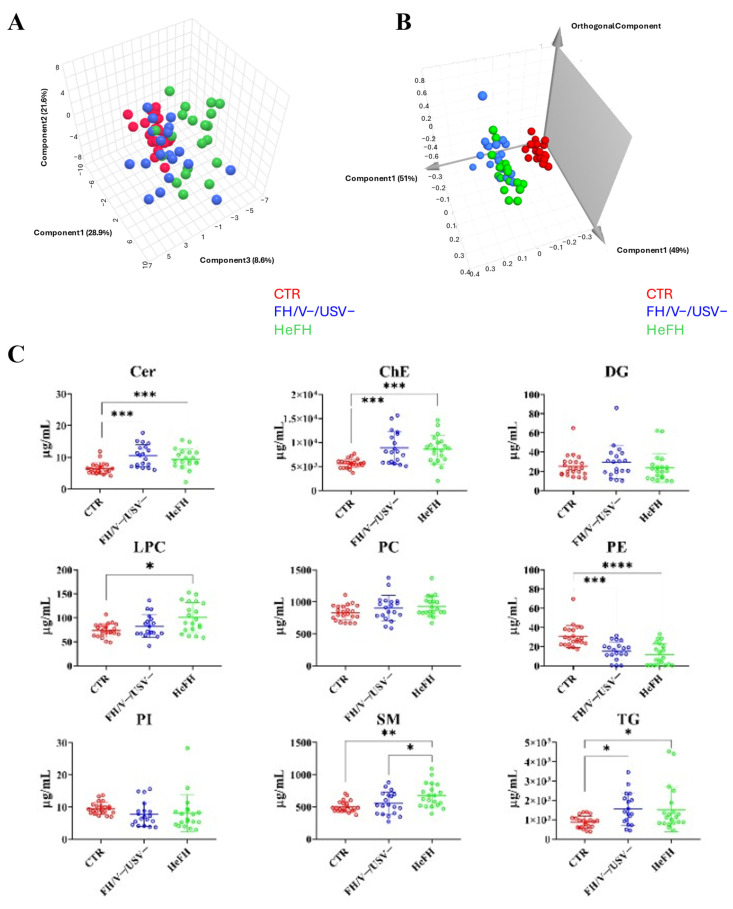 Figure 1
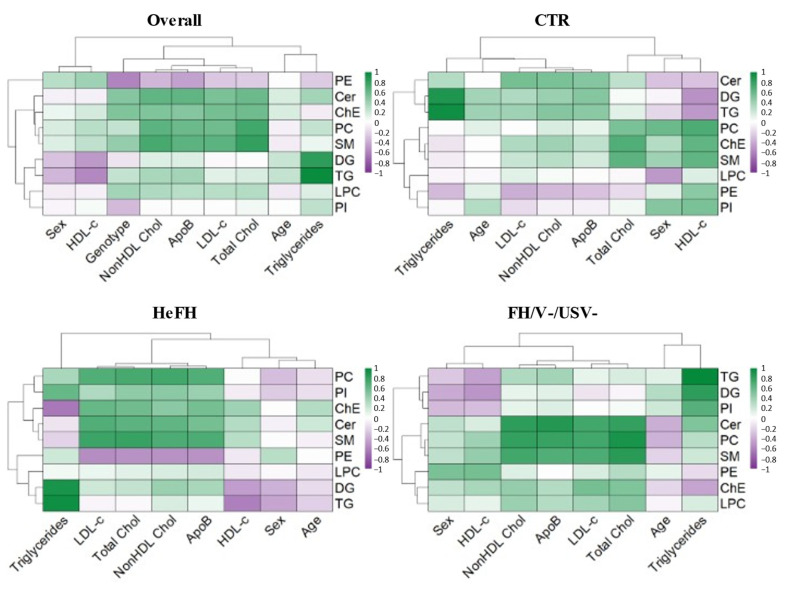 Figure 2
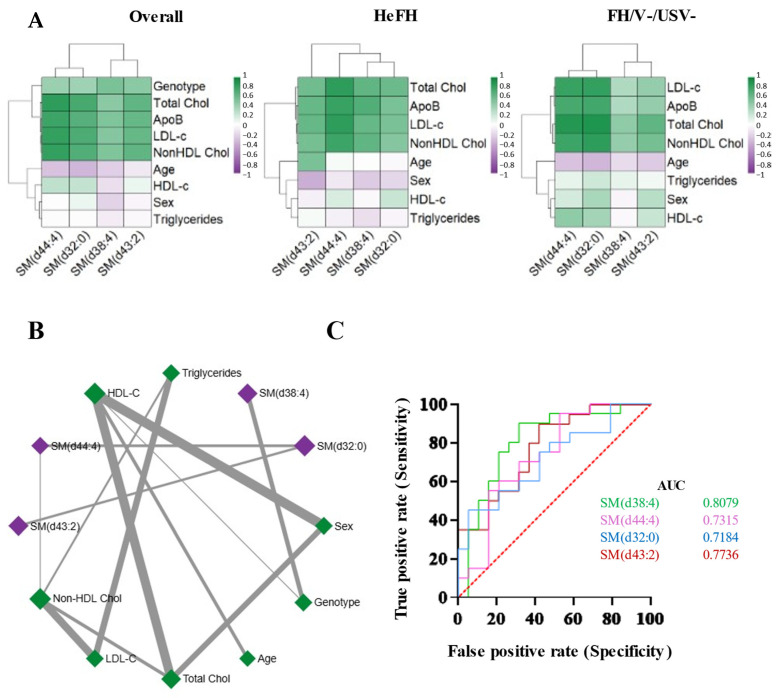 Figure 3
 Figure 4
Peer Reviews
No public reviews on file for this paper yet. If you reviewed it on a platform where reviews are public (OpenReview, ICLR, NeurIPS, ICML), you can paste yours below so the community can read it here.
Videos
No videos yet. Explain this paper in a talk, walkthrough, or lecture? Add one.
Taxonomy
TopicsMetabolomics and Mass Spectrometry Studies · Lipoproteins and Cardiovascular Health · Cancer, Lipids, and Metabolism