Investigating the Nutritional Properties, Chemical Composition (UPLC-HR-MS) and Safety (Ames Test) of Atriplex halimus L. Leaves and Their Potential Health Implications
Maria Eleonora Foletti, Massimo Tacchini, Gianni Sacchetti, Annalisa Maietti, Mohamed Lamin Abdi Bellau, Marinella De Leo, Alessandra Guerrini

TL;DR
This study examines the nutritional and chemical properties of Atriplex halimus L. leaves, finding them rich in fiber, iron, and polyphenols, with no toxic effects and high bioaccessibility of antioxidants.
Contribution
The study provides a comprehensive chemical and nutritional profile of Atriplex halimus L. leaves, including novel metabolite identification and safety confirmation via the Ames test.
Findings
Atriplex halimus leaves are rich in dietary fiber (44.41 g/100 g) and iron (142.0 mg/100 g).
The leaves contain 40.6% polyunsaturated fatty acids, including linoleic and α-linolenic acid.
The traditional decoction showed high polyphenol bioaccessibility (71.52%) and no mutagenic effects in the Ames test.
Abstract
Motivated by the plant’s ethnopharmacological importance and the health conditions of the Sahrawi people, who have been living as refugees for over 50 years, this study comprehensively assessed the nutritional profile, secondary metabolite composition, in vitro bioaccessibility, and toxicological safety of Atriplex halimus L. leaves. The proximate analysis demonstrated richness in dietary fiber (44.41 ± 0.11 g/100 g) and essential macro/microelements, notably iron (142.0 ± 2.41 mg/100 g). The lipid profile features essential polyunsaturated fatty acids, specifically linoleic and α-linolenic acid, accounting for 40.6 ± 7.0% of total fatty acids. The UPLC-HR--MS characterization of two extracts tentatively identified 13 specialized metabolites, including uncommon flavonoids such as highly glycosylated forms of isorhamnetin and syringetin. Caffeic acid 3-sulfate and caffeic acid 4-sulfate…
Genes, proteins, chemicals, diseases, species, mutations and cell lines named across the full text — each resolved to its canonical identifier and authoritative record.
Click any figure to enlarge with its caption.
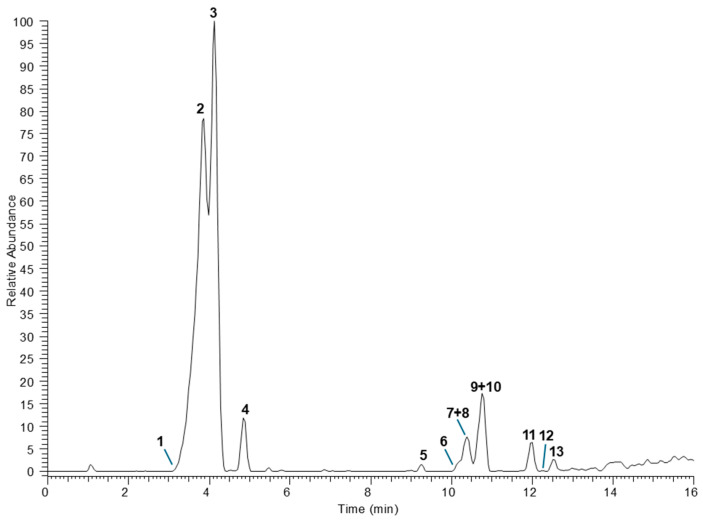 Figure 1
Peer Reviews
No public reviews on file for this paper yet. If you reviewed it on a platform where reviews are public (OpenReview, ICLR, NeurIPS, ICML), you can paste yours below so the community can read it here.
Videos
No videos yet. Explain this paper in a talk, walkthrough, or lecture? Add one.
Taxonomy
TopicsPharmacological Effects of Medicinal Plants · Ethnobotanical and Medicinal Plants Studies · Date Palm Research Studies