Experimental Study on the Effect of Humidity on the Mechanical Properties of 3D-Printed Mechanical Metamaterials
Qian Sun, Xiaojun Tan, Jianhao Man, Shuai Li, Zeeshan Ali, Kaiyang Yin, Bo Cao, Christoph Eberl

TL;DR
This study explores how humidity affects the mechanical properties of 3D-printed materials and metamaterials, showing significant changes in strength and behavior under different humidity levels.
Contribution
The study systematically validates the impact of humidity on 3D-printed mechanical metamaterials, identifying critical thresholds for material behavior.
Findings
Water absorption in polymers occurs in three stages with Nylon showing the highest uptake.
Material properties like Poisson’s ratio shift abruptly at high humidity levels.
Mechanical metamaterials exhibit predictable behavior at low-to-moderate humidity but become unpredictable at high humidity.
Abstract
In this study, six common fused filament fabrication (FFF) polymers—PEEK, PLA, PETG, ABS, Nylon, and TPU—were acclimatized at 15%, 45%, and 95% relative humidity (RH) to characterize tensile behavior, including Young’s modulus, maximum strain, and ultimate tensile strength. Separately, mechanical metamaterial samples at relative densities (RD) of 25%, 35%, and 45% were tested in compression at the same RH levels to evaluate stiffness, strength, and Poisson’s ratio. The water absorption process can generally be divided into different stages—rapid uptake (0–12 h), a plateau (12–60 h), and a late rebound (60–100 h)—with a total uptake ranking of Nylon > PETG > PLA ≈ ABS > TPU ≈ PEEK. Samples under tensile and compressive tests show a great difference between properties at different RD and RH levels. Poisson’s ratio indicates that material responses remain predictable at low-to-moderate RH,…
Genes, proteins, chemicals, diseases, species, mutations and cell lines named across the full text — each resolved to its canonical identifier and authoritative record.
Click any figure to enlarge with its caption.
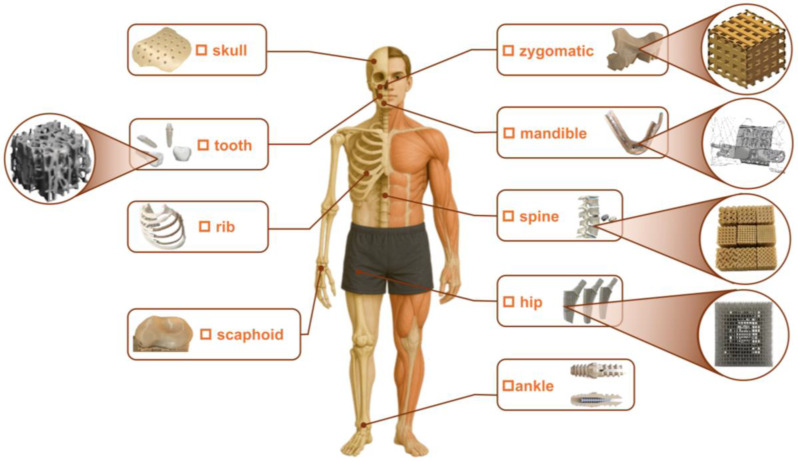 Figure 1
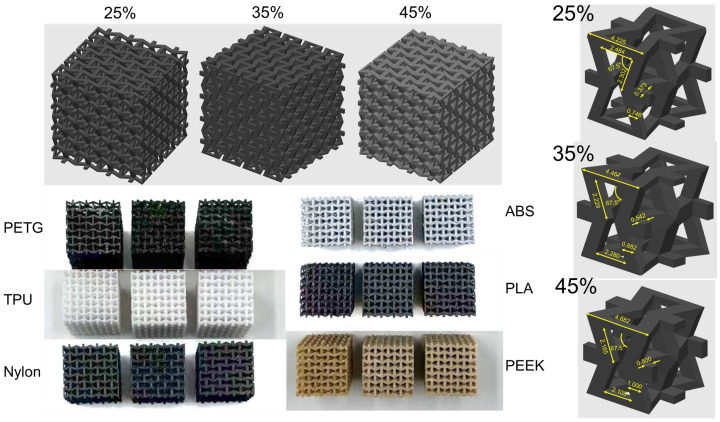 Figure 2
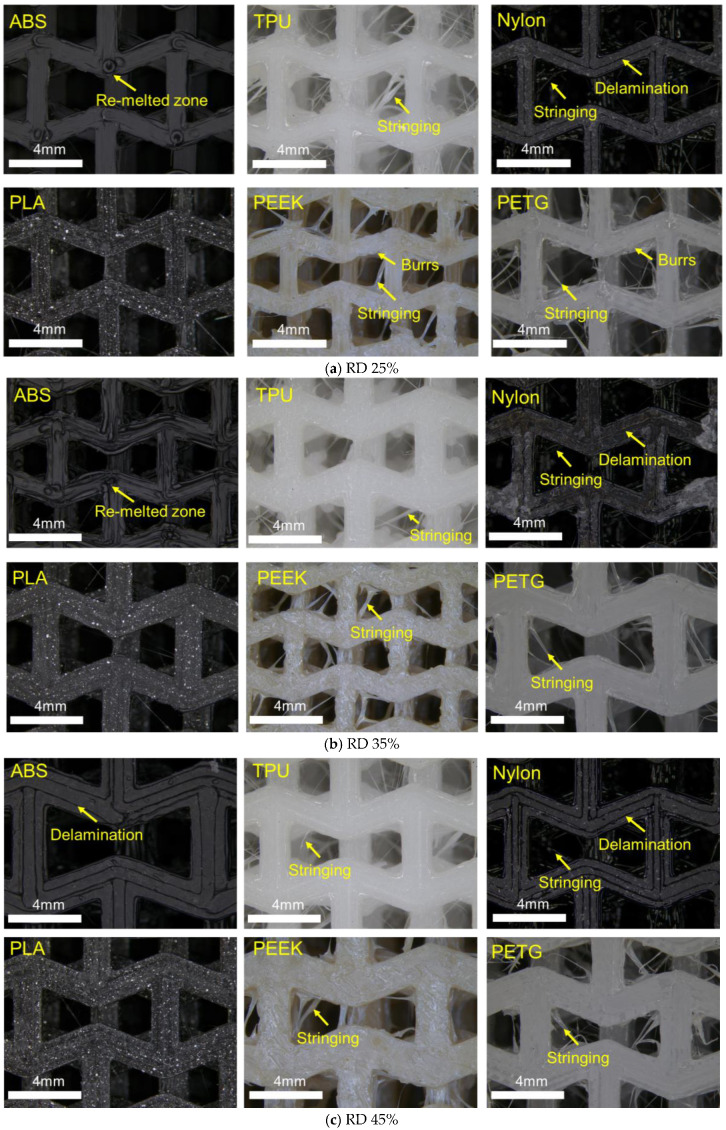 Figure 3
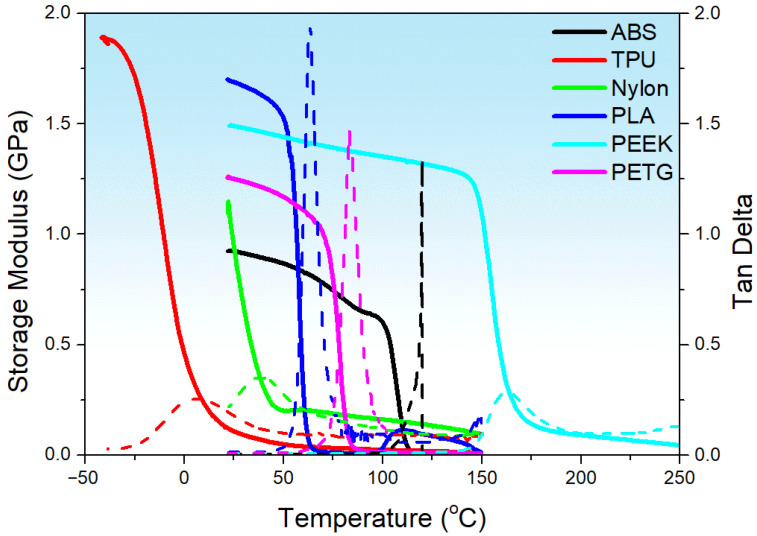 Figure 4
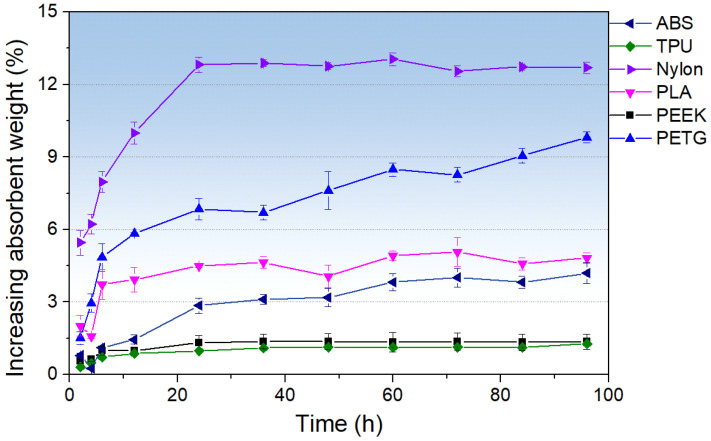 Figure 5
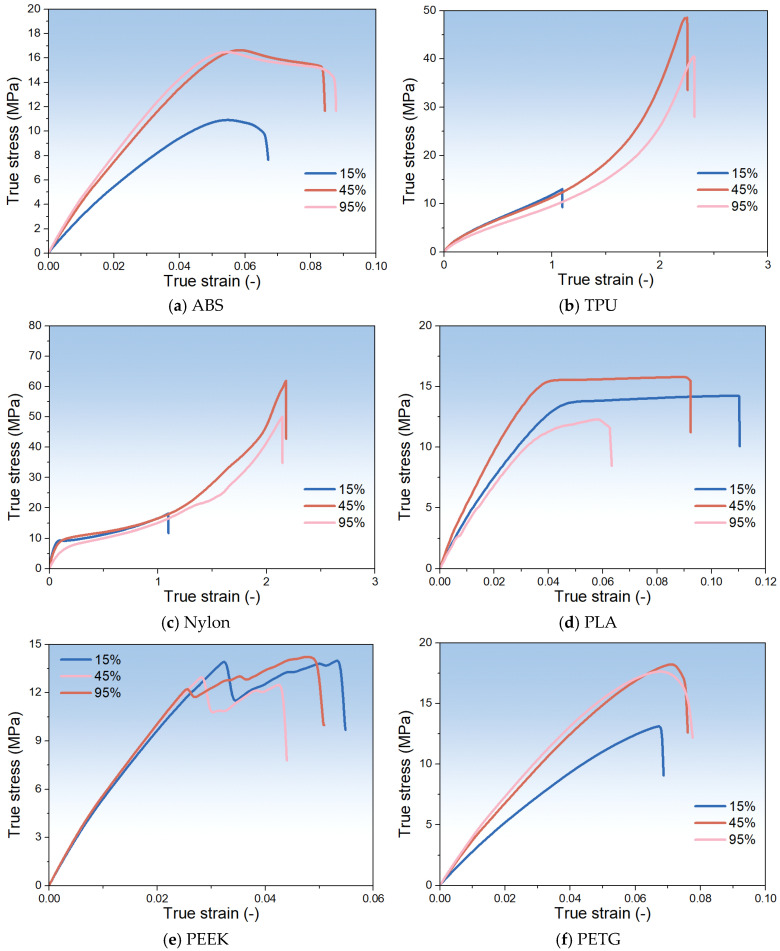 Figure 6
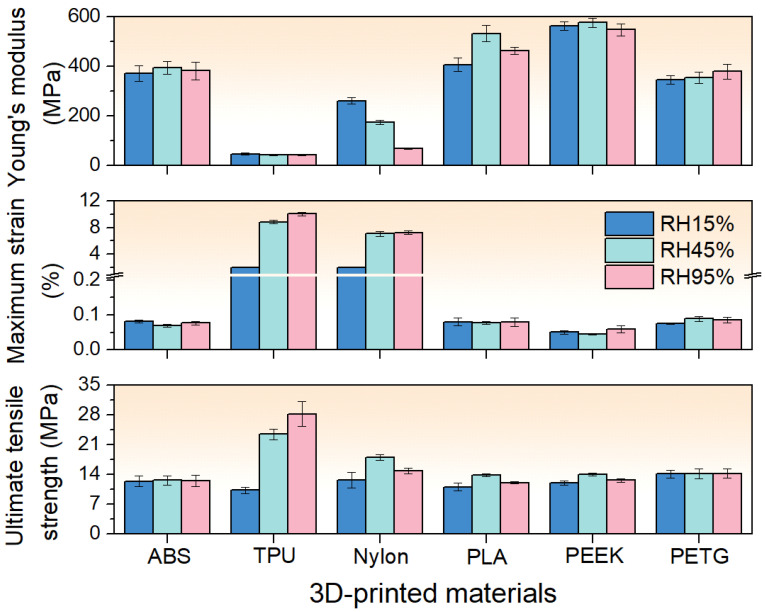 Figure 7
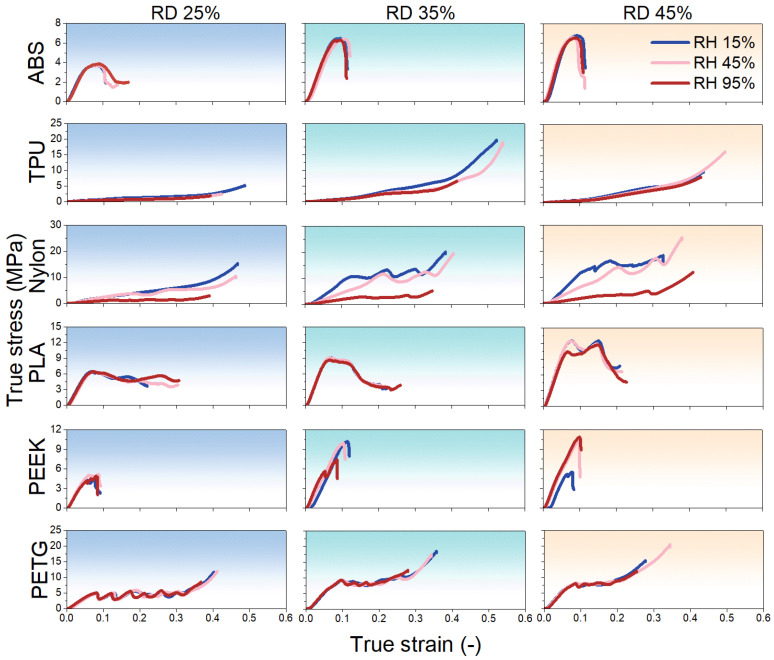 Figure 8
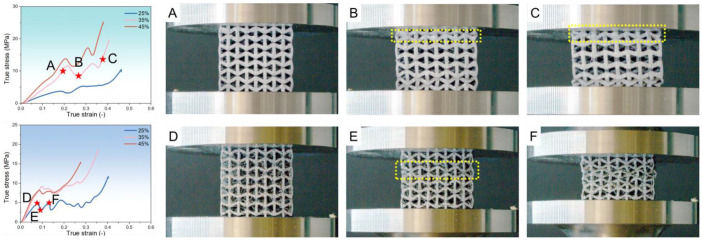 Figure 9
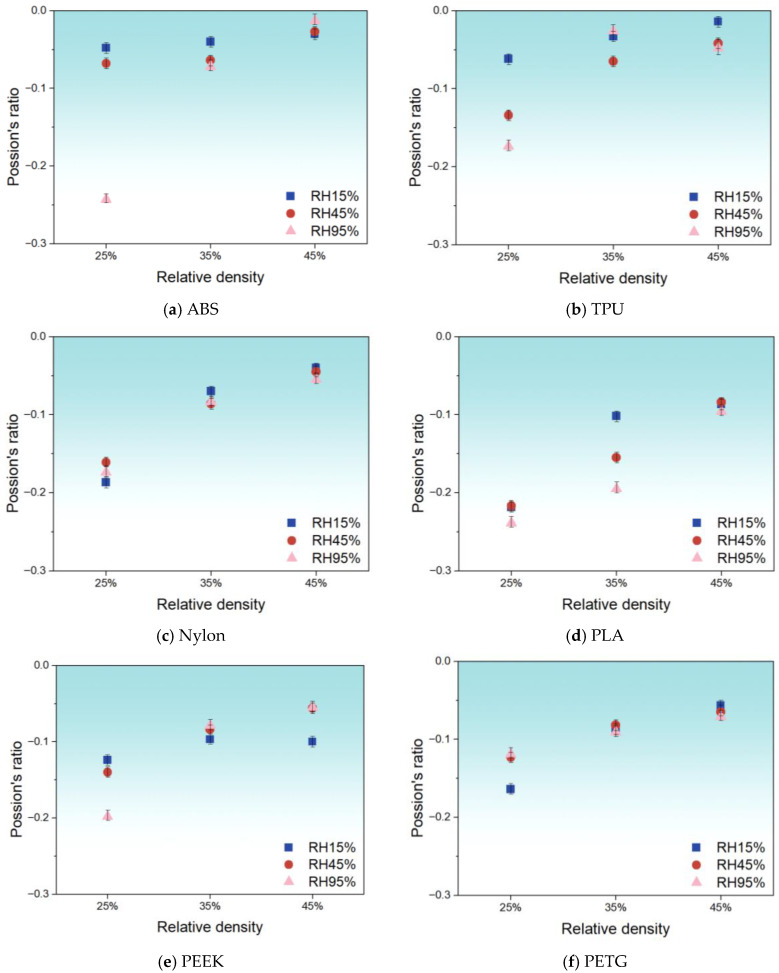 Figure 10
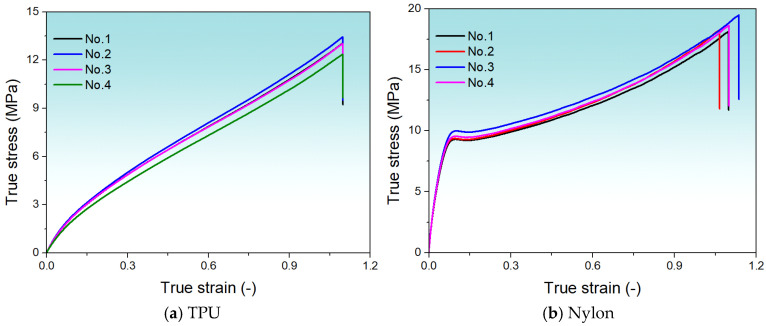 Figure 11
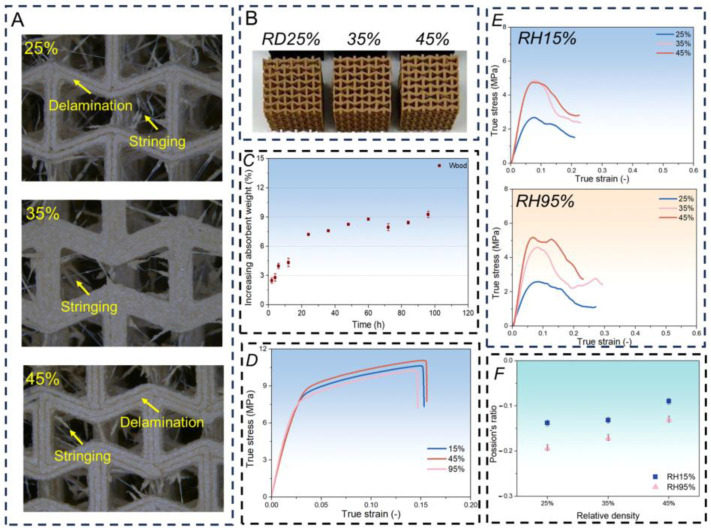 Figure 12
Peer Reviews
No public reviews on file for this paper yet. If you reviewed it on a platform where reviews are public (OpenReview, ICLR, NeurIPS, ICML), you can paste yours below so the community can read it here.
Videos
No videos yet. Explain this paper in a talk, walkthrough, or lecture? Add one.
Taxonomy
TopicsCellular and Composite Structures · Additive Manufacturing and 3D Printing Technologies · 3D Printing in Biomedical Research