L-arginine Results in an Artificial Increase in Creatinine
Michelle Hwang, Jennifer Han, Sean Lei, Igor Kagan

TL;DR
This paper shows that L-arginine, a common supplement, can falsely raise creatinine levels, a marker for kidney function.
Contribution
The study demonstrates that L-arginine can artificially elevate serum creatinine, independent of kidney function.
Findings
A 65-year-old man's creatinine levels normalized after stopping L-arginine.
Cystatin C levels remained stable, indicating no real kidney damage.
L-arginine use was directly linked to the artificial creatinine increase.
Abstract
L-arginine is a commonly available over-the-counter supplement. We report a 65-year-old man with a history of benign prostatic hyperplasia, hypertension, and obstructive sleep apnea who had an elevated serum creatinine level and normal cystatin C in the setting of L-arginine supplementation. After discontinuation of L-arginine, repeat testing showed normalization of serum creatinine, while cystatin C remained unchanged, thus demonstrating that L-arginine use can result in an artificial increase in serum creatinine.
Genes, proteins, chemicals, diseases, species, mutations and cell lines named across the full text — each resolved to its canonical identifier and authoritative record.
Click any figure to enlarge with its caption.
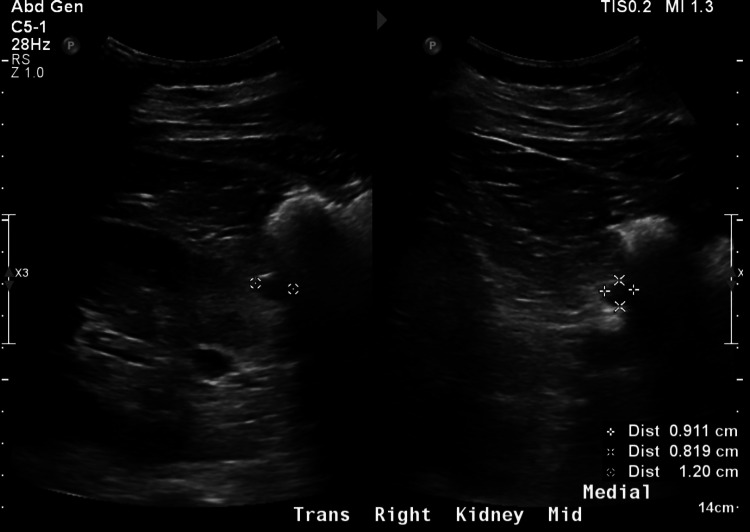 Figure 1
Peer Reviews
No public reviews on file for this paper yet. If you reviewed it on a platform where reviews are public (OpenReview, ICLR, NeurIPS, ICML), you can paste yours below so the community can read it here.
Videos
No videos yet. Explain this paper in a talk, walkthrough, or lecture? Add one.
Taxonomy
TopicsMuscle metabolism and nutrition · Diet and metabolism studies · Coenzyme Q10 studies and effects