A novel mechanism by which c-MYC is aberrantly activated by epigenetic silencing of its antisense lncRNA in colon cancer
Xuming Hu, Ye Wei, Meiying Zhang, Chunfeng Dou, Liping Wang, Gul Zaib, Huixian Wu, Wang Guo, Xiaoyuan Wang, Shihao Chen, Qi Xu, Mingzhou Guo, Hengmi Cui

TL;DR
This study reveals that c-MYC, a cancer-related gene, is overactivated in colon cancer due to the silencing of a regulatory RNA called MYC-AS1.
Contribution
The paper introduces a novel epigenetic mechanism where c-MYC is activated by DNA methylation silencing its antisense RNA MYC-AS1.
Findings
MYC-AS1 is an antisense RNA that suppresses c-MYC expression and tumor growth.
DNA hypermethylation silences MYC-AS1, leading to increased c-MYC activity in cancer cells.
MYC-AS1 interacts with HuR protein and inhibits LDHA, a gene targeted by c-MYC.
Abstract
Proto-oncogenes are abnormally activated in nearly all types of tumors. However, the epigenetic mechanism of proto-oncogene activation has not yet been well elucidated. The present study involved the construction of a double-stranded cDNA library derived from gastrointestinal cancer cells, followed by high-throughput genome sequencing to select the c-MYC gene associated with colorectal cancer. Through RACE analysis, we identified the antisense RNA MYC-AS1 and its complete sequence. By investigating the cellular functions, expression of MYC-AS1, elucidating its interaction mechanism with the c-MYC gene, and exploring the impact of DNA methylation on MYC-AS1 expression, we uncover the fundamental principles and regulatory mechanisms underlying colorectal cancer development. Here, we show that a subset of proto-oncogenes,including c-MYC, possess antisense RNAs. Upregulation of c-MYC in…
Genes, proteins, chemicals, diseases, species, mutations and cell lines named across the full text — each resolved to its canonical identifier and authoritative record.
Click any figure to enlarge with its caption.
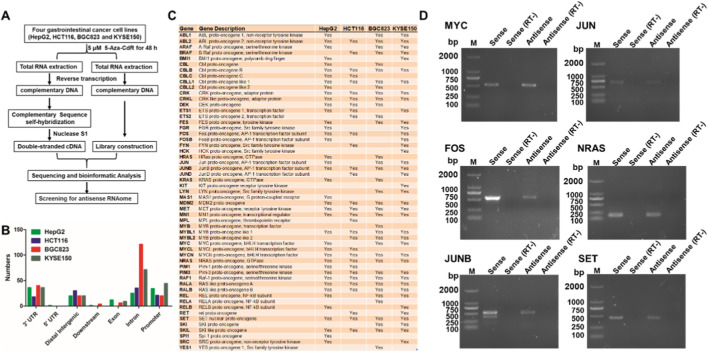 Figure 1
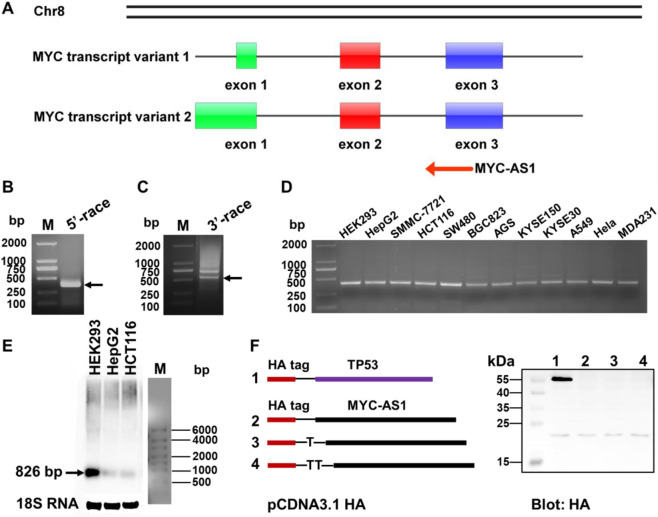 Figure 2
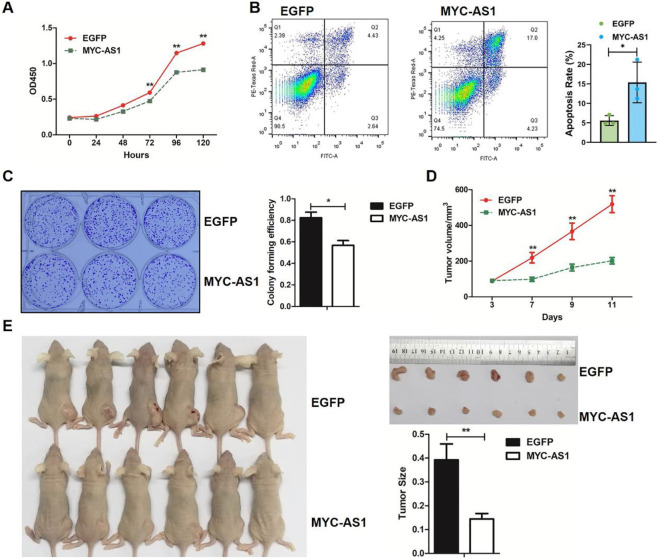 Figure 3
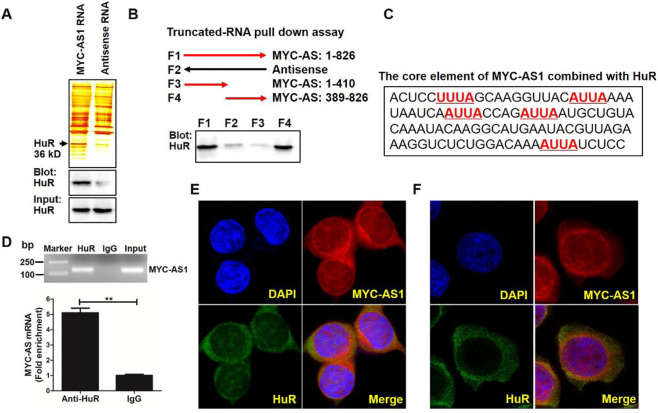 Figure 4
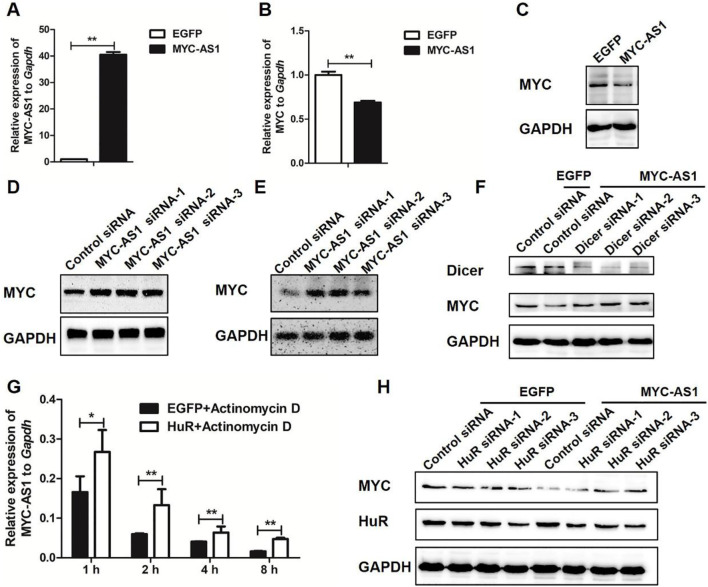 Figure 5
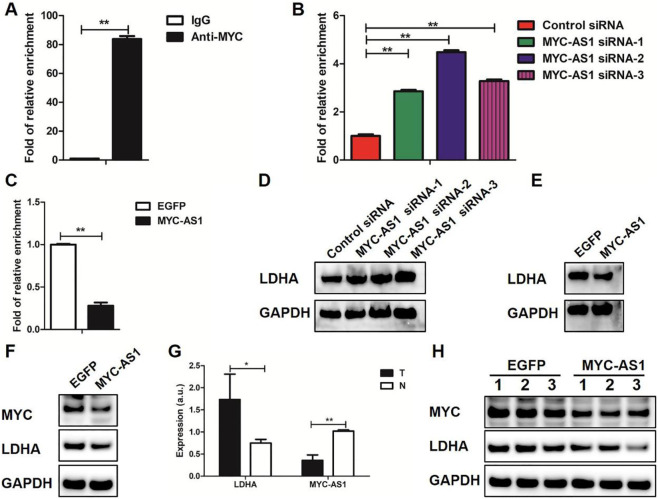 Figure 6
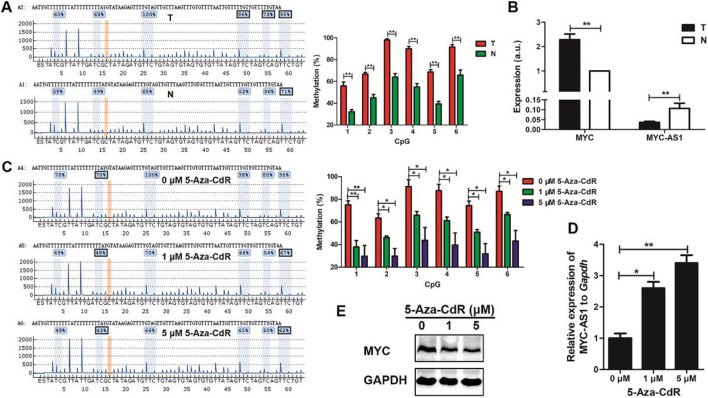 Figure 7
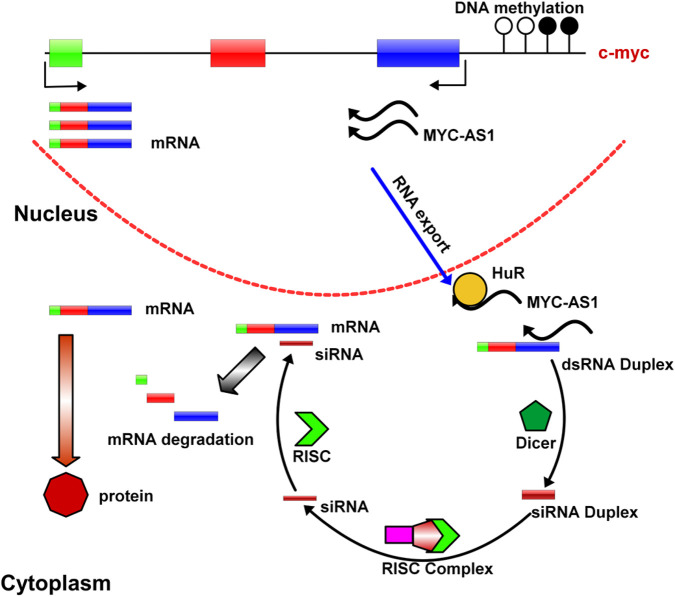 Figure 8
Peer Reviews
No public reviews on file for this paper yet. If you reviewed it on a platform where reviews are public (OpenReview, ICLR, NeurIPS, ICML), you can paste yours below so the community can read it here.
Videos
No videos yet. Explain this paper in a talk, walkthrough, or lecture? Add one.
Taxonomy
TopicsCancer-related molecular mechanisms research · RNA modifications and cancer · Mycobacterium research and diagnosis