Topology-controlled Pt atomic sites enhance electron utilization efficiency for NAD+ regeneration and alcohol detoxification
Yinjun Tang, Pengcheng Qi, Yifei Chen, Jian Li, Wenxuan Jiang, Hongcheng Sun, Wenling Gu, Yao Sun, Chengzhou Zhu

TL;DR
This study introduces a new method for alcohol detoxification using Pt atomic sites in Co3O4 lattices to improve coenzyme regeneration and reduce harmful byproducts.
Contribution
The novel use of topology-controlled Pt atomic sites enhances electron utilization and reduces ROS in alcohol metabolism.
Findings
PtTdCo/O shows 3.59- to 3.83-fold higher NOX-like activity compared to other structures.
PtTd sites improve substrate adsorption and lower reaction energy for alcohol degradation.
The method minimizes ROS production while promoting efficient electron utilization.
Abstract
Acute alcohol intoxication causes severe damage to the liver, nervous system and metabolic processes while inducing inflammatory responses. Current therapeutic strategies targeting ethanol metabolism through alcohol or aldehyde dehydrogenase activation face critical limitations of NADH accumulation and excessive reactive oxygen species (ROS) generation. Herein, by introducing a topology-controlled Pt atomic site into Co3O4 lattices, the geometric structure diversification of Pt was achieved for alcohol detoxification by coenzyme regeneration. In comparison with octahedral PtOhCo/O and pure Co3O4, PtTdCo/O (atomic Pt sites within tetrahedral topology) exhibits 3.59- and 3.83-fold higher NOX-like activity, and preferentially catalyzes 4e⁻ oxygen reduction, improving electron utilization while minimizing ROS production. Mechanistic studies indicate that the introduction of PtTd sites…
Genes, proteins, chemicals, diseases, species, mutations and cell lines named across the full text — each resolved to its canonical identifier and authoritative record.
Click any figure to enlarge with its caption.
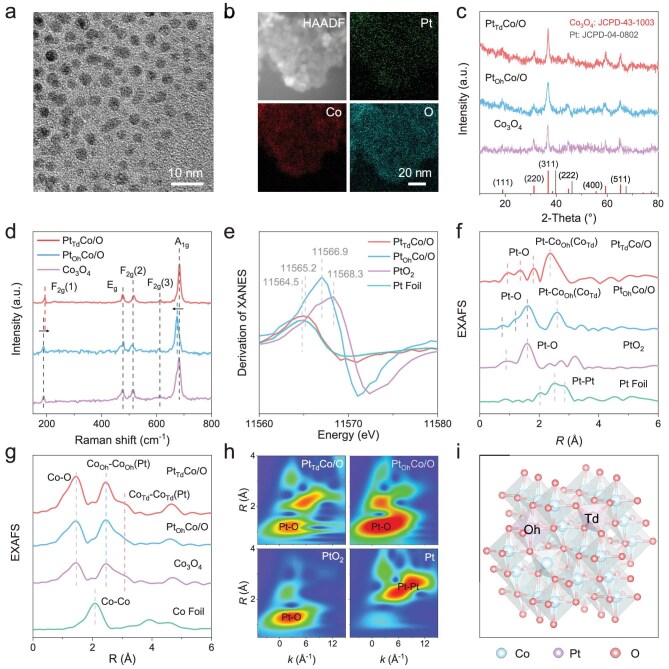 Figure 1
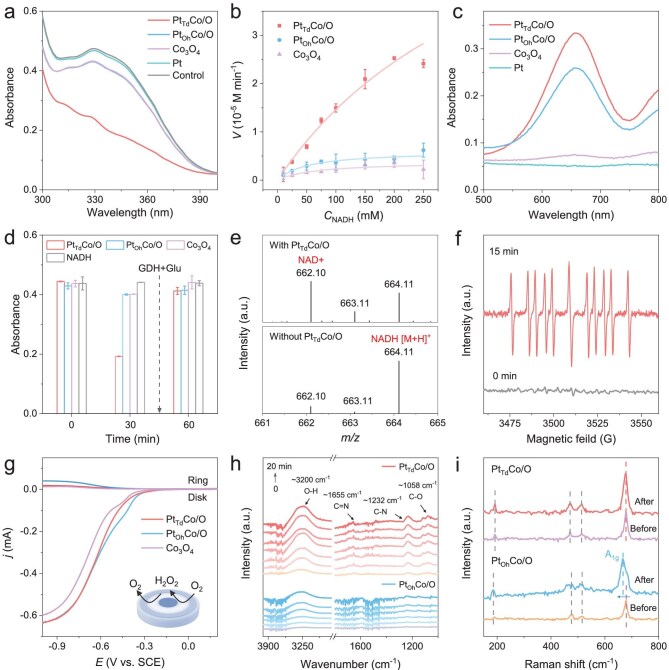 Figure 2
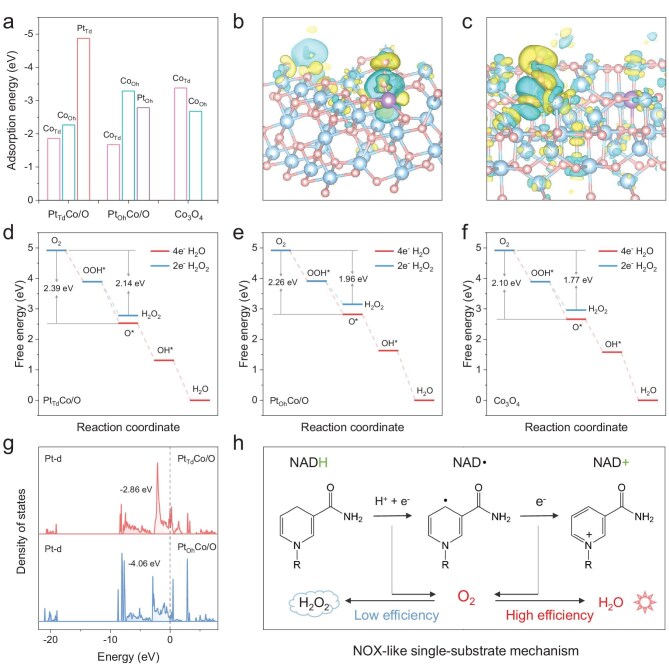 Figure 3
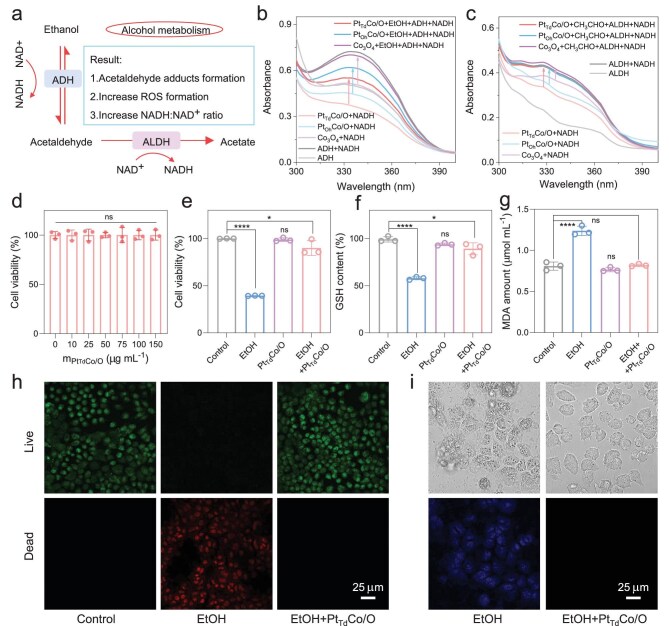 Figure 4
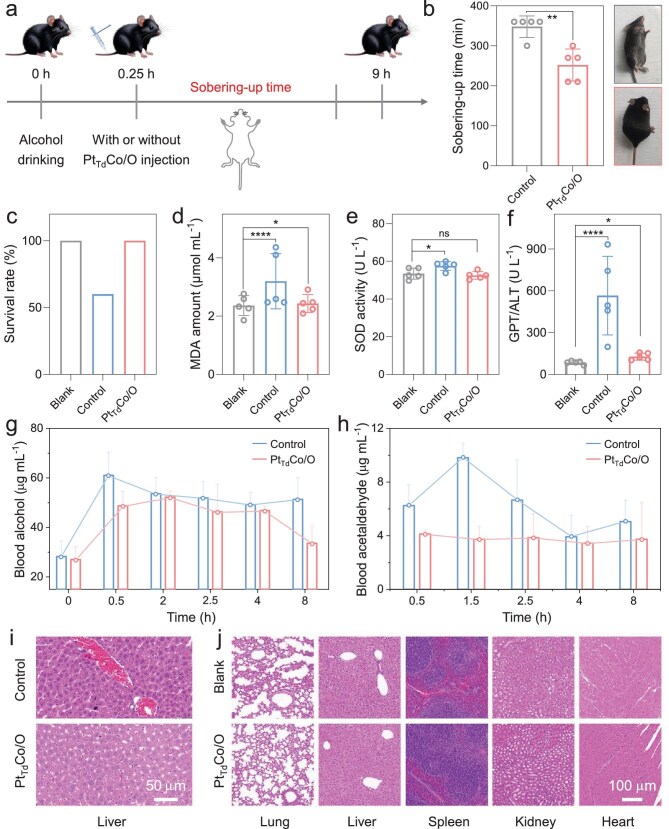 Figure 5
Peer Reviews
No public reviews on file for this paper yet. If you reviewed it on a platform where reviews are public (OpenReview, ICLR, NeurIPS, ICML), you can paste yours below so the community can read it here.
Videos
No videos yet. Explain this paper in a talk, walkthrough, or lecture? Add one.
Taxonomy
TopicsAdvanced Nanomaterials in Catalysis · Electrochemical sensors and biosensors · Electrocatalysts for Energy Conversion