The Clinical Spectrum of Hypophosphatasia in Older Adults
Estefania Valdez Navarro, Evelyn M. Wong, Lianne Tile, Angela M. Cheung

TL;DR
This paper discusses the importance of diagnosing hypophosphatasia in older adults to avoid inappropriate osteoporosis treatments.
Contribution
It emphasizes measuring alkaline phosphatase in older adults with fragility fractures to identify hypophosphatasia.
Findings
Low serum alkaline phosphatase levels may indicate hypophosphatasia in older adults with fragility fractures.
Correct diagnosis of HPP prevents the use of contraindicated antiresorptive medications.
Abstract
Alkaline phosphatase (ALP) should be measured in older adults presenting with fragility fractures. Hypophosphatasia (HPP) should be suspected in individuals with hypophosphatasemia (low serum ALP). A correct diagnosis allows clinicians to avoid using potent antiresorptive osteoporosis medications, which are contraindicated in patients with HPP.
Genes, proteins, chemicals, diseases, species, mutations and cell lines named across the full text — each resolved to its canonical identifier and authoritative record.
Click any figure to enlarge with its caption.
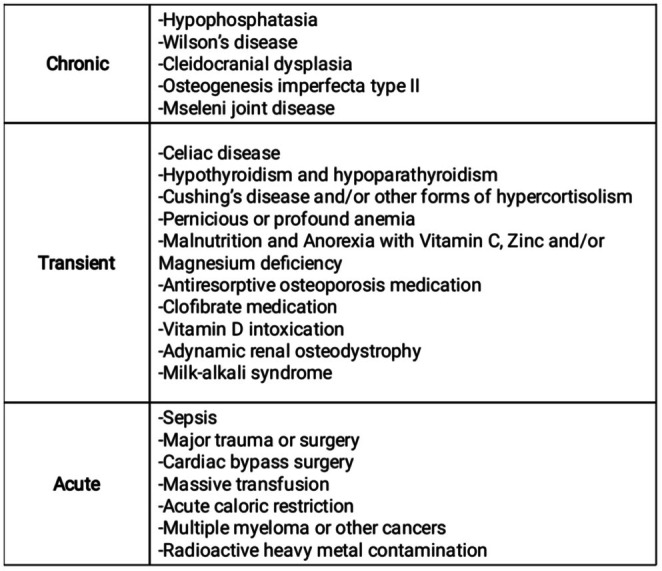 Figure 1
Peer Reviews
No public reviews on file for this paper yet. If you reviewed it on a platform where reviews are public (OpenReview, ICLR, NeurIPS, ICML), you can paste yours below so the community can read it here.
Videos
No videos yet. Explain this paper in a talk, walkthrough, or lecture? Add one.
Taxonomy
TopicsAlkaline Phosphatase Research Studies · Bone health and osteoporosis research · Bone health and treatments