Towards synthetic catechol rich protein analogues through tyrosinase catalyzed activation of a tyrosine dipeptide in continuous mode
Stefan Reinicke, Verena Jentzen, Felix Panis, Matthias Pretzler, Keven Walter, Ulrich Glebe, Annette Rompel

TL;DR
The paper proposes a green method to synthesize catechol-rich protein analogues using an enzyme in continuous mode.
Contribution
A novel continuous biocatalytic route for synthesizing catechol-rich protein analogues using tyrosinase and a tyrosine dipeptide.
Findings
Tyrosinase SinATyr was immobilized on silica microparticles for continuous synthesis.
The dipeptide substrate showed lower enzyme affinity and slower conversion than l-tyrosine.
Experimental validation confirmed the formation of desired TCC structures.
Abstract
We present a perspective towards a green synthesis route for synthetic, catechol rich protein analogues (TCC). The method relies on the oxidation of a tyrosine dipeptide in continuous mode by the immobilized tyrosinase SinATyr followed by Michael addition of a dithiol. For the dipeptide substrate a kcat value of 0.16 s−1 and a Km value of 1.6 mM were determined meaning that its conversion is slower and the affinity towards the active center of the enzyme is lower compared to the standard substrate l-tyrosine (kcat = 5.6 s−1; Km = 0.24 mM). For the continuous operation mode SinATyr is immobilized on polyelectrolyte decorated silica microparticles with a k value of 0.11 s−1 (at 1 mM dipeptide substrate) after immobilization and finally experimental proof is given that the converted dipeptide in contact with the dithiol yields the desired TCC structures. We present a perspective towards a…
Genes, proteins, chemicals, diseases, species, mutations and cell lines named across the full text — each resolved to its canonical identifier and authoritative record.
Click any figure to enlarge with its caption.
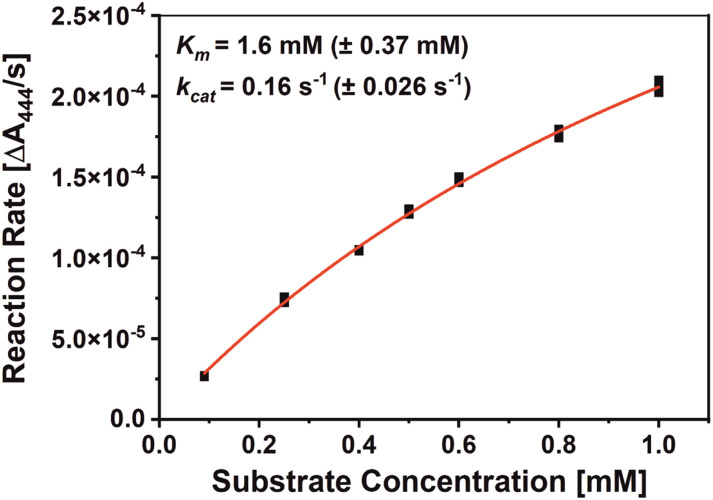 Figure 1
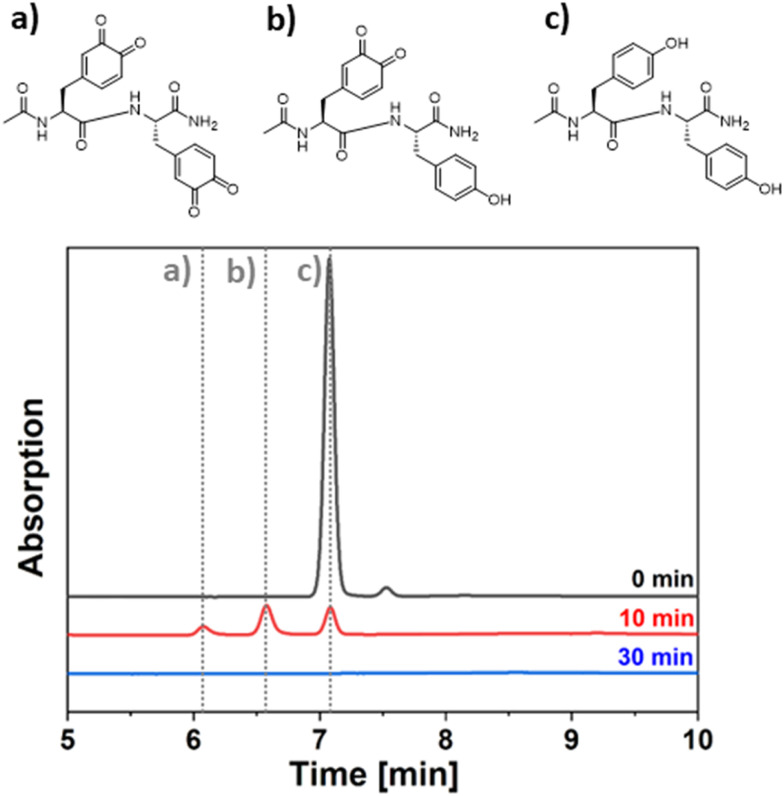 Figure 2
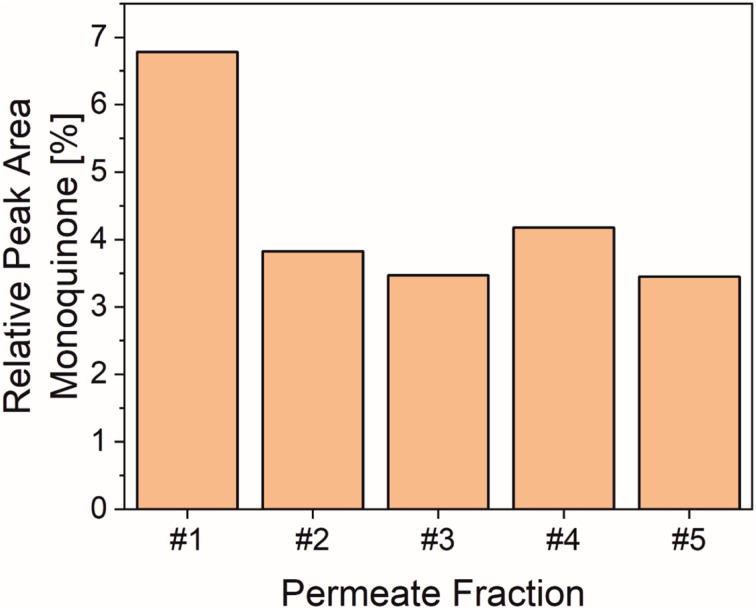 Figure 3
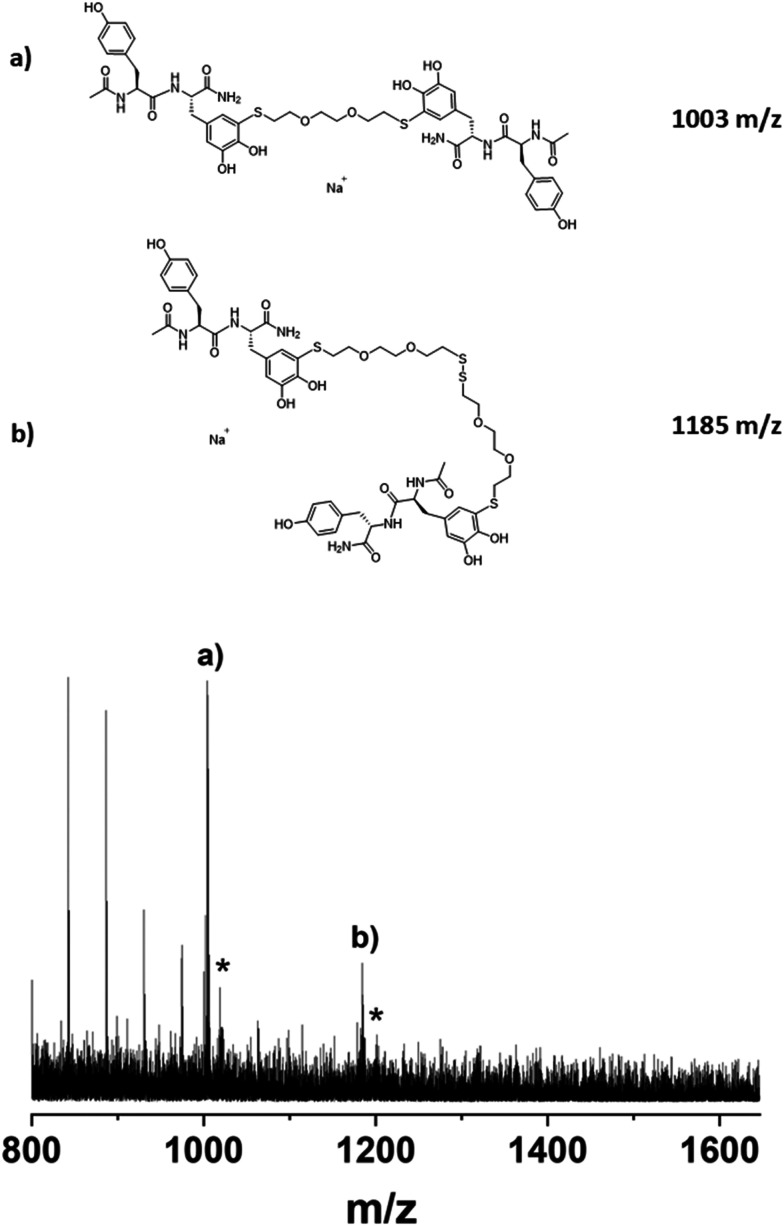 Figure 4
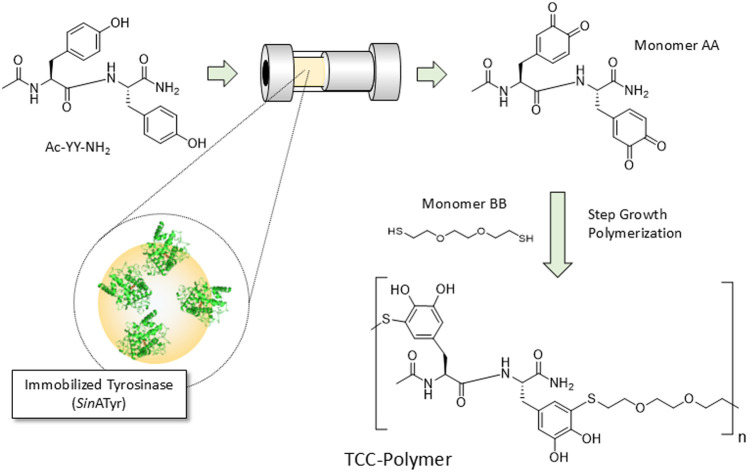 Figure 5
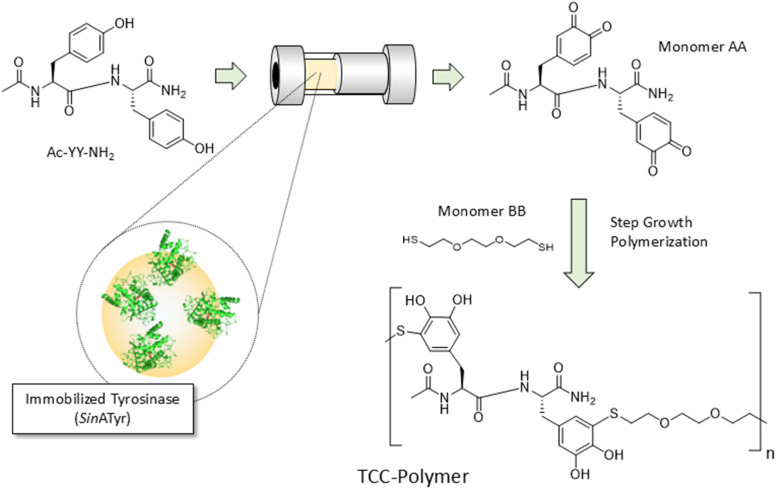 Figure 6
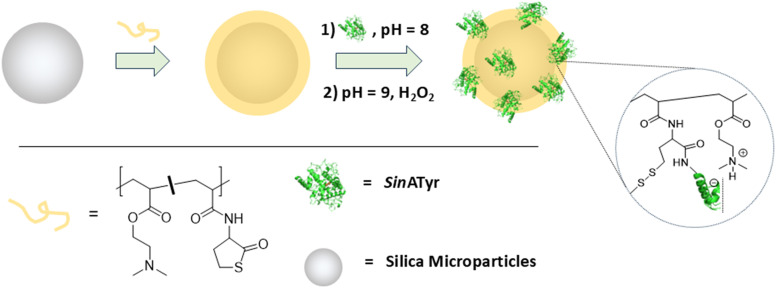 Figure 7
Peer Reviews
No public reviews on file for this paper yet. If you reviewed it on a platform where reviews are public (OpenReview, ICLR, NeurIPS, ICML), you can paste yours below so the community can read it here.
Videos
No videos yet. Explain this paper in a talk, walkthrough, or lecture? Add one.
Taxonomy
TopicsBiochemical effects in animals · melanin and skin pigmentation · Advanced Glycation End Products research