Analysis of Chemical Components and Blood‐Absorbed Components in Youjing Granules by UHPLC‐Q‐Orbitrap‐MS
Mingxin Guo, Jiaqi Zeng, Xuping Jiang, Wenjiao Zhu, Zhian Tang, Tieliang Ma

TL;DR
This study identifies the chemical components and blood-absorbed substances in Youjing Granules using advanced mass spectrometry techniques.
Contribution
The study provides a detailed chemical profile and identifies absorbed components in serum after administration of Youjing Granules.
Findings
132 chemical components were identified, including flavonoids, prenol lipids, and steroids.
24 blood-absorbed components were detected, comprising 15 prototypes and 9 metabolites.
The findings offer insights into the pharmacodynamic basis and mechanism of Youjing Granules.
Abstract
This study investigates the chemical components of Youjing Granules (YG) and identifies blood‐absorbed components in rat serum following YG administration via gavage. Chemical components and blood‐absorbed components of YG were analysed and identified using ultra‐high‐performance liquid chromatography coupled with hybrid quadrupole‐orbitrap high‐resolution mass spectrometry (UHPLC‐Q‐orbitrap‐MS). Identification was achieved by comparing retention time, precise molecular weight, secondary MS fragments with literature data and reference substances. A total of 132 chemical components were identified and analysed from YG, primarily including flavonoids, prenol lipids, organooxygen compounds, isoflavonoids, steroids and steroid derivatives, as well as cinnamic acids and derivatives. Twenty‐four blood‐absorbed components were detected in serum, comprising 15 prototype components and 9…
Genes, proteins, chemicals, diseases, species, mutations and cell lines named across the full text — each resolved to its canonical identifier and authoritative record.
Click any figure to enlarge with its caption.
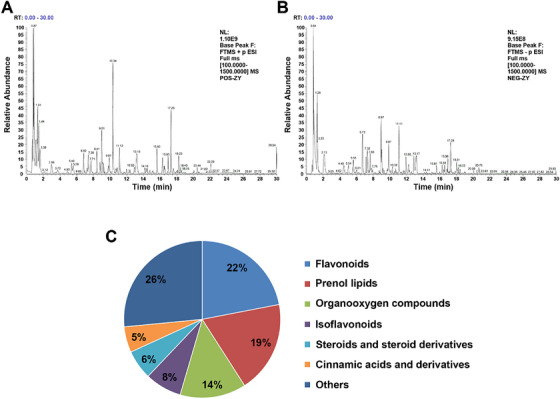 FIGURE 1
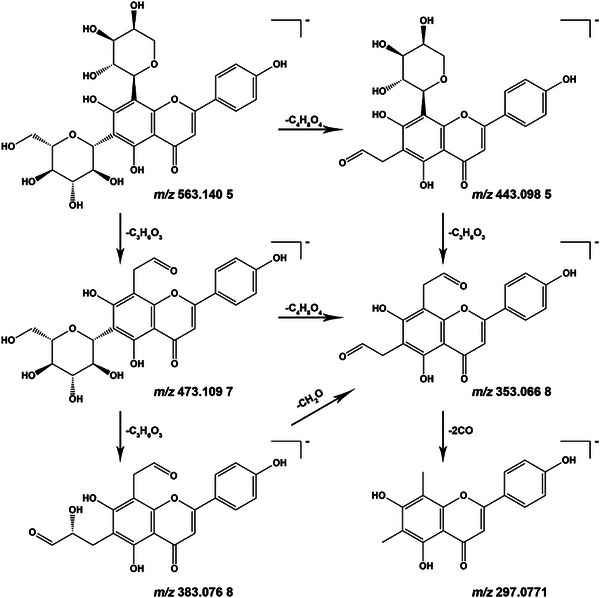 FIGURE 2
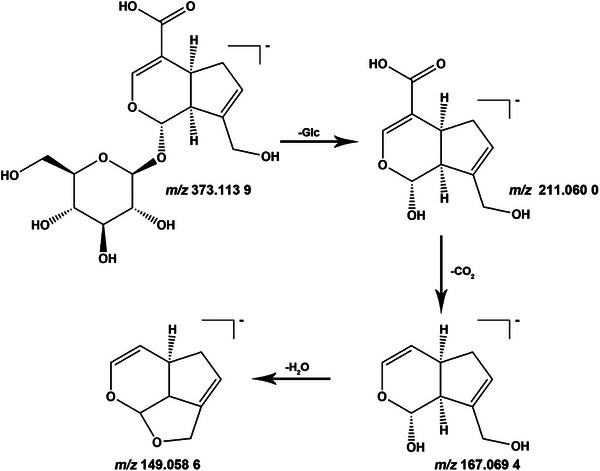 FIGURE 3
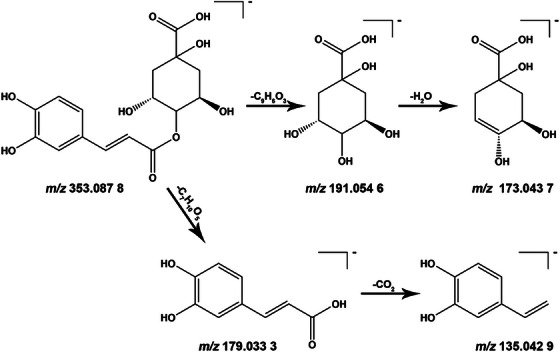 FIGURE 4
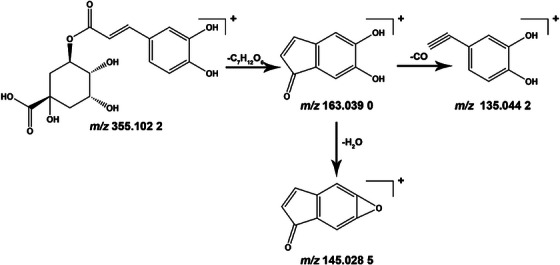 FIGURE 5
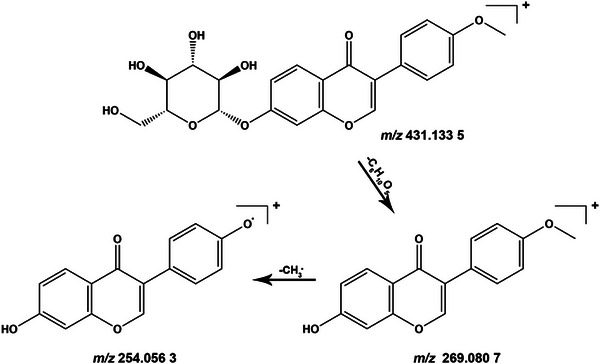 FIGURE 6
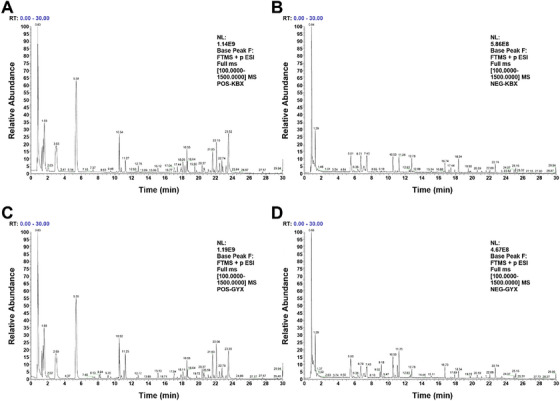 FIGURE 7
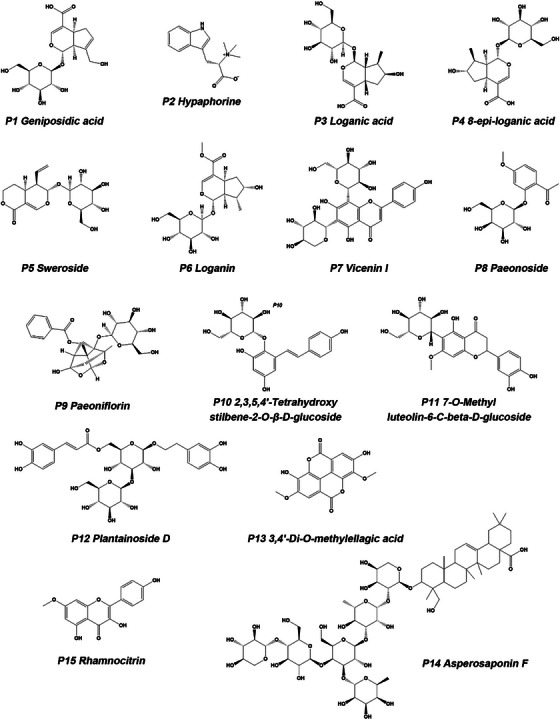 FIGURE 8
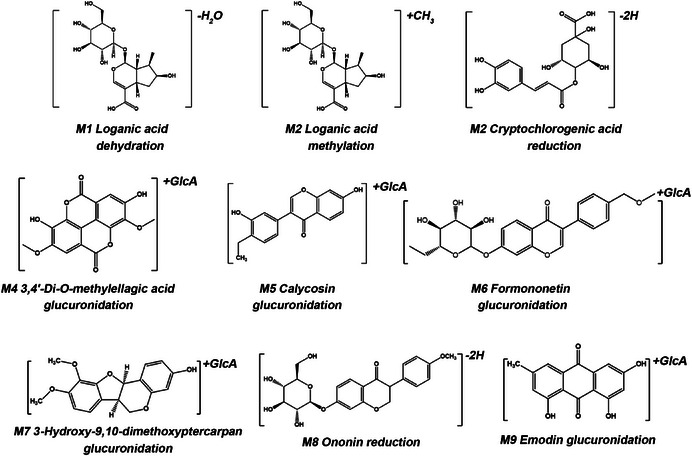 FIGURE 9
| No. | Model |
| Adducts | Experimental | Theoretical | Error (ppm) | Fragments | Formula | Identification | Source | PubChem |
|---|---|---|---|---|---|---|---|---|---|---|---|
| 1 | POS | 0.78 | [M + H]+ | 180.0869 | 180.0866 | 1.21 | 180.0872, 162.0760, 96.0453, 87.0451, 85.0295 | C6H13NO5 |
| XD, SYZ, CBZ, SCP, BX, HQ | 2723635 |
| 2 | POS | 0.80 | [M + H]+ | 133.0609 | 133.0608 | 1.27 | 74.0249, 87.0563, 88.0403, 116.0348 | C4H8N2O3 |
| CBZ, BMG, ZSW | 6267 |
| 3 | POS | 0.87 | [M + H‐H2O]+ | 487.1660 | 487.1657 | 0.45 | 325.1130, 163.0601, 145.0496, 127.0393, 97.0292, 85.0295, 69.0348 | C18H32O16 | Maltotriose | CBZ, MDP, CQZ | 439586 |
| 4 | NEG | 0.91 | [M + FA‐H]− | 387.1142 | 387.1144 | −0.57 | 341.1085, 179.0544, 161.0435, 119.0326, 113.0219, 101.0218, 96.9575 | C12H22O11 | Sucrose | CBZ, XD, SYZ, CQZ, HQ, MDP | 5988 |
| 5 | POS | 1.31 | [M + NH4]+ | 394.1712 | 394.1708 | 1.15 | 179.0703, 151.0755, 133.0650, 394.1740, 105.0704 | C16H24O10 | 8‐Debenzoylpaeoniflorin | MDP | 71452333 |
| 6 | NEG | 1.37 | [M − H]− | 243.0616 | 243.0623 | −2.59 | 243.0618, 200.0550, 152.0332, 140.0330, 110.0222, 82.0272, 66.0322 | C9H12N2O6 | Uridine | SCP, FL, CBZ, HQ | 6029 |
| 7 | NEG | 1.46 | [M + FA‐H]− | 312.0951 | 312.0950 | 0.37 | 134.0448, 266.0896, 107.0338, 59.0112 | C10H13N5O4 | Adenosine | SCP, FL, BMG, BX, CQZ | 60961 |
| 8 | POS | 1.50 | [M + H]+ | 252.1091 | 252.1091 | −0.20 | 136.0618, 117.0551, 252.1080, 144.9611 | C10H13N5O3 | Cordycepin | SCP | 6303 |
| 9 | NEG | 1.55 | [M − H]− | 282.0843 | 282.0844 | −0.36 | 150.0399, 282.0841, 133.0132, 108.0180 | C10H13N5O5 | Guanosine | SCP, FL, SYZ, CBZ, HQ | 135398635 |
| 10 | POS | 1.97 | [M + H]+ | 171.0289 | 171.0288 | 0.51 | 171.0287, 170.0957, 170.0832, 154.0498, 153.0184, 149.9403, 148.9771 | C7H6O5 | Gallic acid | ZSW, MDP, CQZ, SCP | 370 |
| 11 | NEG | 5.04 | [M − H]− | 373.1139 | 373.1140 | −0.36 | 373.1144, 211.0600, 167.0694, 149.0586, 123.0428, 89.0216, 71.0112 | C16H22O10 | Geniposidic acid | CQZ | 443354 |
| 12 | POS | 5.40 | [M + H]+ | 205.0972 | 205.0972 | 0.16 | 188.0708, 146.0602, 149.0235, 118.0657, 144.0810 | C11H12N2O2 |
| BX | 6305 |
| 13 | NEG | 5.65 | [M − H]− | 353.0878 | 353.0878 | −0.08 | 191.0548, 135.0428, 179.0334, 353.0868 | C16H18O9 | Neochlorogenic acid | XD, CBZ, BMG, TSZ, BX | 5280633 |
| 14 | POS | 6.00 | [M + H]+ | 139.0391 | 139.0390 | 0.59 | 139.0391, 137.0599, 116.9668, 111.0447, 95.0864, 93.0345, 81.0710 | C7H6O3 | Protocatechualdehyde | FL, SCP | 8768 |
| 15 | POS | 6.56 | [M + H]+ | 579.1501 | 579.1497 | 0.74 | 579.1503, 427.1019, 291.0856, 289.0692, 287.0543, 271.0608, 247.0608 | C30H26O12 | Procyanidin B1 | MDP, BX | 11250133 |
| 16 | POS | 6.80 | [M + H]+ | 247.1439 | 247.1441 | −0.81 | 188.0707, 146.0601, 60.0822, 118.0656, 144.0811 | C14H18N2O2 | Hypaphorine | — | 442106 |
| 17 | POS | 6.82 | [M + NH4]+ | 394.1706 | 394.1708 | −0.33 | 215.0915, 197.0809, 179.0703, 151.0756, 137.0598, 133.0650, 123.0809 | C16H24O10 | Loganic acid | XD | 89640 |
| 18 | POS | 7.22 | [2M + H]+ | 753.2810 | 753.2812 | −0.26 | 377.1442, 215.0915, 197.0810, 179.0704, 153.0547, 151.0754, 151.0392 | C16H24O10 | 8‐Epi‐loganic acid | CQZ | 158144 |
| 19 | POS | 7.38 | [M + H‐H2O]+ | 163.0388 | 163.0390 | −0.76 | 163.0390, 135.0442, 145.0286, 117.0340, 89.0396 | C9H8O4 | Caffeic acid | BMG, XD, SYZ, CBZ, BX, MDP, ZJC, SCP, TSZ, HQ | 689043 |
| 20 | NEG | 7.38 | [M − H]− | 495.1507 | 495.1508 | −0.27 | 137.0221, 495.1513, 93.0320, 165.0534 | C23H28O12 | Oxypaeoniflorin | MDP, FL | 21631105 |
| 21 | NEG | 7.63 | [M − H]− | 353.0877 | 353.0878 | −0.24 | 353.0878, 191.0546, 179.0333, 173.0437, 135.0429, 93.0320, 85.0269 | C16H18O9 | Cryptochlorogenic acid | XD, CBZ, BMG, TSZ, SYZ, BX, CQZ | 9798666 |
| 22 | POS | 7.71 | [M + H]+ | 355.1022 | 355.1024 | −0.50 | 163.0390, 135.0442, 145.0285, 91.0582 | C16H18O9 | Chlorogenic acid | XD, CBZ, BMG, TSZ, BX, HQ, SCP | 1794427 |
| 23 | NEG | 7.79 | [M − H]− | 367.1033 | 367.1035 | −0.43 | 193.0491, 134.0350, 367.1032, 117.0325 | C17H20O9 | 5‐ | BMG | 10133609 |
| 24 | POS | 8.99 | [M + H]+ | 359.1332 | 359.1337 | −1.37 | 197.0809, 127.0393, 179.0702, 111.0810 | C16H22O9 | Sweroside | XD, MDP, BX | 161036 |
| 25 | POS | 9.08 | [M + H]+ | 229.1069 | 229.1070 | −0.66 | 197.0809, 179.0703, 161.0597, 151.0755, 137.0599, 133.0650, 123.0808 | C11H16O5 | Loganetin | XD | 10466307 |
| 27 | POS | 9.08 | [M + NH4]+ | 408.1862 | 408.1864 | −0.50 | 179.0703, 229.1070, 109.0654, 151.0755, 81.0710, 133.0649 | C17H26O10 | Loganin | XD | 87691 |
| 28 | POS | 9.10 | [M + H]+ | 595.1659 | 595.1657 | 0.28 | 595.1658, 577.1542, 457.1158, 439.1045, 427.1031, 421.0912, 409.0915 | C27H30O15 | Vicenin 2 | SYZ, BX, CQZ, HQ | 442664 |
| 29 | NEG | 9.17 | [M + FA‐H]− | 505.1564 | 505.1563 | 0.34 | 165.0537, 150.0301, 459.1512, 293.0879 | C20H28O12 | Paeonolide | MDP | 442923 |
| 30 | NEG | 9.19 | [M + FA‐H]− | 373.1139 | 373.1140 | −0.23 | 165.0538, 150.0303, 373.1129, 160.8399 | C15H20O8 | Paeonoside | MDP | 442924 |
| 31 | NEG | 9.34 | [M + FA‐H]− | 525.1615 | 525.1614 | 0.34 | 121.0271, 525.1586, 479.1560, 167.0335 | C23H28O11 | Albiflorin | MDP, FL | 24868421 |
| 32 | POS | 9.35 | [M + H]+ | 613.1401 | 613.1399 | 0.32 | 319.0449, 153.0183, 481.0981, 85.0295 | C26H28O17 | Myricetin 3‐ | SYZ | 101641678 |
| 33 | POS | 9.53 | [M + H]+ | 153.0546 | 153.0546 | −0.01 | 153.0548, 131.9745, 125.0601, 121.0289, 113.9643, 111.0447, 109.1019 | C8H8O3 | Isovanilline | SYZ, CBZ, BMG, FL, BX | 12127 |
| 34 | POS | 9.69 | [M + H]+ | 369.1179 | 369.1180 | −0.17 | 177.0547, 145.0285, 117.0340, 91.0586 | C17H20O9 | 4‐ | CBZ, BMG, BX | 10177048 |
| 35 | NEG | 9.69 | [M − H]− | 405.1190 | 405.1191 | −0.21 | 243.0656, 405.1191, 137.0222, 173.0589 | C20H22O9 | Piceatannol 3′‐ | ZSW | 11968990 |
| 36 | POS | 9.71 | [M + H]+ | 165.0546 | 165.0546 | 0.13 | 147.0442, 119.0497, 91.0552, 163.0390 | C9H8O3 |
| BMG, BX, SCP, HQ, CQZ | 637542 |
| 37 | POS | 9.76 | [M + H]+ | 565.1554 | 565.1552 | 0.35 | 565.1547, 547.1442, 409.0911, 391.0818, 379.0819, 361.0703, 349.0702 | C26H28O14 | Vicenin I | SYZ, CBZ, BMG, SCP, HQ | 13644663 |
| 38 | NEG | 9.87 | [M + FA‐H]− | 525.1610 | 525.1614 | −0.85 | 121.0270, 449.1458, 525.1639, 479.1563 | C23H28O11 | Paeoniflorin | MDP, FL | 442534 |
| 39 | POS | 9.96 | [M + H]+ | 417.1178 | 417.1180 | −0.40 | 255.0651, 199.0755, 417.1181, 227.0702 | C21H20O9 | Daidzin | SYZ | 107971 |
| 40 | NEG | 9.99 | [M − H]− | 563.1405 | 563.1406 | −0.19 | 563.1403, 353.0668, 443.0985, 297.0771, 383.0768, 473.1097 | C26H28O14 | Schaftoside | SYZ, CBZ, CQZ, SCP | 442658 |
| 41 | POS | 10.09 | [M + H]+ | 449.1077 | 449.1078 | −0.21 | 449.1085, 431.0977, 413.0864, 395.0764, 365.0661, 353.0658, 339.0862 | C21H20O11 | Isoorientin | CQZ | 114776 |
| 133 | NEG | 10.10 | [M − H]− | 287.0561 | 287.0561 | −0.09 | 287.0556, 269.0462, 259.0613, 225.0544, 165.0172, 163.0016, 153.0169 | C15H12O6 | 2,3‐Dihydrofisetin | SYZ, ZJC | 5317435 |
| 42 | NEG | 10.22 | [M − H]− | 447.0935 | 447.0933 | 0.45 | 447.0932, 357.0613, 327.0510, 299.0553, 298.0474, 297.0405, 133.0270 | C21H20O11 | Orientin | — | 5281675 |
| 43 | POS | 10.40 | [M + H]+ | 183.0652 | 183.0652 | −0.10 | 183.0652, 159.9692, 155.0703, 140.0468, 131.9744, 123.0444, 113.9643 | C9H10O4 | 3,5‐Dimethoxy‐4‐hydroxybenzaldehyde | SYZ | 8655 |
| 44 | POS | 10.58 | [M + H]+ | 465.1028 | 465.1028 | 0.13 | 303.0498, 61.0299, 85.0295, 229.0495 | C21H20O12 | Hyperoside | TSZ, ZSW, HQ | 5281643 |
| 45 | POS | 10.61 | [M + NH4]+ | 760.3017 | 760.3022 | −0.72 | 419.1691, 401.1588, 265.1068, 235.0962, 217.0860, 205.0861, 190.0624 | C34H46O18 | Eleutheroside E | XD, SYZ | 71312557 |
| 46 | NEG | 10.65 | [M − H]− | 611.1620 | 611.1618 | 0.41 | 611.1613, 445.0984, 343.0666, 301.0557, 193.0129, 169.0121, 165.0537 | C27H32O16 | Suffruticoside C | MDP | 10258206 |
| 47 | POS | 10.79 | [M + H]+ | 193.0496 | 193.0495 | 0.20 | 193.0498, 133.0286, 178.0261, 137.0598 | C10H8O4 | Isoscopoletin | CBZ | 69894 |
| 48 | NEG | 10.80 | [M − H]− | 555.1720 | 555.1719 | 0.20 | 151.0379, 479.1558, 555.1722, 165.0538 | C25H32O14 | 10‐Hydroxyoleuropein | SYZ | 6440747 |
| 49 | POS | 10.83 | [M + H‐H2O]+ | 177.0546 | 177.0546 | −0.23 | 145.0285, 117.0340, 177.0547, 89.0396, 149.0599 | C10H10O4 | Ferulic acid | BMG, SYZ, SCP, TSZ, HQ, ZSW, CQZ | 445858 |
| 50 | NEG | 11.04 | [M − H]− | 431.0981 | 431.0984 | −0.55 | 311.0562, 431.0983, 283.0610, 161.0224, 341.0686 | C21H20O10 | Vitexin | SYZ | 5280441 |
| 51 | NEG | 11.07 | [M − H]− | 577.1565 | 577.1563 | 0.34 | 293.0454, 577.1576, 413.0911, 59.0112 | C27H30O14 | Vitexin rhamnoside | — | 5282151 |
| 52 | NEG | 11.08 | [M + FA‐H]− | 491.1192 | 491.1195 | −0.67 | 283.0612, 268.0377, 491.1203, 240.0426 | C22H22O10 | Calycosin‐7‐ | HQ, SYZ | 5318267 |
| 53 | POS | 11.10 | [M + H]+ | 609.1812 | 609.1814 | −0.31 | 609.1808, 351.0851, 327.0860, 323.0914, 308.0667, 297.0757, 285.0751 | C28H32O15 | Spinosin | BX, XD | 155692 |
| 54 | POS | 11.12 | [M + H]+ | 407.1333 | 407.1337 | −0.99 | 245.0808, 199.0755, 125.0237, 151.0390, 227.0702, 85.0295 | C20H22O9 | 2,3,5,4′‐Tetrahydroxy stilbene‐2‐ | ZSW | 5321884 |
| 55 | POS | 11.16 | [M + H]+ | 305.0651 | 305.0656 | −1.59 | 304.0533, 287.0550, 259.0604, 231.0654, 195.0292, 153.0183, 149.0236 | C15H12O7 | Taxifolin | ZJC, BX, HQ | 439533 |
| 56 | POS | 11.19 | [M + H]+ | 433.1129 | 433.1129 | −0.09 | 433.1135, 415.1028, 379.0813, 367.0808, 349.0713, 337.0705, 323.0922 | C21H20O10 | Isovitexin | SYZ, ZJC | 162350 |
| 57 | POS | 11.28 | [M + H]+ | 581.1501 | 581.1501 | 0.01 | 287.0549, 449.1082, 85.0295, 73.0297 | C26H28O15 | Leucoside | SYZ | 44566720 |
| 58 | POS | 11.37 | [M + H]+ | 465.1028 | 465.1028 | 0.11 | 303.0497, 85.0295, 229.0496, 153.0183 | C21H20O12 | Isoquercitrin | TSZ, BX, CQZ, MDP | 5280804 |
| 59 | NEG | 11.63 | [M − H]− | 623.1985 | 623.1981 | 0.51 | 161.0224, 623.1987, 133.0272, 113.0219, 135.0428, 461.1669 | C29H36O15 | Acteoside | CQZ, HQ | 5281800 |
| 60 | NEG | 11.68 | [M + FA‐H]− | 509.1298 | 509.1301 | −0.52 | 509.1295, 341.0888, 327.0731, 197.0446, 183.0281, 181.0494, 167.0331 | C22H24O11 | 7‐ | SYZ | 5319708 |
| 61 | POS | 11.68 | [M + H]+ | 433.1130 | 433.1129 | 0.08 | 271.0599, 433.1132, 153.0183, 215.0703 | C21H20O10 | Sophoricoside | SYZ, CQZ, HQ | 5321398 |
| 62 | POS | 11.79 | [M + NH4]+ | 658.2345 | 658.2342 | 0.46 | 163.0389, 325.0916, 135.0442, 145.0287 | C29H36O16 | Plantainoside D | CQZ | 9986606 |
| 63 | POS | 11.91 | [M + H]+ | 265.0969 | 265.0972 | −0.80 | 265.0971, 206.0840, 105.0343, 247.0864 | C16H12N2O2 | Perlolyrine | XD, BMG | 160179 |
| 64 | POS | 11.95 | [M + H]+ | 517.1341 | 517.1341 | 0.08 | 163.0390, 135.0442, 145.0285, 499.1241 | C25H24O12 | Isochlorogenic acid B | XD, CBZ, BMG, SCP, CQZ, TSZ | 5281780 |
| 65 | NEG | 11.99 | [M − H]− | 447.0933 | 447.0933 | 0.08 | 447.0932, 284.0327, 255.0298, 227.0341, 285.0393 | C21H20O11 | Astragalin | SYZ, SCP, TSZ | 5282102 |
| 66 | POS | 12.04 | [M + H]+ | 595.1658 | 595.1657 | 0.09 | 287.0548, 71.0505, 85.0296, 449.1087 | C27H30O15 | Nicotiflorin | CQZ, SCP | 5318767 |
| 67 | NEG | 12.24 | [M − H]− | 515.1192 | 515.1195 | −0.66 | 191.0546, 179.0332, 135.0429, 353.0878, 515.1195 | C25H24O12 | Isochlorogenic acid A | XD, SYZ, CBZ, BMG, BX, HQ, TSZ | 6474310 |
| 68 | POS | 12.29 | [M + NH4]+ | 642.2390 | 642.2392 | −0.38 | 163.0390, 325.0916, 135.0442, 145.0285 | C29H36O15 | Isoacteoside | CQZ | 6476333 |
| 69 | POS | 12.38 | [M + NH4]+ | 538.2284 | 538.2283 | 0.17 | 341.1384, 235.0965, 205.0855, 187.0754, 175.0755, 160.0520, 137.0598 | C26H32O11 | (+)‐Pinoresinol 4‐ | XD, CQZ, HQ, TSZ | 486614 |
| 70 | NEG | 12.67 | [M − H]− | 577.1566 | 577.1563 | 0.57 | 269.0454, 577.1578, 268.0376, 269.0760 | C27H30O14 | Isorhoifolin | CQZ | 9851181 |
| 71 | POS | 12.67 | [M + H]+ | 579.1708 | 579.1708 | −0.12 | 271.0599, 579.1703, 153.0181, 119.0496 | C27H30O14 | Rhoifolin | CQZ, SCP | 5282150 |
| 72 | POS | 12.74 | [M + H]+ | 479.1184 | 479.1184 | 0.08 | 317.0656, 302.0423, 85.0295, 153.0179 | C22H22O12 | Isorhamnetin‐3‐ | — | 5318645 |
| 73 | POS | 12.86 | [M + NH4]+ | 540.2074 | 540.2076 | −0.27 | 168.0655, 540.2076, 193.0860, 161.0597 | C25H30O12 | 6‐p‐Methoxycinnamoyl catalpol | SYZ | 6325621 |
| 74 | NEG | 12.88 | [M − H]− | 515.1191 | 515.1195 | −0.81 | 515.1191, 353.0878, 191.0546, 179.0333, 173.0437, 135.0428, 93.0319 | C25H24O12 | Isochlorogenic acid C | XD, SYZ, CBZ, SCP, BX, HQ, TSZ | 6474309 |
| 75 | NEG | 12.88 | [M + FA‐H]− | 801.2102 | 801.2095 | 0.88 | 283.0246, 298.0481, 593.1516, 755.2043, 255.0293 | C33H40O20 | Complanatoside B | SYZ | 10440090 |
| 76 | NEG | 13.17 | [M + FA‐H]− | 791.2621 | 791.2615 | 0.76 | 745.2580, 583.2037, 513.1604, 459.1519, 209.0804, 193.0483, 141.0172 | C33H46O19 | Cantleyoside | XD | 12302406 |
| 77 | POS | 13.30 | [M + H]+ | 463.1231 | 463.1235 | −0.83 | 301.0705, 463.1232, 286.0472, 258.0522 | C22H22O11 | Diosmetin‐7‐ | SYZ, BX, CQZ, HQ | 11016019 |
| 78 | NEG | 13.30 | [M + FA‐H]− | 669.1678 | 669.1672 | 0.98 | 299.0558, 461.1091, 283.0247, 271.0609, 165.0172, 298.0478 | C28H32O16 | Complanatuside | SYZ | 5492406 |
| 79 | NEG | 13.67 | [M − H]− | 431.0983 | 431.0984 | −0.18 | 269.0454, 431.0978, 240.0422, 225.0549 | C21H20O10 | Oroxin A | HQ | 5320313 |
| 80 | NEG | 14.01 | [M − H]− | 717.1470 | 717.1461 | 1.31 | 717.1467, 519.0928, 339.0501, 321.0403, 295.0601, 293.0448, 279.0306 | C36H30O16 | Salvianolic acid B | — | 11629084 |
| 81 | POS | 14.16 | [M + H]+ | 431.1335 | 431.1337 | −0.44 | 269.0807, 431.1346, 254.0563, 213.0910 | C22H22O9 | Ononin | SYZ, BMG, HQ | 442813 |
| 82 | POS | 14.16 | [M + H]+ | 284.1277 | 284.1281 | −1.35 | 147.0441, 121.0652, 284.1282, 119.0496 | C17H17NO3 |
| — | 5372945 |
| 83 | NEG | 14.17 | [M − H]− | 445.0777 | 445.0776 | 0.15 | 269.0454, 445.0779, 113.0220, 85.0268 | C21H18O11 | Baicalin | SYZ, SCP, HQ, ZSW, CQZ | 64982 |
| 84 | POS | 14.34 | [M + H]+ | 197.0807 | 197.0808 | −0.62 | 197.0809, 169.0859, 154.0625, 139.0391, 138.0676, 131.9744, 123.0444 | C10H12O4 | 2,4,5‐Trimethoxybenzaldehyde | SCP | 20525 |
| 85 | NEG | 14.41 | [M − H]− | 599.1773 | 599.1770 | 0.53 | 599.1777, 447.1276, 431.1352, 429.1174, 281.0667, 179.0330, 149.0585 | C30H32O13 | Mudanpioside C | MDP | 21631098 |
| 86 | POS | 14.47 | [M + H]+ | 331.1536 | 331.1540 | −1.19 | 331.1541, 313.1436, 287.1274, 285.1118, 255.1016, 253.1229, 253.0866 | C19H22O5 | Magnolignan D | CBZ | 5319189 |
| 87 | NEG | 14.53 | [M − H]− | 253.0503 | 253.0506 | −1.27 | 253.0502, 224.0460, 217.8488, 209.0590 | C15H10O4 | Daidzein | SYZ, HQ | 5281708 |
| 88 | POS | 15.06 | [M + NH4]+ | 618.2178 | 618.2181 | −0.58 | 317.1013, 267.0854, 249.0757, 179.0706, 151.0757, 123.0442, 105.0343 | C30H32O13 | Benzoyloxypaeoniflorin | MDP | 21631107 |
| 89 | NEG | 15.09 | [M + FA‐H]− | 1109.5385 | 1109.5385 | −0.08 | 1063.5331, 101.0218, 1061.5188, 163.0591, 205.0708, 917.4738 | C51H84O23 | Protogracillin | BX | 441892 |
| 90 | POS | 15.13 | [M + H‐H2O]+ | 301.1067 | 301.1070 | −1.01 | 167.0704, 301.1068, 152.0468, 134.0364 | C17H18O6 | Paeonilactone‐C | SYZ, MDP | 10471123 |
| 91 | POS | 15.42 | [M + H]+ | 303.0495 | 303.0499 | −1.53 | 303.0497, 123.0445, 167.0704, 153.0180 | C15H10O7 | Quercetin | ZJC, ZSW, MDP | 5280343 |
| 92 | POS | 15.60 | [M + H]+ | 285.0752 | 285.0757 | −1.83 | 285.0755, 270.0520, 225.0545, 253.0494 | C16H12O5 | Calycosin | SYZ, HQ | 5280448 |
| 93 | POS | 15.69 | [M + H]+ | 243.1013 | 243.1016 | −1.21 | 243.1015, 107.0498, 135.0442, 134.0728, 211.0763, 121.0651 | C15H14O3 | 4′‐Methoxyresveratrol | 非药味特征化合物/复方 | 6255462 |
| 94 | NEG | 15.71 | [M − H]− | 329.0303 | 329.0303 | 0.14 | 329.0309, 314.0066, 270.9882, 298.9836, 312.9996 | C16H10O8 | 3,4′‐Di‐ | SYZ | 5491816 |
| 95 | NEG | 15.98 | [M − H]− | 431.0981 | 431.0984 | −0.67 | 269.0454, 431.0984, 225.0545, 240.0418 | C21H20O10 | Emodin‐8‐β‐ | XD, HQ | 99649 |
| 96 | NEG | 16.28 | [M + FA‐H]− | 461.1088 | 461.1089 | −0.25 | 461.1090, 299.0554, 298.0480, 283.0603, 283.0251, 268.0376, 255.0295 | C21H20O9 | Chrysophanein | SYZ | 6324923 |
| 97 | POS | 16.28 | [M + H‐H2O]+ | 1031.5404 | 1031.5421 | −1.61 | 1031.5417, 85.0294, 253.1948, 129.0548 | C51H84O22 | Protodioscin | BX | 441891 |
| 98 | POS | 16.86 | [M + H]+ | 271.0597 | 271.0601 | −1.65 | 271.0601, 153.0182, 215.0691, 243.0657 | C15H10O5 | Genistein | SYZ | 5280961 |
| 99 | NEG | 16.88 | [M + FA‐H]− | 1281.6113 | 1281.6121 | −0.67 | 911.5015, 1235.6063, 603.3905, 471.3477, 749.4485 | C59H96O27 | Macranthoidin A | XD | 14564503 |
| 100 | POS | 16.95 | [M + NH4]+ | 602.2228 | 602.2232 | −0.68 | 105.0342, 179.0702, 267.0862, 151.0755, 249.0756, 81.0346 | C30H32O12 | Benzoylpaeoniflorin | MDP, FL | 21631106 |
| 101 | NEG | 17.06 | [M − H]− | 971.4869 | 971.4857 | 1.23 | 603.3904, 927.4962, 601.3751, 971.4858 | C48H76O20 | Sophoraflavoside II | SYZ | 197561 |
| 102 | NEG | 17.12 | [M + FA‐H]− | 1119.5597 | 1119.5593 | 0.37 | 749.4485, 1073.5543, 1119.5608, 471.3478 | C53H86O22 | Dipsacoside B | XD | 21627940 |
| 103 | NEG | 17.29 | [M + FA‐H]− | 973.5017 | 973.5014 | 0.40 | 603.3907, 973.5012, 927.4973, 323.0985 | C47H76O18 | Asperosaponin VI | XD | 14284436 |
| 104 | NEG | 17.50 | [M − H]− | 299.0559 | 299.0561 | −0.83 | 299.0560, 284.0323, 285.0374, 148.0144 | C16H12O6 | 4′‐Hydroxywogonin | SYZ | 5322078 |
| 105 | POS | 17.60 | [M + H]+ | 167.0701 | 167.0703 | −0.91 | 167.0704, 149.0597, 121.0654, 125.0607 | C9H10O3 | Paeonol | MDP, BMG, BX, SCP | 11092 |
| 106 | POS | 17.69 | [M + NH4]+ | 1048.5681 | 1048.5687 | −0.53 | 1048.5692, 1031.5424, 869.4933, 723.4330, 577.3739, 415.3207, 271.2054 | C51H82O21 | Pseudoprotodioscin | BX | 51346147 |
| 107 | NEG | 17.73 | [M − H]− | 971.4868 | 971.4857 | 1.06 | 601.3748, 603.3902, 925.4823, 971.4868 | C48H76O20 | Dianoside G | SYZ | 125937 |
| 108 | NEG | 18.01 | [M − H]− | 329.2331 | 329.2333 | −0.72 | 329.2334, 211.1329, 229.1437, 171.1008 | C18H34O5 | 9,10,13‐Trihydroxy‐11‐octadecenoic acid | SYZ, CBZ, FL | 5282965 |
| 109 | NEG | 18.01 | [M + FA‐H]− | 991.5126 | 991.5119 | 0.74 | 991.5121, 945.5077, 119.0325, 113.0217, 101.0218, 89.0218, 71.0111 | C47H78O19 | Astragaloside V | HQ | 71448939 |
| 110 | NEG | 18.22 | [M − H]− | 267.0660 | 267.0663 | −0.89 | 267.0661, 252.0423, 223.0391, 251.0344 | C16H12O4 | Formononetin | SYZ, HQ | 5280378 |
| 111 | POS | 18.43 | [M + NH4]+ | 930.5406 | 930.5421 | −1.59 | 930.5421, 439.3575, 205.1953, 203.1796, 191.1794, 189.1638, 145.0496 | C47H76O17 | Soyasaponin II | SYZ, HQ | 443614 |
| 112 | POS | 18.43 | [M + H]+ | 785.4671 | 785.4682 | −1.36 | 784.5805, 772.2932, 734.2094, 704.4370, 473.3618, 455.3503, 437.3419 | C41H68O14 | Astragaloside IV | HQ | 13943299 |
| 113 | POS | 18.50 | [M + H]+ | 301.1066 | 301.1070 | −1.53 | 167.0704, 301.1071, 299.0914, 152.0469 | C17H16O5 | 3‐Hydroxy‐9,10‐dimethoxyptercarpan | HQ | 14077830 |
| 114 | POS | 18.68 | [M + H]+ | 303.1222 | 303.1227 | −1.67 | 123.0445, 167.0704, 133.0650, 161.0598 | C17H18O5 | 7,2′‐Dihydroxy‐3′,4′‐dimethoxyisoflavan | HQ | 602152 |
| 115 | NEG | 18.94 | [M − H]− | 1351.6523 | 1351.6540 | −1.24 | 1351.6537, 1205.5969, 471.3477, 749.4493 | C64H104O30 | Asperosaponin F | XD | 11968864 |
| 116 | POS | 18.97 | [M + H]+ | 943.5252 | 943.5261 | −0.99 | 943.5297, 943.3523, 894.6891, 865.4182, 797.4710, 781.4672, 635.4149 | C48H78O18 | Soyasaponin Bb | SYZ, HQ | 122097 |
| 117 | POS | 19.17 | [M + H]+ | 301.0703 | 301.0707 | −1.25 | 283.0600, 199.0752, 301.0711, 227.0703 | C16H12O6 | Rhamnocitrin | SYZ, HQ | 5320946 |
| 118 | POS | 19.59 | [M + H]+ | 209.1171 | 209.1172 | −0.38 | 209.1172, 207.1744, 194.0939, 189.1639, 181.0860, 179.0711, 178.0994 | C12H16O3 | β‐Asarone | SCP | 5281758 |
| 119 | POS | 20.00 | [M + H–H2O]+ | 231.1377 | 231.1380 | −0.86 | 231.1380, 213.1270, 189.0911, 185.1326, 175.0755, 163.0754, 161.0597 | C15H20O3 | Atractylenolide III | CBZ, SYZ, FL | 155948 |
| 120 | NEG | 20.00 | [M + FA‐H]− | 795.4544 | 795.4536 | 1.07 | 795.4571, 749.4501, 603.3874, 471.3483, 89.0217, 71.0111, 59.0113 | C41H66O12 | α‐Hederin | XD | 73296 |
| 121 | POS | 20.04 | [M + H]+ | 417.1904 | 417.1908 | −0.86 | 417.1893, 249.1125, 219.1027, 208.1097, 193.0861, 181.0859, 165.0547 | C23H28O7 | Gomisin O | SYZ | 5317808 |
| 122 | POS | 20.44 | [M + H–H2O]+ | 437.3412 | 437.3414 | −0.40 | 437.3423, 215.1796, 203.1798, 201.1641, 189.1639, 159.1172, 147.1170 | C30H48O4 | Subprogenin A | FL | 101605318 |
| 123 | POS | 20.44 | [2M + H]+ | 1209.8022 | 1209.8023 | −0.09 | 737.4458, 605.4058, 587.3951, 455.3520, 437.3416, 409.3463, 391.3356 | C35H56O8 | Hederagenin 3‐ | XD | 441928 |
| 124 | POS | 20.53 | [M + H]+ | 445.2118 | 445.2122 | −0.78 | 105.0343, 194.1178, 117.0704, 224.1069, 91.0546, 134.0965 | C27H28N2O4 | Asperglaucide | XD, CBZ, FL, CQZ | 10026486 |
| 125 | NEG | 20.70 | [M − H]− | 269.0453 | 269.0455 | −0.87 | 269.0454, 225.0547, 62.9614, 241.0504 | C15H10O5 | Emodin | ZSW, XD, CBZ, SCP | 3220 |
| 126 | NEG | 21.17 | [M + FA‐H]− | 913.4815 | 913.4802 | 1.49 | 913.4794, 867.4757, 721.4150, 163.0591, 119.0322, 113.0220, 101.0217 | C45H72O16 | Dioscin | BX, CQZ | 119245 |
| 127 | POS | 21.47 | [M + H]+ | 219.1742 | 219.1743 | −0.60 | 219.1745, 201.1639, 175.1483, 161.1326, 159.1166, 155.9335, 153.9370 | C15H22O | Nootkanone | XD, BMG | 1268142 |
| 128 | NEG | 21.54 | [M + FA‐H]− | 315.2538 | 315.2541 | −1.09 | 315.2537, 116.9259, 297.2439, 141.1258 | C17H34O2 | Methyl Palmitate | SYZ, CBZ, SCP, FL, CQZ, HQ, ZSW, MDP | 8181 |
| 129 | POS | 21.56 | [M + H]+ | 233.1534 | 233.1536 | −0.73 | 233.1539, 215.1432, 187.1484, 177.0905, 159.0803, 151.0753, 131.0857 | C15H20O2 | Atractylenolide II | SYZ, CBZ, BMG, FL, BX | 14448070 |
| 130 | NEG | 21.69 | [M + FA‐H]− | 767.4232 | 767.4223 | 1.24 | 767.4221, 721.4141, 264.6903, 251.0151, 249.0591, 215.9853, 166.6230 | C39H62O12 | Paris saponin V | BX | 11061578 |
| 131 | POS | 22.95 | [M + H]+ | 285.0755 | 285.0757 | −0.90 | 285.0754, 284.3310, 284.2948, 261.8956 | C16H12O5 | Physcion | ZSW, TSZ | 10639 |
| 132 | POS | 23.51 | [M + H–H2O]+ | 467.3521 | 467.3520 | 0.27 | 467.3543, 449.3389, 423.1747, 311.2357, 293.2268, 196.4135, 140.6940 | C31H48O4 | Dehydrotumulosic acid | FL | 15225964 |
| No. | Identification |
| Formula | Adducts | Experimental | Theoretical | Error (ppm) | Source |
|---|---|---|---|---|---|---|---|---|
| P1 | Geniposidic acid | 5.09 | C16H22O10 | [M − H]− | 373.1137 | 373.1140 | −0.80 | CQZ |
| P2 | Hypaphorine | 6.78 | C14H18N2O2 | [M + H]+ | 247.1442 | 247.1441 | 0.42 | — |
| P3 | Loganic acid | 7.15 | C16H24O10 | [M − H]− | 375.1293 | 375.1297 | −0.96 | XD |
| P4 | 8‐Epi‐loganic acid | 7.22 | C16H24O10 | [M + H]+ | 377.1441 | 377.1442 | −0.23 | CQZ |
| P5 | Sweroside | 8.98 | C16H22O9 | [M + H]+ | 359.1338 | 359.1337 | 0.34 | XD, MDP, BJ |
| P6 | Loganin | 9.06 | C17H26O10 | [M + NH4]+ | 408.1868 | 408.1870 | −0.42 | XD |
| P7 | Vicenin I | 9.20 | C26H28O14 | [M + H]+ | 565.1549 | 565.1552 | −0.53 | SYZ, CBZ, BMG, SCP, HQ |
| P8 | Paeonoside | 9.20 | C15H20O8 | [M + FA‐H]+ | 373.1137 | 373.1140 | −0.79 | MDP |
| P9 | Paeoniflorin | 9.88 | C23H28O11 | [M + NH4]+ | 498.1976 | 498.1975 | 0.09 | MDP, FL |
| P10 | 2,3,5,4′‐Tetrahydroxy stilbene‐2‐ | 11.59 | C20H22O9 | [M + NH4]+ | 424.1606 | 424.1608 | −0.41 | ZSW |
| P11 | 7‐ | 12.13 | C22H24O11 | [M − H]− | 463.1246 | 463.1246 | 0.09 | SYZ |
| P12 | Plantainoside D | 12.79 | C29H36O16 | [M − H]− | 639.1930 | 639.1931 | −0.05 | CQZ |
| P13 | 3,4′‐Di‐ | 15.69 | C16H10O8 | [M − H]− | 329.0303 | 329.0303 | 0.09 | SYZ |
| P14 | Asperosaponin F | 18.94 | C64H104O30 | [M − H]− | 1351.6544 | 1351.6540 | 0.35 | XD |
| P15 | Rhamnocitrin | 19.18 | C16H12O6 | [M + H]+ | 301.0702 | 301.0707 | −1.67 | SYZ, HQ |
| No. |
| Formula | Adducts | Experimental | Theoretica | Error (ppm) | Identification | Source |
|---|---|---|---|---|---|---|---|---|
| M1 | 8.96 | C16H22O9 | [M + FA‐H]− | 403.1242 | 403.1246 | −0.89 | Loganic acid dehydration | XD |
| M2 | 9.03 | C17H26O10 | [M + FA‐H]− | 435.1504 | 435.1508 | −0.91 | Loganic acid methylation | XD |
| M3 | 9.15 | C16H20O9 | [M + FA‐H]− | 401.1086 | 401.1089 | −0.88 | Cryptochlorogenic acid reduction | XD, CBZ, BMG, TSZ, SYZ, BJ, CQZ |
| M4 | 11.70 | C22H18O14 | [M + NH4]+ | 524.1044 | 524.1040 | 0.69 | 3,4′‐Di‐ | SYZ |
| M5 | 12.52 | C22H20O11 | [M − H]− | 459.0933 | 459.0933 | −0.02 | Calycosin glucuronidation | SYZ, HQ |
| M6 | 14.20 | C22H20O10 | [M − H]− | 443.0981 | 443.0984 | −0.53 | Formononetin glucuronidation | SYZ, HQ |
| M7 | 15.30 | C23H24O11 | [M + NH4]+ | 494.1661 | 494.1662 | −0.23 | 3‐Hydroxy‐9,10‐dimethoxyptercarpan glucuronidation | HQ |
| M8 | 15.44 | C22H24O9 | [M + FA‐H]+ | 477.1400 | 477.1402 | −0.41 | Ononin reduction | SYZ, BMG, HQ |
| M9 | 17.32 | C21H18O11 | [M − H]− | 445.0778 | 445.0776 | 0.27 | Emodin glucuronidation | ZSW, XD, CBZ, SCP |
- —National Natural Science Foundation of China10.13039/501100001809
- —The Foundation of the Wuxi Administration of Traditional Chinese Medicine
- —The Top Talent Support Program for Young and Middle‐aged People of the Wuxi Health Committee
Peer Reviews
No public reviews on file for this paper yet. If you reviewed it on a platform where reviews are public (OpenReview, ICLR, NeurIPS, ICML), you can paste yours below so the community can read it here.
Videos
No videos yet. Explain this paper in a talk, walkthrough, or lecture? Add one.
Taxonomy
TopicsTraditional Chinese Medicine Analysis · Medicinal Plant Pharmacodynamics Research · Chromatography in Natural Products
Introduction
1
Global male infertility rates show an upward trend, with sperm quality in men having decreased by approximately 50% over recent decades [1]. In industrialized countries, infertility affects 8%–12% of couples of childbearing ages, making it the third major threat to reproductive health after cardiovascular diseases and tumours [2, 3]. Primary causes of male infertility include physiological and genetic factors, behavioural lifestyles, environmental influences and socio‐demographic risks [3]. Given the complexity of etiological factors, treatment primarily focuses on etiological interventions, including pharmacotherapy, surgery and assisted reproductive technology (ART) [1]. However, these treatment methods present limitations and risks with unsatisfactory outcomes. For instance, ART carries risks such as high cost per cycle, low clinical pregnancy rates, complications like ovarian hyperstimulation syndrome and potential vertical transmission of epigenetic defects [4]. In contrast, traditional Chinese medicine (TCM) boasts a long history in treating male infertility. TCM emphasizes a holistic treatment approach that can effectively address functional disorders, demonstrating broad clinical applicability, improving reproductive function, laying a physiological foundation for improving sperm quality, and significantly increasing the success rate of ART [3].
In TCM practice, male infertility is classified into eight syndrome types: kidney yin deficiency, kidney yang deficiency, kidney essence deficiency, liver qi stagnation, phlegm‐dampness accumulation, dampness‐heat, qi stagnation with blood stasis and spleen deficiency with dampness exuberance [5, 6]. In clinical cases, pure kidney deficiency is rare, with the kidney deficiency accompanied by dampness‐heavy pattern predominating. Youjing Granules (YGs), a time‐tested formula developed by Professor Xu Fusong, one of the founders of andrology in TCM, is used for treating male infertility. Its composition includes Astragali radix (Huangqi, HQ), Dioscorea spongiosa rhizome (Bijie, BJ), Cuscutae semen (Tusizi, TSZ), Astragali Complanati Semen (Shayuanzi, SYZ), Plantaginis semen (Cheqianzi, CQZ), Acori tatarinowii rhizome (Shichangpu, SCP), Gleditsiae spina (Zaojiaoci, ZJC), Dipsaci radix (Xuduan, XD), Ostreae concha (Muli, ML), Imperatae rhizoma (Baimaogen, BMG), Poria (Fulin, FL), Polygoni multiflori radix praeparata (Zhiheshouwu, ZSW), Moutan Cortex (Mudanpi, MDP) and Stir‐fried Atractylodis Macrocephalae Rhizoma (Chaobaizhu, CBZ). This formula, based on the combination of tonifying the kidney, resolving dampness, removing blood stasis and clearing heat, has achieved favourable outcomes in clinical application over many years. Its efficacy and mechanisms of action have been verified in previous studies [7]. Preliminary studies indicate that YG upregulates the expression of molecules related to self‐renewal and proliferation in spermatogonia stem cells (SSCs), such as neurotrophic factors and fibroblast growth factor‐2 [8, 9]. This helps ameliorate sperm quality and promote the proliferation and self‐renewal of SSCs, thereby protecting spermatogenic function in rats. YG exhibits unique advantages in the treatment of male infertility. However, the composition of TCM formulas is complex, and their pharmacological effects result from the synergistic actions of multiple active constituents. The specific active ingredients in YG responsible for its efficacy remain unclear.
To establish a dedicated chemical component database for YG and clarify ‘what is in it’, this study employed ultra‐high‐performance liquid chromatography coupled with hybrid quadrupole‐orbitrap high‐resolution mass spectrometry (UHPLC‐Q‐Orbitrap‐MS) technology to comprehensively analyse and identify the chemical components and blood‐absorbed components of YG, aiming to provide a reference basis for research on the pharmacodynamic material basis of YG.
Materials and Methods
2
Instruments and Reagents
2.1
Vanquish Flex UHPLC ultra‐high‐performance liquid chromatograph, Q Exactive Quadrupole‐Orbitrap Mass Spectrometer (Thermo Fisher Scientific, USA); ACQUITY UPLC HSS T3 reversed‐phase chromatographic column (Waters Corporation, USA); Mikro 220R high‐speed refrigerated centrifuge (Hettich Lab Technology, Germany); KQ3200D Ultrasonic Extractor (Kunshan Ultrasonic Instrument Co. Ltd., China).
Astragali radix (No.: 2412109101), Dioscorea spongiosa rhizome (No.: 2410113101), Cuscutae semen (No.: 2412156101), Astragali Complanati Semen (No.: 2412266101), Plantaginis semen (No.: 2412135101), Acori tatarinowii rhizome (No.: 2502368101), Gleditsiae spina (No.: 2412196101), Dipsaci radix (No.: 2412159101), Ostreae concha (No.: 2502047101), Imperatae rhizoma (No.: 2409379101), Poria (No.: 2408169101), Polygoni multiflori radix praeparata (No.: 2412045101), Moutan Cortex (No.: 2503560101), Stir‐fried Atractylodis Macrocephalae Rhizoma (No.: 2504252101). All granules were provided by Tianjiang Pharmaceutical Co. Ltd. Methanol, acetonitrile and acetic acid were all mass spectrometry grade (Thermo Fisher Scientific, USA).
Experimental Animals
2.2
Twelve SPF‐grade male SD rats weighing 220–250 g were purchased from Guangzhou RuiGe Biotechnology Co. Ltd. Animal Production License Number: SCXK (Yue) 2023‐0059. Housing conditions: Temperature 23–26°C, relative humidity 45%–55%, with a 12‐h light/dark cycle. All animal procedures were approved by the Ethics Committee of Yangzhou University (No.: 2017‐065).
Preparation of Drug Solution
2.3
An appropriate amount of YG was placed in a glass test tube, dissolved with 10 times the amount of hot purified water under stirring and prepared into a 0.2‐g/mL YG solution for gavage administration to rats. A volume of 100 µL of YG sample and 300 µL methanol were charged into a 1.5‐mL centrifuge tube and vortexed for 1 min. After that, the tube was centrifuged at 4°C and 12,000 rpm for 10 min. Finally, 100 µL of supernatant was mixed with 100 ultrapure water and then pipetted into an injection vial for detection.
Preparation and Processing of Serum Samples
2.4
SD rats were randomly divided into two groups: YG group (n = 6) and blank group (n = 6). The YG group received YG solution (0.2 g/mL) via gavage administration at a dose of 10 mL/kg, whereas the blank group received an equivalent volume of distilled water. Gavage was administered twice daily for three consecutive days. Blood samples were collected from the abdominal aorta 1 h after the last administration.
A volume of 100 µL of serum and 300 µL of methanol were transferred into a 1.5‐mL centrifuge tube and vortexed for 10 min. The tube was then centrifuged at 4°C and 12,000 rpm for 10 min. A volume of 270 µL of supernatant was charged into a 1.5‐mL centrifuge tube and concentrated by vacuum centrifuge for 4 h. Subsequently, 90 µL 50% methanol water solution was added into the tube and vortexed for 1 min. The tube was then centrifuged at 4°C and 12,000 rpm for 10 min. A volume of 80 µL of supernatant was transferred into an injection vial for analysis.
Chromatographic Methods
2.5
A Vanquish Flex UHPLC chromatograph (Thermo Fisher Scientific, Waltham, MA, USA) equipped with an ACQUITY UPLC HSS T3 column (2.1 mm × 100 mm, 1.7 µm) (Waters Corp., Milford, MA, USA) was used for separation. The mobile phase was consisted of water (0.1% formic acid, phase A) and acetonitrile (phase B) with a flow rate of 0.3 mL/min, and the column temperature was 40°C. Elution gradient: 0–1.0 min, 98% A; 1.0–14.0 min, 98% A→70% A; 14.0–25.0 min, 70% A → 0% A; 25.0–28.0 min, 0% A; 28.1–30.0 min, 0% A → 98% A. The injection volume was 6.0 µL.
Mass Spectrometry Methods
2.6
The MS data were collected by a hybrid quadrupole orbitrap mass spectrometer (Q Exactive, Thermo Fisher Scientific, Waltham, MA, USA) equipped with a HESI‐II spray probe. The parameters were set as follows: positive ion source voltage 3.7 kV and negative ion source voltage 3.5 kV, heated capillary temperature 320°C, sheath gas pressure 30 psi, auxiliary gas pressure 10 psi and desolvation temperature 300°C. Both the sheath gas and the auxiliary gas were nitrogen. The collision gas was also nitrogen with a pressure of 1.5 mTorr. The data were acquired in ‘Full scan/dd‐MS2’ mode. The parameters of the full scan were set as follows: resolution 70,000 auto gain control target 1 × 10⁶, maximum isolation time 50 ms and m/z scan range 100–1500. The dd‐MS2 data were collected with the parameters of resolution 17,500 auto gain control target 1 × 10⁵, maximum isolation time 50 ms, top n (n ≤ 10) most intense parent ions selected for fragmentation coupled with dynamic exclusion mechanism, isolation window of m/z 2, collision energy 10, 30 and 60 V and intensity threshold 1 × 10⁵.
Precision
2.7
The same YG sample solution was taken and injected six consecutive times according to the experimental analytical method. The relative standard deviation (RSD) of the peak areas of the main components was calculated, and all results were less than 3.0%, indicating that the instrument precision of the analytical method was satisfactory and met the analytical requirements.
Stability
2.8
The same YG sample solution was stored at 25°C and analysed at 0, 2, 4, 8, 12 and 24 h, respectively. The variation in peak area of the main components was used for calculation. The results showed that the RSD of the peak areas for all target components within 24 h was less than 5.0%, demonstrating that the test sample solution remained chemically stable at room temperature for 24 h and met the requirements of the analytical process.
Data Processing and Analysis
2.9
The MS data were processed by Progenesis QI 3.0 (Waters Corp., Milford, MA, USA) with the steps of raw data introduction, peak extraction and deconvolution. The identification was finally determined by consideration of retention time error of reference substance, mass error of parent ion, match degree of daughter ions, isotope distribution and peak area after searching the reference substance database (TCM Pro 2.0, Beijing Hexin Technology Co. Ltd.) and theoretical database constructed by literature and public databases.
Results
3
Chemical Component Analysis of YG
3.1
UHPLC‐Q‐orbitrap‐MS was conducted for the comprehensive chemical component analysis of YG samples. The base peak ion (BPI) chromatograms of samples in positive and negative ion modes are shown in Figure 1A,B. The major chemical components achieved good separation within 30 min. On the basis of retention time and fragmentation patterns of detected components, comparison with reference standards, relevant literature and databases led to the identification of 132 chemical components. These include 29 flavonoids, 25 prenol lipids, 18 organic oxygen compounds, 10 isoflavonoids, 8 steroids and steroid derivatives, 7 cinnamic acids and derivatives and 35 other compounds. The identification results are presented in Table 1, with the relative content distribution of chemical classifications illustrated in Figure 1C.
Base peak ions (BPI) chromatograms: (A) YG sample in positive mode; (B) YG sample in negative mode; and (C) relative content distribution of chemical component categories in YG.
Fragmentation Patterns of Compounds
3.2
Flavonoids
3.2.1
A total of 29 flavonoids were identified in the YG sample, 23 of which belonged to flavonoid glycosides. In negative ion mode, flavonoids readily form [M − H]^−^ quasi‐molecular ions. During fragmentation, glycosidic bond cleavage frequently occurs, losing glucose or rhamnose molecules to yield aglycone fragment ions such as [M − H–Glc]^−^ or [M − H–Rha]^−^. These aglycone fragments subsequently undergo further neutral molecule losses (e.g., CH_3_, CO, H_2_O and CHO).
Compound 39 serves as an illustrative example. In negative ion mode, the quasi‐molecular ion of this compound was observed at m/z 563.1405 [M − H]^−^, and the molecular formula was determined as C_26_H_28_O_14_ through mass spectrometry software fitting. On the basis of fragment ion m/z values at 473.1097, 443.0985, 383.0768, 353.0668 and 297.0771, we deduced the formation of fragment ions such as [M − H–C_4_H_8_O_4_]^−^, [M − H–C_4_H_8_O_4_–C_3_H_6_O_3_]^−^ or [M − H–C_3_H_6_O_3_–C_4_H_8_O_4_]^−^, [M − H–C_3_H_6_O_3_]^−^, [M − H–2C_3_H_6_O_3_]^−^ and [M − H–C_4_H_8_O_4_–C_3_H_6_O_3_–2CO]^−^ or [M − H–C_3_H_6_O_3_–C_4_H_8_O_4_–2CO]^−^. This analysis was further supported by database matching and literature reports [10, 11]. This compound was tentatively identified as schaftoside, and its fragmentation pathway is shown in Figure 2.
Fragmentation pathway of schaftoside.
Prenol Lipids
3.2.2
A total of 25 prenol lipids compounds were detected in YG samples, of which 20 belonged to terpene glycosides. In negative ion mode, these compounds can readily form quasi‐molecular ions such as [M − H]^−^ and [M + HCOO]^−^, which can easily remove the glucose structure during fragmentation, generating glycoside fragment ions [M − H–Glc]^−^. Subsequently, the glycoside fragments further lose H_2_O and CO_2_ molecules, generating fragment ions such as [M − H–Glc–H_2_O]^−^, [M − H–Glc–CO_2_]^−^ and [M − H–Glc–H_2_O–CO_2_]^−^.
Taking Compound 11 as an example, the quasi‐molecular ion of this compound was observed at m/z 373.1139 [M − H]^−^. The molecular formula was determined as C_16_H_22_O_11_ through accurate mass measurement. On the basis of fragment ions at m/z 211.0600, 167.0694 and 149.0586, we inferred the formation of fragment ions, including [M − H–Glc]^−^, [M − H–Glc–CO_2_]^−^ and [M − H–Glc–H_2_O–CO_2_]^−^. This fragmentation pattern suggests the presence of a glucose moiety and an iridoid aglycone structure. Through database cross‐referencing and literature comparison, the compound was ultimately identified as azadirachtin [12, 13, 14]. Its fragmentation pathway is illustrated in Figure 3.
Fragmentation pathways of geniposidic acid.
Organooxygen Compounds
3.2.3
A total of 18 organooxygen compounds were detected in YG samples, of which 8 fell into the categories of alcohols and polyols, and another 8 belonged to carbohydrates and their derivatives. In negative ion mode, it readily forms [M − H]^−^ quasi‐molecular ions. Fragment ions of these compounds are primarily generated through cleavage of ester bonds and glycosidic bonds. Cleavage at ester bonds results in the loss of groups such as caffeoyl (C_9_H_6_O_3_) and feruloyl (C_10_H_8_O_3_). Cleavage at the glycosidic bond results in the loss of a glucose residue (C_6_H_10_O_5_). Additionally, the loss of common neutral molecules such as H_2_O, CO_2_ and CO can also be observed.
For example, Compound 21 exhibited a quasi‐molecular ion at m/z 353.0877 [M − H]^−^. Its molecular formula was determined as C_16_H_18_O_9_. On the basis of fragment ions at m/z 191.0546, 179.0333, 173.0437 and 135.0429, the presence of caffeic acid and quinic acid structural units was suggested. Database retrieval combined with literature comparison indicated this compound as cryptochlorogenic acid [12, 15, 16, 17], with its fragmentation pathways illustrated in Figure 4.
Fragmentation pathways of cryptochlorogenic acid.
For instance, Compound 22 exhibits a quasi‐molecular ion at m/z 355.1022 [M + H]^+^. The fitted molecular formula is C_16_H_18_O_9_. Under positive ion mode collision‐induced dissociation, we postulate that its quasi‐molecular ion initially loses C_7_H_12_O_6_ to yield a fragment ion at m/z 163.0390. This fragment further loses one H_2_O molecule to form m/z 145.0285 or loses one CO molecule to generate m/z 135.0442. Through database retrieval combined with literature comparison, this compound is tentatively identified as chlorogenic acid [18], with its fragmentation pathways illustrated in Figure 5.
Fragmentation pathways of chlorogenic acid.
Isoflavonoids
3.2.4
A total of 10 isoflavonoids were identified in YG samples, including 4 isoflavone glycosides. Flavonoid glycosides typically lose all sugar moieties in mass spectrometry, generating high‐abundance aglycone ions.
Taking Compound 81 as an example, its quasi‐molecular ion appeared at m/z 431.1335 [M + H]^+^ with a molecular formula of C_22_H_22_O_9_. Under positive ion mode collision‐induced dissociation, it is speculated that the quasi‐molecular ion initially loses one glucose molecule to produce the characteristic fragment ion at m/z 269.0807 [M + H–C_6_H_10_O_5_]^+^. Subsequently, it undergoes methyl radical elimination to form the fragment ion at m/z 254.0563 [M + H–C_6_H_10_O_5_–CH_3_]^+^. On the basis of the database retrieval and literature comparison, this compound was inferred to be ononin [19, 20], and its fragmentation pathways are shown in Figure 6.
Fragmentation pathways of ononin.
Analysis of Blood‐Absorbed Prototype Components in YG
3.2.5
As shown in Figure 7, by comparing the BPI chromatograms of YG sample, drug‐containing serum sample and blank serum sample, compounds present in both YG and drug‐containing serum samples but absent in blank serum were identified as blood‐absorbed prototype components, and compounds present in drug‐containing serum but absent in both YG and blank serum samples were inferred to be blood‐absorbed metabolites. After combining with primary and secondary mass spectrometry analysis and comparing data with Table 1 and the database, a total of 15 blood‐absorbed prototype components were identified. The results are presented in Table 2, with their chemical structures shown in Figure 8.
Base peak ions (BPI) chromatograms: (A) blank serum sample in positive ion mode; (B) blank serum sample in negative ion mode; (C) drug‐containing serum sample in positive ion mode; and (D) drug‐containing serum sample in negative ion mode.
Structural formula of blood‐absorbed prototype components in YG.
CQZ contributes three constituents: geniposidic acid, 8‐epi‐loganic acid and plantainoside D; DX provides four constituents: loganic acid, sweroside, loganin and asperosaponin F; three constituents originate from MDP: sweroside, paeonoside and paeoniflorin; four components are derived from SYZ, including vicenin I, 7‐O‐methyl luteolin‐6‐C‐β‐d‐glucoside, 3,4′‐O‐dimethyl ellagic acid and rhamnocitrin; two components originate from HQ: vicenin I and rhamnocitrin. Additionally, sweroside is present in BJ; vicenin I also exists in CBZ, BMG and SCP; paeoniflorin is further found in FL.
By comparing Figure 7 and Table 1, we analysed the potential metabolic pathways of YG and identified metabolites on the basis of mass spectrometric fragmentation patterns. A total of nine metabolites were successfully identified in the drug‐containing serum, with results detailed in Table 3 and Figure 9. Among these, M1, M3 and M8 are Phase I metabolites, whereas M2, M4, M5, M6, M7 and M9 are Phase II metabolites. Taking M6 as an example, this compound forms an [M − H]^−^ quasi‐molecular ion in negative ion mode, with m/z 443.0981 [M − H]^−^. The fitted molecular formula is C_22_H_20_O_10_. The prototype compound formononetin generates a quasi‐molecular ion at m/z 267.0660 [M − H]^−^ in negative ion mode. The mass difference between them is m/z 176.0321, consistent with the molecular weight shift characteristic of glucuronic acid conjugation reactions [21]. Subsequently, by comparing characteristic fragment ions of M6 with those of the prototype compound formononetin, we identified M6 as a glucuronidation product of formononetin.
Chemical structural formula of blood‐absorbed metabolites in YG.
Discussion
4
Currently, infertility affects 8%–12% of couples of childbearing ages, with male factors directly causing or contributing to approximately 50% of these cases [2]. Male infertility patients commonly exhibit clinical characteristics such as low ejaculate volume, reduced sperm concentration or decreased sperm motility, imposing substantial physical and psychological burdens on numerous families. Most TCM scholars recognize deficiency of kidney essence as the pathogenesis of male infertility. Physicians throughout history have consistently regarded tonifying kidney essence as the fundamental therapeutic approach, while concurrently regulating the heart, spleen and lung [5]. YG also adopts a method combining tonifying kidney and resolving dampness with removing stasis and clearing heat. Among the components, SYZ possesses warm nature and sweet flavour, acting on the liver and kidney meridians. It functions to warm and tonify the liver and kidney, reduce urination and alleviate leucorrhoea. Its extract significantly reduces the sperm deformity index in animals with spermatogenic dysfunction, markedly enhances sperm quality in rats, substantially increases serum testosterone levels, decreases follicle‐stimulating hormone and demonstrates a remarkable spermatogenic‐promoting effect [6, 22]. Both CQZ and TSZ are core components for treating asthenospermia. When combined with other ingredients, they demonstrate remarkable efficacy in tonifying the kidney, promoting spermatogenesis and activating sperm vitality, thereby enhancing sperm motility and increasing progressive sperm count [7, 23]. DX possesses a bitter, sweet and pungent taste with a slightly warm nature. It functions to tonify the liver and kidney while strengthening bones and tendons. Studies indicate that DX can counteract the reproductive damage induced by Tripterygium hypoglaucum in male rats [24]. MDP exhibits a slightly cold nature with pungent and bitter flavours and enters the heart, liver and kidney meridians, demonstrating effects in clearing heat, cooling blood, activating blood circulation and dissipating blood stasis. It serves as an essential component in numerous TCM formulations for treating male infertility [5, 23, 25].
As a time‐tested clinical prescription for treating male infertility, YG demonstrates remarkable therapeutic efficacy and are extensively applied in clinical practice. However, their complex chemical composition and unidentified active pharmaceutical ingredients limit further development. Therefore, systematic characterization of their complex chemical profile, along with subsequent identification of the components absorbed into the bloodstream after oral administration, is crucial for elucidating the material basis of their pharmacological effects and advancing modern research into their mechanisms of action. Blood‐absorbed components of TCM are considered potential bioactive constituents. Further analysis of the components from YG that enters systemic circulation holds significant value for identifying pharmacologically active substances and elucidating the mechanisms of action. UHPLC‐Q‐orbitrap‐MS technology, characterized by high resolution, accuracy and separation efficiency, serves as an effective approach for rapid separation and identification of chemical components in complex TCM systems.
The metabolism of reactive oxygen species (ROS) profoundly influences male reproductive capacity, where appropriate levels of ROS facilitate sperm capacitation and acrosome reactions [5]. However, excessive ROS may trigger redox imbalance, induce oxidative stress damage and adversely affect spermatogenesis. Under oxidative stress conditions, endogenously generated damage‐associated molecular patterns (DAMPs) are activated by ROS, stimulating cytokine production and subsequently activating downstream signalling pathways such as nuclear factor‐κ B (NF‐κB) and mitogen‐activated protein kinases (MAPK). This cascade amplifies chemokine expression, recruits additional inflammatory cells and ultimately initiates sterile inflammation [5]. The inflammatory process leads to persistent lipid peroxidation, causing accumulation of O_2_·^−^, which further reacts with unstable hydrogen atoms on polyunsaturated fatty acid, triggering a cascade effect that ultimately reduces sperm plasma membrane fluidity [5].
This experiment employed UHPLC‐Q‐orbitrap‐MS technology to analyse YG and serum samples from rats following YG administration via gavage. Ultimately, 132 chemical components were identified and analysed from YG, with 24 blood‐absorbed components detected in serum samples, including 15 prototype components and 9 metabolites. Metabolic pathways involved Phase I metabolic reactions (dehydration, reduction) and Phase II metabolic reactions (glucuronidation, methylation). Specific results are presented in Tables 2 and 3. Wang et al.’s research demonstrated that the blood‐absorbed prototype component sweroside inhibits the ROS‐mediated NF‐κB/NLRP3 pathway in Ang II‐treated cardiomyocytes by directly binding to CaMKIIδ [26]. Ma et al.’s research indicates that sweroside suppresses aconitine‐induced intracellular ROS generation [27]. Additionally, sweroside exhibits anti‐inflammatory [28], antioxidant [29] and apoptosis‐inhibiting properties [30]. Geniposidic acid effectively reduces ROS levels, inhibits JNK activation and suppresses apoptosis, demonstrating its key role in regulating ROS/JNK/NLRP3 signalling in cell death [31]. Furthermore, geniposidic acid exerts anti‐aging effects through antioxidant stress response and autophagy induction [32]. Hypaphorine demonstrates anti‐inflammatory effects in sepsis‐induced acute lung injury by modulating the DUSP1/p38/JNK signalling pathway [33]. Hypaphorine also mediates anti‐inflammatory effects in endothelial cells via the AMPK signalling pathway by facilitating interaction between TLR4 and PPARγ [34].
In conclusion, this study employed UHPLC‐Q‐orbitrap‐MS technology to characterize the chemical components, blood‐absorbed prototype components and metabolites of YG, laying the theoretical groundwork for further YG research.
Author Contributions
Mingxin Guo: writing – original draft, writing – review and editing. Jiaqi Zeng: writing – original draft, writing – review and editing. Xuping Jiang: formal analysis. Wenjiao Zhu: formal analysis, investigation. Zhian Tang: conceptualization, funding acquisition, writing – review and editing. Tieliang Ma: conceptualization, funding acquisition, writing – review and editing. All authors contributed to revision and approved the final version for publication.
Funding
This work was funded by the National Natural Science Foundation of China (Grants 82404987 and 82505411), the Top Talent Support Program for Young and Middle‐aged People of the Wuxi Health Committee (Grant BJ2020105) and the foundation of the Wuxi Administration of Traditional Chinese Medicine (Grants 2023‐ZYYB29 and 2023‐ZYYB31).
Conflicts of Interest
The authors declare no conflicts of interest.
The reference list from the paper itself. Each links out to its DOI / PubMed record.
- 1A. E. Calogero , R. Cannarella , A. Agarwal , et al., “The Renaissance of Male Infertility Management in the Golden Age of Andrology,” World Journal of Men's Health 41, no. 2 (2023): 237–254, 10.5534/wjmh.220213.PMC 1004264936649928 · doi ↗ · pubmed ↗
- 2A. Agarwal , S. Baskaran , N. Parekh , et al., “Male Infertility,” Lancet 397, no. 10271 (2021): 319–333, 10.1016/S 0140-6736(20)32667-2.33308486 · doi ↗ · pubmed ↗
- 3H. Li , N. Li , Q. Lu , et al., “Chronic Alcohol‐Induced Dysbiosis of the Gut Microbiota and Gut Metabolites Impairs Sperm Quality in Mice,” Frontiers in Microbiology 13 (2022): 1042923, 10.3389/fmicb.2022.1042923.36532416 PMC 9751024 · doi ↗ · pubmed ↗
- 4B. Huang , Z. Wang , Y. Kong , M. Jin , and L. Ma , “Global, Regional and National Burden of Male Infertility in 204 Countries and Territories Between 1990 and 2019: An Analysis of Global Burden of Disease Study,” BMC Public Health 23, no. 1 (2023): 2195, 10.1186/s 12889-023-16793-3.37940907 PMC 10631182 · doi ↗ · pubmed ↗
- 5Z. Jiacheng , H. Hangqi , J. Yuxin , et al., “Inhibition of Oxidative Stress by Wuzi Yanzongwan to Ameliorate Idiopathic Oligoasthenospermia: A Review,” Chinese Journal of Experimental Traditional Medical Formulae 30, no. 11 (2024): 238–244.
- 6T. Ruijie , S. Miaomiao , D. Jing , et al., “An Analysis of Professor Xu Fu‐Song's Academic Thought From Youjing Granule,” Henan Traditional Chinese Medicine 41, no. 12 (2021): 1830–1833.
- 7W. Shengjie , “The Study of Juhe Huojing Prescription in Treatment of Male Infertility of Kidney Deficiency With Damp‐Heat Type After IVF‐ET/ICSI Failure” (Master's thesis, Guangzhou University of Chinese Medicine, 2024).
- 8X.‐P. Jiang , Y.‐X. Sun , B. Qiao , et al., “Youjing Granules Ameliorate Spermatogenesis in Rats Through Regulating the Prolifereation of Spermatogonial Stem Cells,” Chinese Journal of Natural Medicines 20, no. 8 (2022): 580–588, 10.1016/S 1875-5364(22)60209-7.36031230 · doi ↗ · pubmed ↗