Advances in diagnosis and treatment of lung cancer-associated obstructive pneumonia and lung abscess: synergistic strategies for infection control and antitumor therapy
Peijun Cao, Li Chen, Shaohua Xie, Bin Hu

TL;DR
This review discusses new strategies for managing lung cancer complications like pneumonia and abscesses by combining infection control and cancer treatment.
Contribution
The paper highlights integrated strategies using targeted therapy, immunotherapy, and nanomedicine for managing lung cancer-related infections.
Findings
Integrated clinical strategies balance infection control and antitumor therapy.
Recent advances in nanomedicine show promise for treating pulmonary infections.
Targeted therapy and immunotherapy are key in managing these complications.
Abstract
Lung cancer-associated obstructive pneumonia and pulmonary abscess represent critical oncologic complications. Effective management hinges on dynamically balancing primary tumor control with secondary infection management. Recent major advances in targeted therapy, immunotherapy, and novel anti-infective technologies have driven a shift towards integrated, multidimensional clinical strategies.This review details diagnostic and therapeutic progress for these conditions, emphasizing the critical balance between controlling severe infections and managing antitumor therapy toxicities, alongside recent advances in nanomedicine for pulmonary infections.
Genes, proteins, chemicals, diseases, species, mutations and cell lines named across the full text — each resolved to its canonical identifier and authoritative record.
Click any figure to enlarge with its caption.
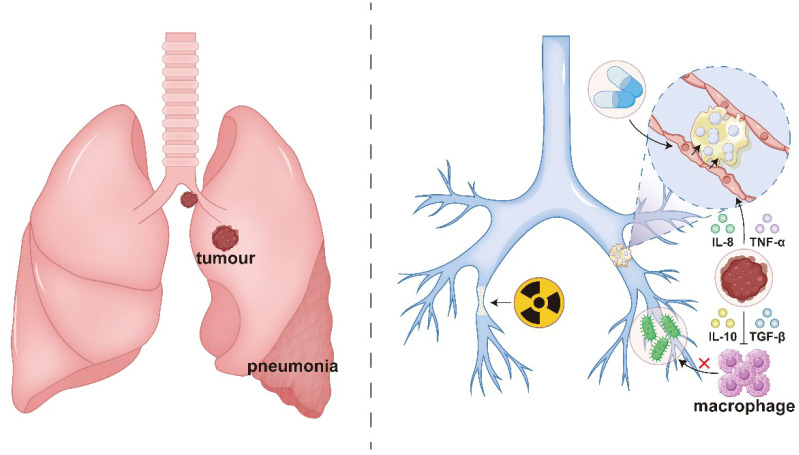 Figure 1
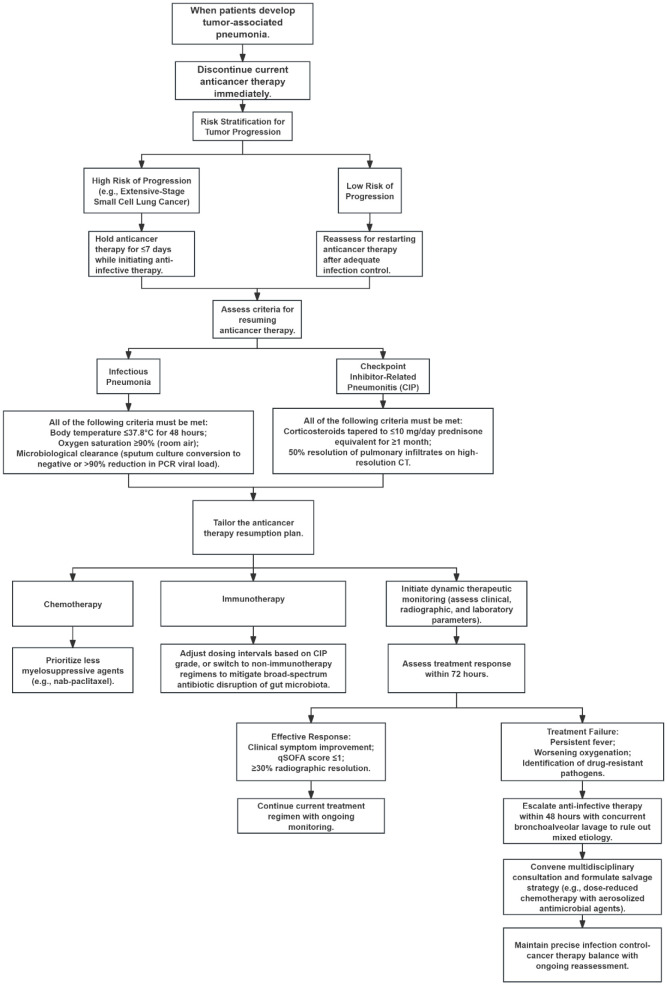 Figure 2
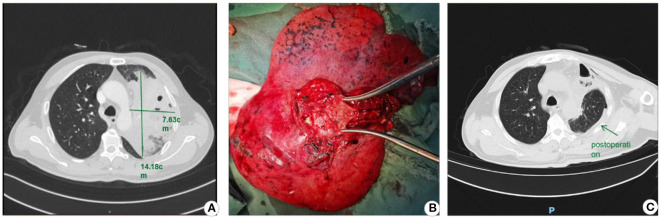 Figure 3
Peer Reviews
No public reviews on file for this paper yet. If you reviewed it on a platform where reviews are public (OpenReview, ICLR, NeurIPS, ICML), you can paste yours below so the community can read it here.
Videos
No videos yet. Explain this paper in a talk, walkthrough, or lecture? Add one.
Taxonomy
TopicsPneumocystis jirovecii pneumonia detection and treatment · Pneumonia and Respiratory Infections · Clostridium difficile and Clostridium perfringens research