A Case of Spontaneous Atraumatic Renal Bleeding (Wunderlich Syndrome)
Lydia MY Chang, Shail Shah, Dora Moon

TL;DR
A 72-year-old woman with atrial fibrillation experienced a rare spontaneous kidney bleed, which was successfully treated with embolization.
Contribution
This case highlights the rare occurrence and effective management of Wunderlich Syndrome in a patient on anticoagulant therapy.
Findings
The patient presented with symptoms of sudden left abdominal pain and dizziness due to a renal bleed.
Imaging confirmed an active renal arterial bleed, leading to successful embolization of pseudoaneurysms.
Conservative management failed, necessitating interventional treatment for ongoing bleeding.
Abstract
We present an uncommon case of atraumatic spontaneous renal hemorrhage in a 72-year-old woman with a background of atrial fibrillation on edoxaban who presented with a sudden onset of left abdominal pain, nausea, vomiting, lethargy, and dizziness. Cross-sectional imaging was performed and confirmed an ongoing renal bleed. She had a trial of conservative management; however, repeated imaging showed an ongoing, slow but active renal arterial bleed; hence, she underwent an embolization procedure. On-table angiogram revealed pseudoaneurysms in the upper and lower poles of the kidney, for which she underwent successful renal artery embolization.
Genes, proteins, chemicals, diseases, species, mutations and cell lines named across the full text — each resolved to its canonical identifier and authoritative record.
Click any figure to enlarge with its caption.
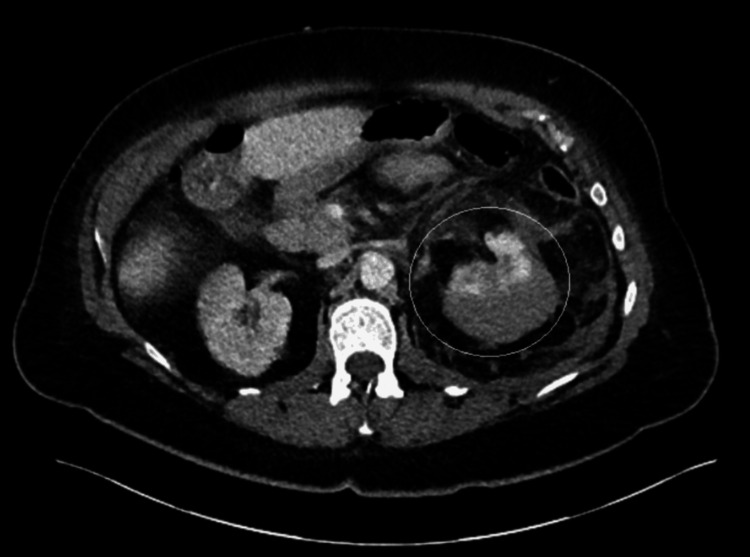 Figure 1
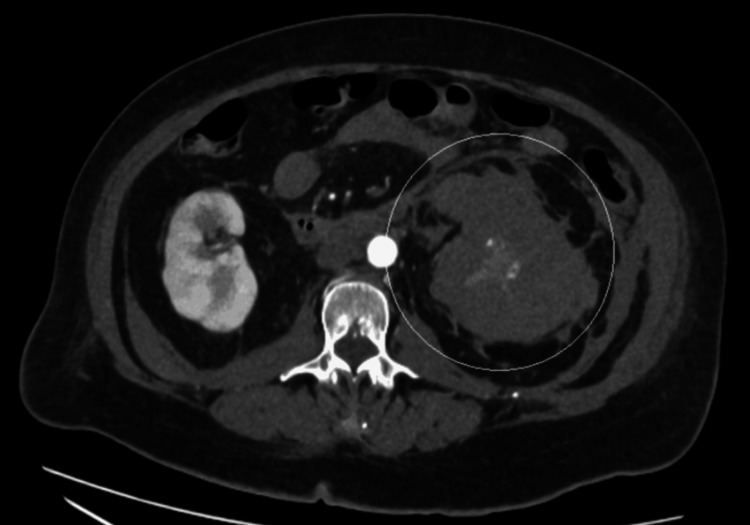 Figure 2
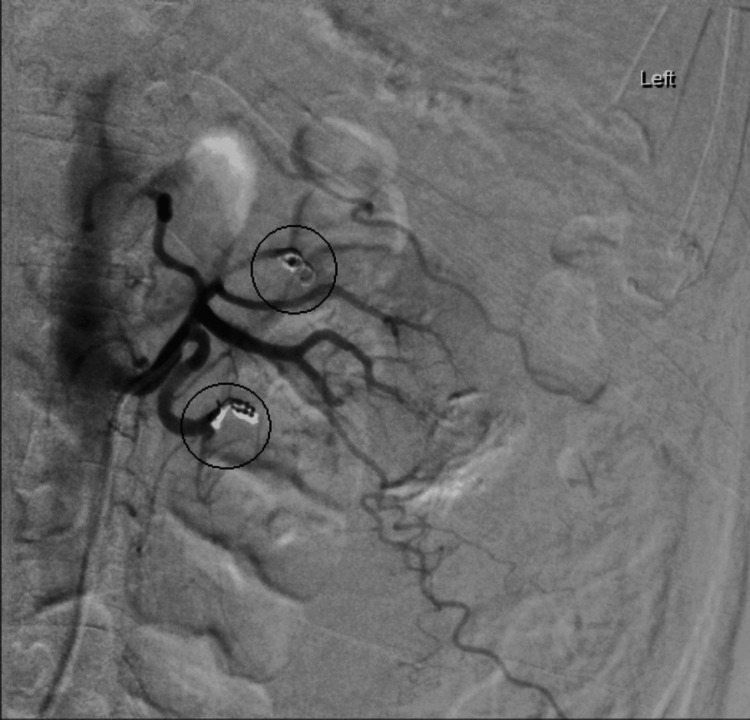 Figure 3
Peer Reviews
No public reviews on file for this paper yet. If you reviewed it on a platform where reviews are public (OpenReview, ICLR, NeurIPS, ICML), you can paste yours below so the community can read it here.
Videos
No videos yet. Explain this paper in a talk, walkthrough, or lecture? Add one.
Taxonomy
TopicsTuberous Sclerosis Complex Research · Renal Diseases and Glomerulopathies · Case Reports on Hematomas