Neuroprotective effects of candesartan in 3-nitropropionic acid-induced Huntington’s disease: modulation of angiotensin and CREB/BDNF/PGC1-α signaling
Ali M. Elgindy, Ahmed M. Atwa, El-Sayed E. El-Awady, Norhan M. El-Sayed, Naglaa F. El-Orabi

TL;DR
Candesartan, a drug that blocks a specific receptor, shows neuroprotective effects in a Huntington's disease model by improving brain function and reducing inflammation.
Contribution
This study demonstrates that candesartan mitigates 3NP-induced Huntington’s disease through activation of neuroprotective signaling pathways.
Findings
Candesartan improved memory, motor, and cognitive functions in rats with Huntington’s disease.
The drug activated the Ang II/AT2R/Ang-(1-7)/Mas receptor axis and increased neurotrophic proteins like CREB/BDNF/PGC1-α.
Candesartan reduced inflammation and mitochondrial dysfunction while inhibiting harmful signaling pathways like JNK/c-Jun.
Abstract
Renin–Angiotensin System has been implicated in neurodegenerative diseases such as Huntington’s (HD). It is made up of two axes: one is the Angiotensin II Type 1 receptor (AT1R) or Angiotensin II Type 2 receptor (AT2R), while the other is angiotensin-(1-7) [Ang-(1-7)], and Mas receptor; the latter has reported developing a neuroprotective effect; oppositely, AT1R activation has been linked to neurodegenerative diseases. This study aims to elucidate the potential neuroprotective effect of Candesartan (Cand) an AT1R blocker in mitigating neuronal degeneration caused by 3-Nitropropionic acid (3NP) induced HD by revealing the prospective role of Ang II/AT2R/Ang-(1-7)/Mas receptor, CREB/BDNF/PGC1-α besides JNK/c-Jun trajectories, as well as the anti-apoptotic survivin. HD was induced by 3NP (10 mg/kg) for 14 days. Rats received Candesartan (2.5 or 5 mg/kg) for 14 days, after which brain and…
Genes, proteins, chemicals, diseases, species, mutations and cell lines named across the full text — each resolved to its canonical identifier and authoritative record.
Click any figure to enlarge with its caption.
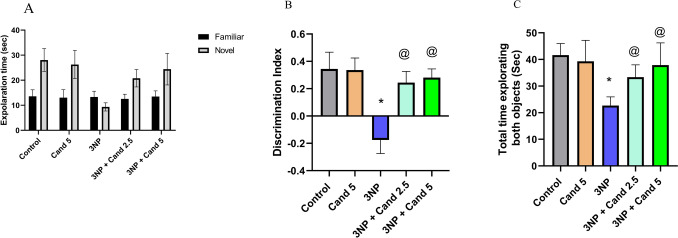 Figure 1
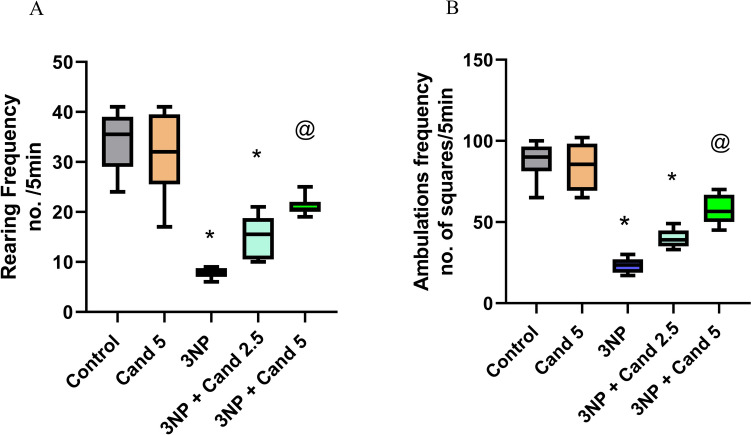 Figure 2
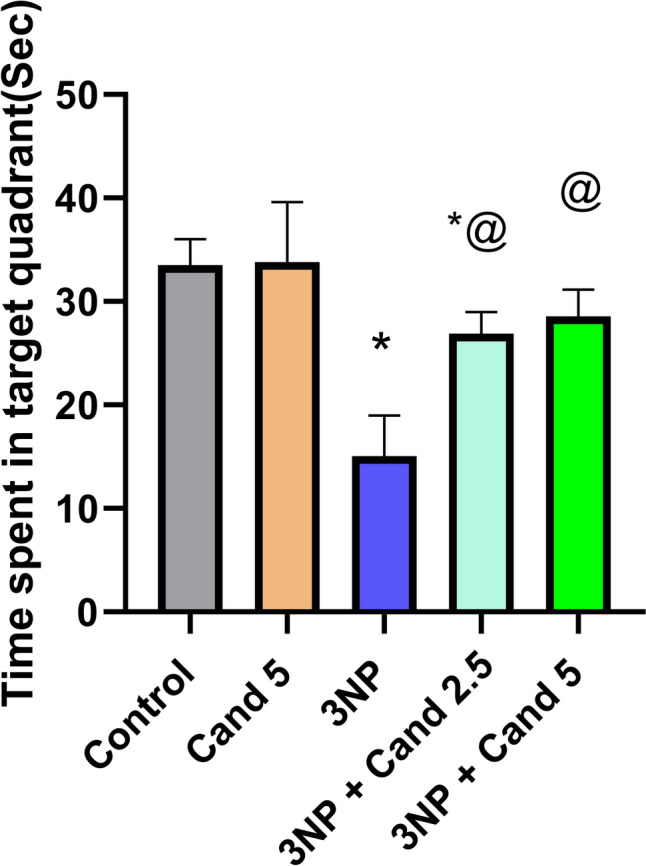 Figure 3
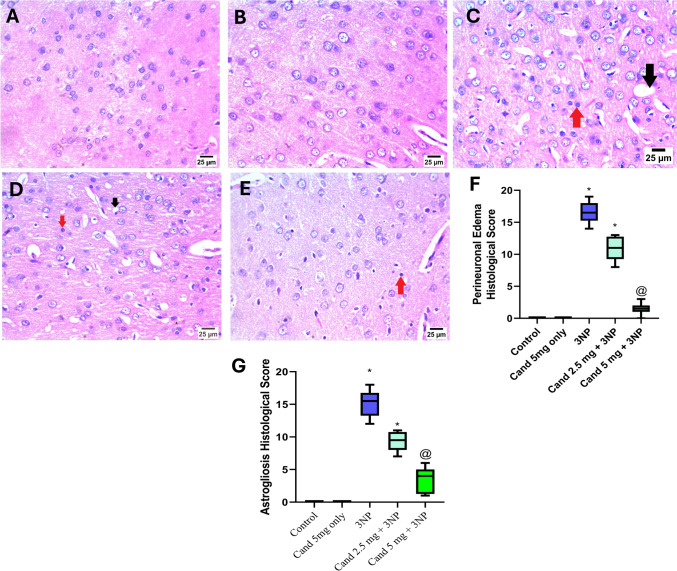 Figure 4
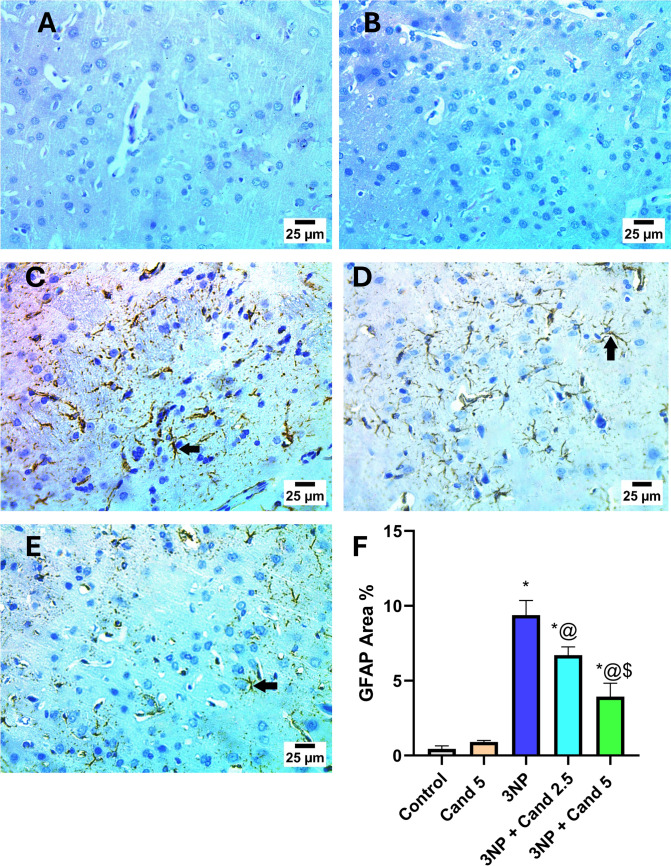 Figure 5
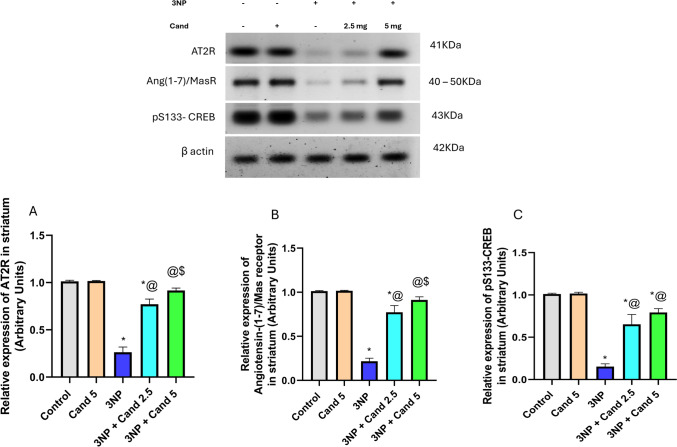 Figure 6
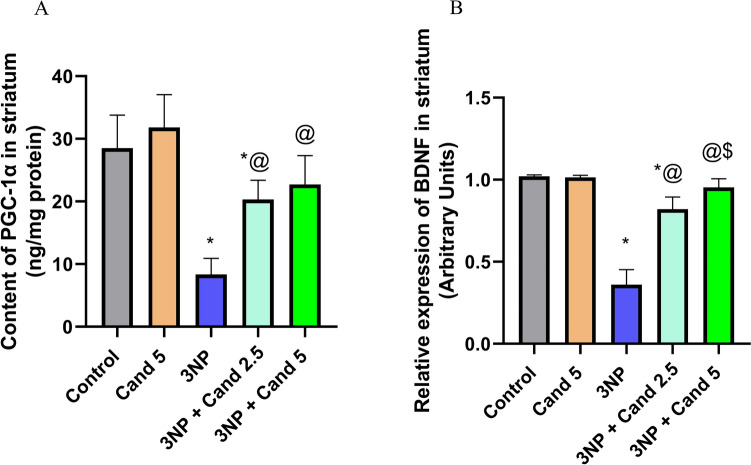 Figure 7
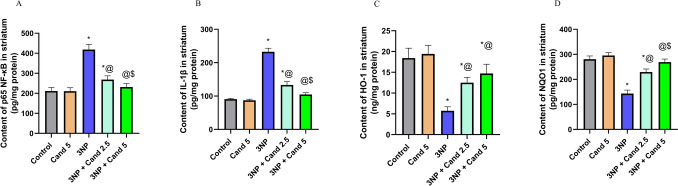 Figure 8
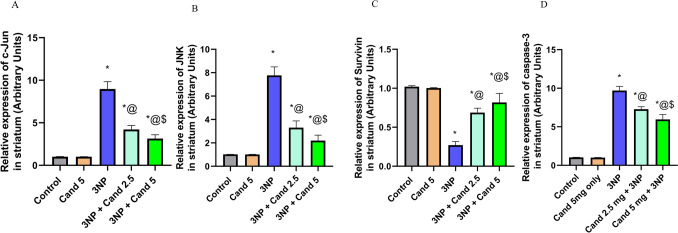 Figure 9
Peer Reviews
No public reviews on file for this paper yet. If you reviewed it on a platform where reviews are public (OpenReview, ICLR, NeurIPS, ICML), you can paste yours below so the community can read it here.
Videos
No videos yet. Explain this paper in a talk, walkthrough, or lecture? Add one.
Taxonomy
TopicsGenetic Neurodegenerative Diseases · Mitochondrial Function and Pathology · Fibromyalgia and Chronic Fatigue Syndrome Research