MIASurviveMTP: Machine learning for immediate assessment and survival prediction after massive transfusion protocol
Michael D. Cobler-Lichter, Jessica M. Delamater, Brianna L. Collie, Nicole B. Lyons, Luciana Tito Bustillos, Nicholas Namias, Brandon M. Parker, Jonathan P. Meizoso, Kenneth G. Proctor, Laila Cure, Laila Cure, Laila Cure, Laila Cure

TL;DR
This paper introduces a machine learning model that predicts survival in trauma patients receiving large blood transfusions, using data from medical records to improve early triage and resource allocation.
Contribution
The paper presents novel machine learning models specifically trained on massive and ultramassive transfusion patients for mortality prediction.
Findings
ML models achieved an AUROC of 0.901 for MT and 0.858 for UMT using arrival data.
Incorporating 4-hour data improved AUROC to 0.943 for MT and 0.922 for UMT.
These are the first ML models trained specifically on MT and UMT patient data.
Abstract
Early triage of trauma patients requiring massive transfusion (MT) may help to marshal appropriate resources and improve treatment and outcome. Artificial intelligence (AI) and machine learning (ML) offer theoretical advantages compared to conventional prediction algorithms but have not been thoroughly evaluated in this population. We hypothesized that AI/ML techniques incorporating all available data in a patient’s medical record could achieve similar, if not higher, performance in the prediction of mortality in MT patients as compared to existing models. Patients from the American College of Surgeons Trauma Quality Improvement Project database (TQIP) were retrospectively reviewed. Those receiving ≥ 5 units of red blood cells and/or whole blood within the first four hours of arrival were defined as MT patients. Those receiving ≥10 units were identified as ultramassive transfusion (UMT)…
Genes, proteins, chemicals, diseases, species, mutations and cell lines named across the full text — each resolved to its canonical identifier and authoritative record.
Click any figure to enlarge with its caption.
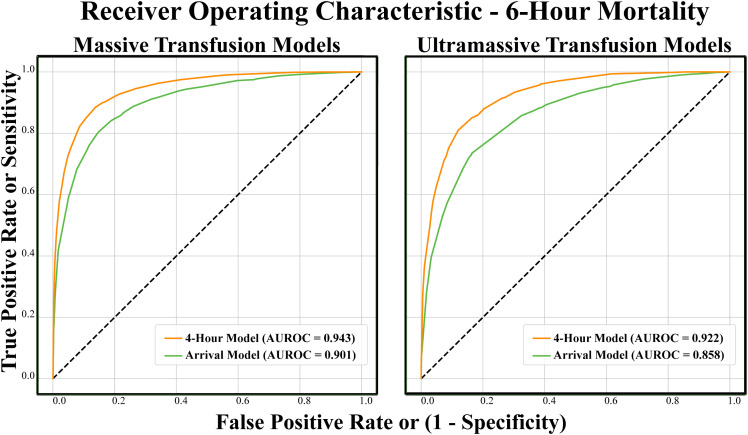 Figure 1
 Figure 2
 Figure 3
 Figure 4
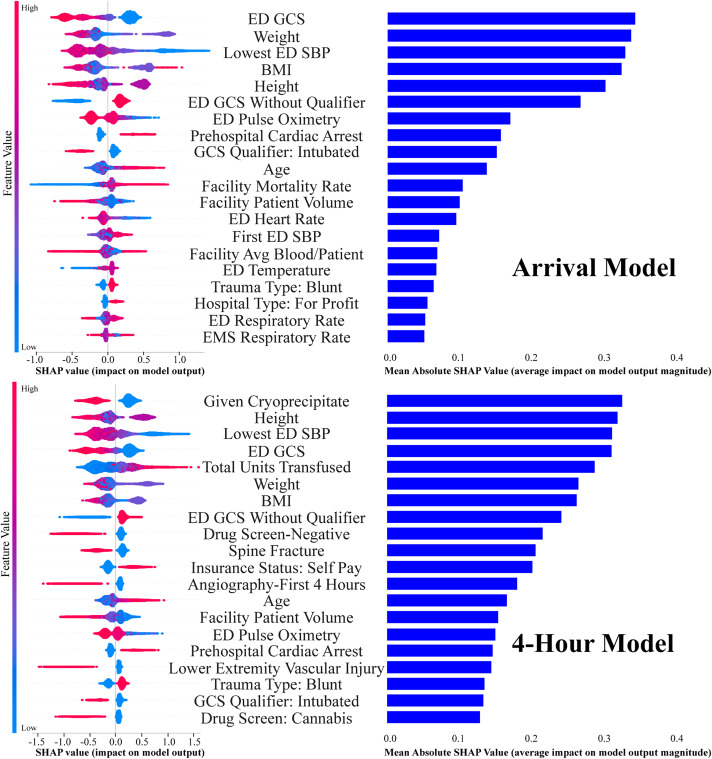 Figure 5
 Figure 6
 Figure 7
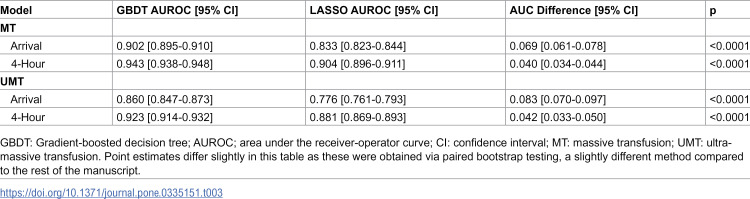 Figure 8
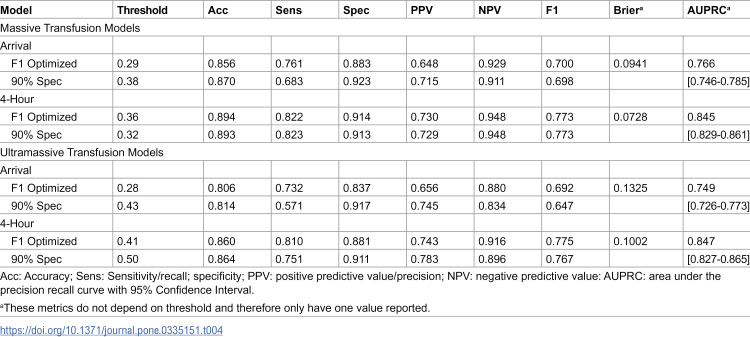 Figure 9
Peer Reviews
No public reviews on file for this paper yet. If you reviewed it on a platform where reviews are public (OpenReview, ICLR, NeurIPS, ICML), you can paste yours below so the community can read it here.
Videos
No videos yet. Explain this paper in a talk, walkthrough, or lecture? Add one.
Taxonomy
TopicsTrauma and Emergency Care Studies · Trauma, Hemostasis, Coagulopathy, Resuscitation · Sepsis Diagnosis and Treatment