β‑Caryophyllene and Graphene Oxide: A Novel Approach for Managing Fusarium Wilt in Cyclamen spp
Andre May, Marcia R. Assalin, Bernardo A. Halfeld-Vieira, Kátia L. Nechet, Eunice R. Batista, Helio D. Quevedo, Marley M. Tavares, Claudio M. Jonsson, Sonia C. N. Queiroz

TL;DR
This study explores using graphene oxide and β-caryophyllene to control Fusarium wilt in cyclamen, showing a significant reduction in plant mortality.
Contribution
The novel combination of graphene oxide and β-caryophyllene demonstrates a synergistic antifungal effect against Fusarium wilt.
Findings
Combined application of graphene oxide and β-caryophyllene reduced plant mortality to 40–60%.
The combination showed a strong synergistic effect against Fusarium oxysporum f. sp. cyclaminis.
β-caryophyllene was found to be environmentally safe based on ecotoxicological assessment.
Abstract
Cyclamen (Cyclamen spp.) is a widely cultivated ornamental plant. Among the soil-borne pathogens affecting cyclamen, Fusarium wilt, caused by Fusarium oxysporum f. sp. cyclaminis, is one of the most significant phytosanitary challenges. This study aimed to evaluate the antifungal potential of graphene oxide and β-caryophyllene, separately and in combination, applied either by spraying or through endotherapy (bulb injection), to control Fusarium wilt in cyclamen. The combined application of these antifungal agents proved more effective, resulting in 40–60% mortality of infected plants, compared to 100% mortality in the untreated control group. A sorption study of fusaric acid on graphene oxide was also conducted to better understand its antifungal activity, along with an ecotoxicological assessment of β-caryophyllene to evaluate its environmental safety. Overall, the strong synergistic…
Genes, proteins, chemicals, diseases, species, mutations and cell lines named across the full text — each resolved to its canonical identifier and authoritative record.
Click any figure to enlarge with its caption.
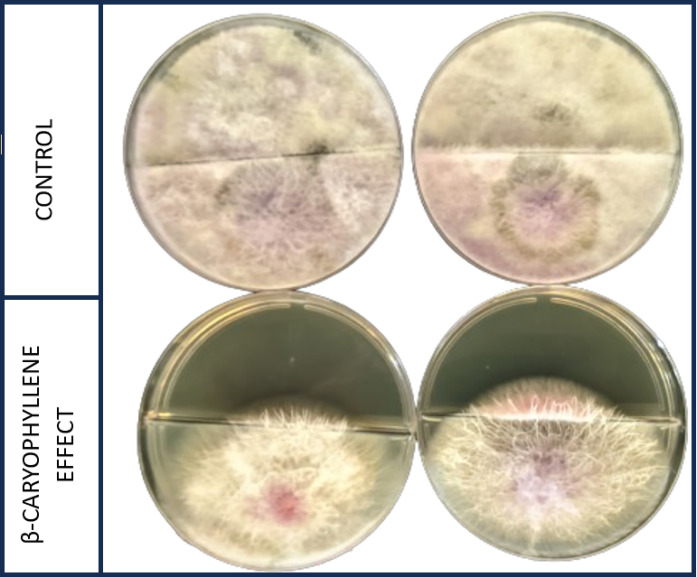 Figure 1
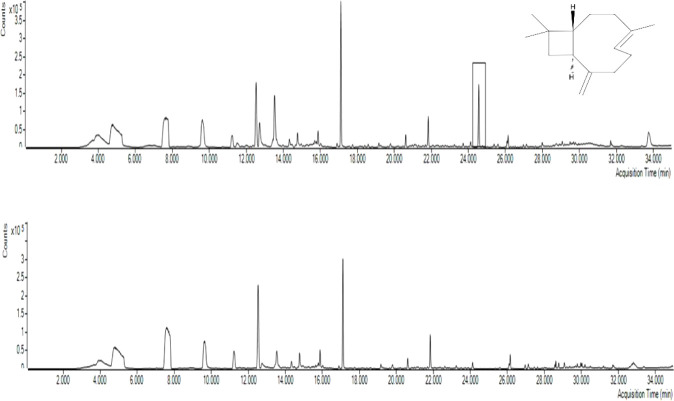 Figure 2
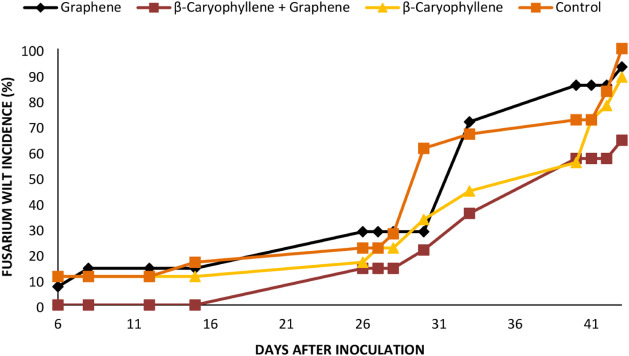 Figure 3
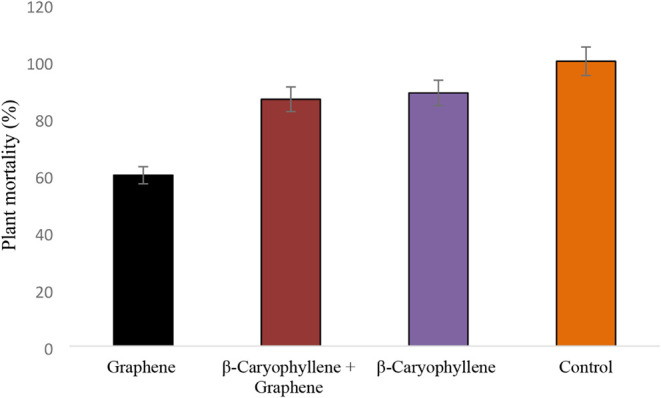 Figure 4
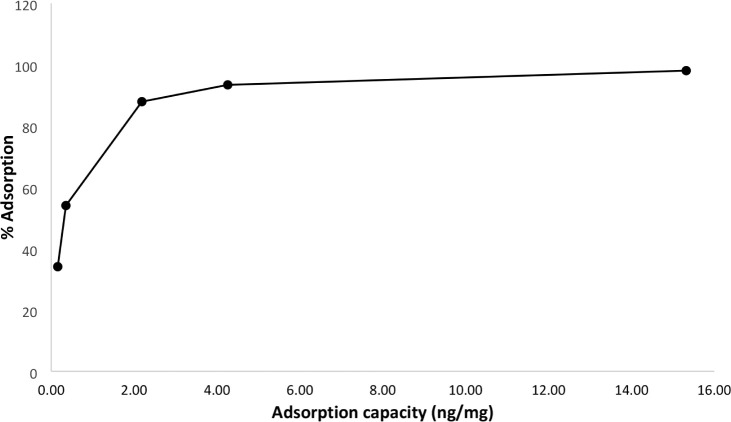 Figure 5
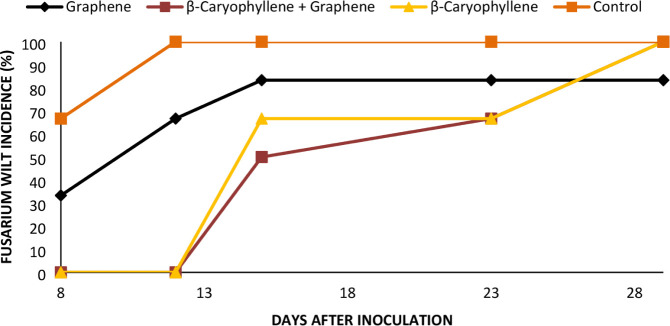 Figure 6
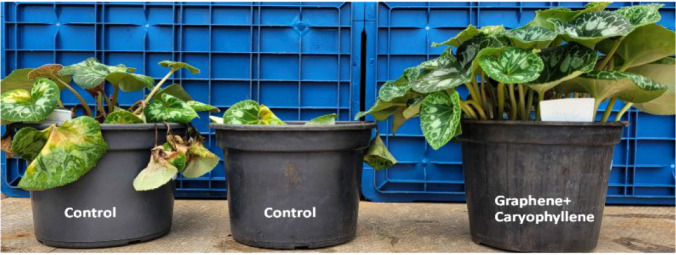 Figure 7
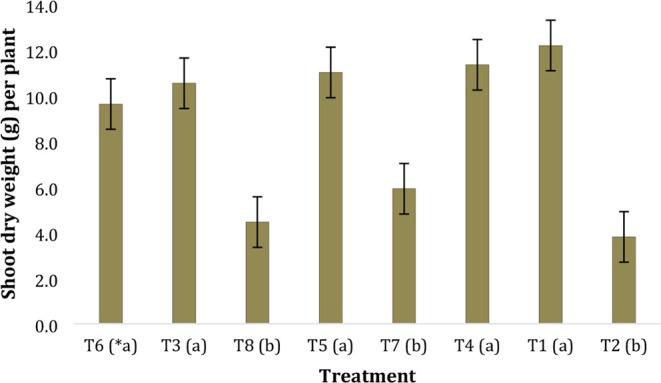 Figure 8
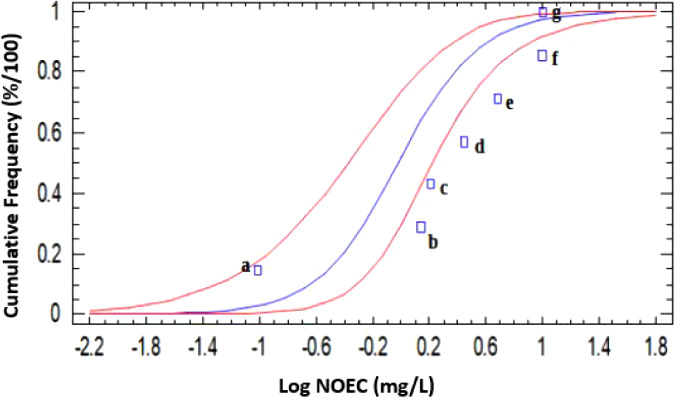 Figure 9
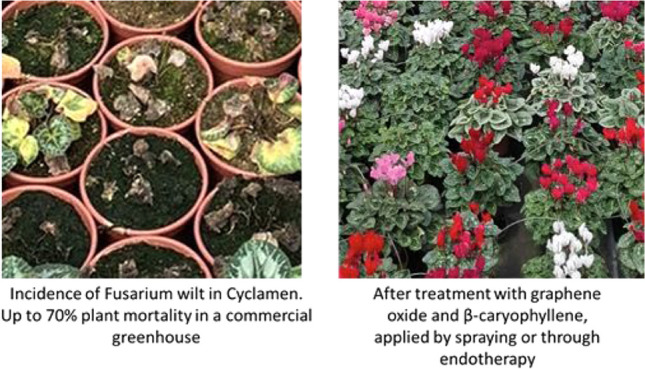 Figure 10
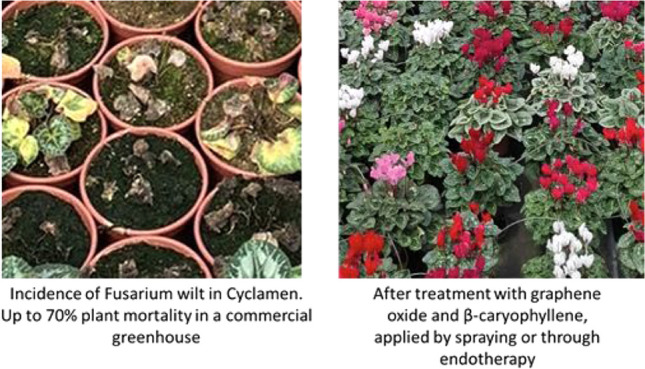 Figure 11
 Figure 12
Peer Reviews
No public reviews on file for this paper yet. If you reviewed it on a platform where reviews are public (OpenReview, ICLR, NeurIPS, ICML), you can paste yours below so the community can read it here.
Videos
No videos yet. Explain this paper in a talk, walkthrough, or lecture? Add one.
Taxonomy
TopicsMedicinal Plants and Neuroprotection · Plant Pathogens and Fungal Diseases · Plant chemical constituents analysis