Regiodivergent Deuteration of Pyridine-Based Heterocycles
Wei Du, Santosh C. Gadekar, Álvaro Velasco-Rubio, Jesus Rodrigalvarez, Ruben Martin

TL;DR
This paper introduces a new method to selectively add deuterium atoms to specific sites in pyridine-based compounds using mild conditions.
Contribution
A regiodivergent deuteration method for pyridotriazoles is introduced, enabling site-selective labeling under mild conditions.
Findings
Site-selective deuteration can be controlled by adjusting base and solvent.
Pyridotriazoles can be easily converted into various pyridine derivatives.
The method allows predictable and selective deuteration of pyridine heterocycles.
Abstract
Herein, we describe a regiodivergent deuteration of pyridotriazoles under mild conditions. Site-selective deuteration can be tuned, controlled, and switched by a subtle interplay of the base and solvent utilized. Given the ease at which pyridotriazoles can be converted into a variety of pyridine congeners, this protocol might offer a new gateway to access a variety of deuterium-labeled pyridine-containing heterocycles in a site-selective, yet predictable, manner.
Genes, proteins, chemicals, diseases, species, mutations and cell lines named across the full text — each resolved to its canonical identifier and authoritative record.
Click any figure to enlarge with its caption.
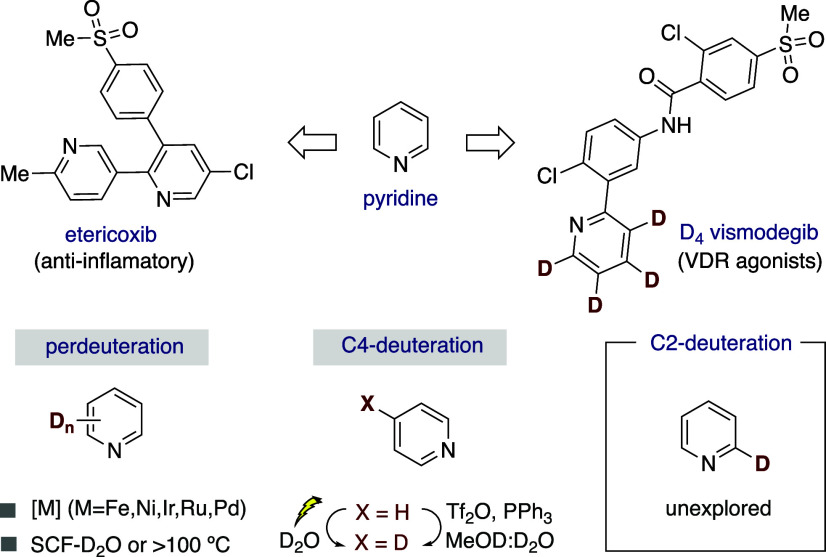 Figure 1
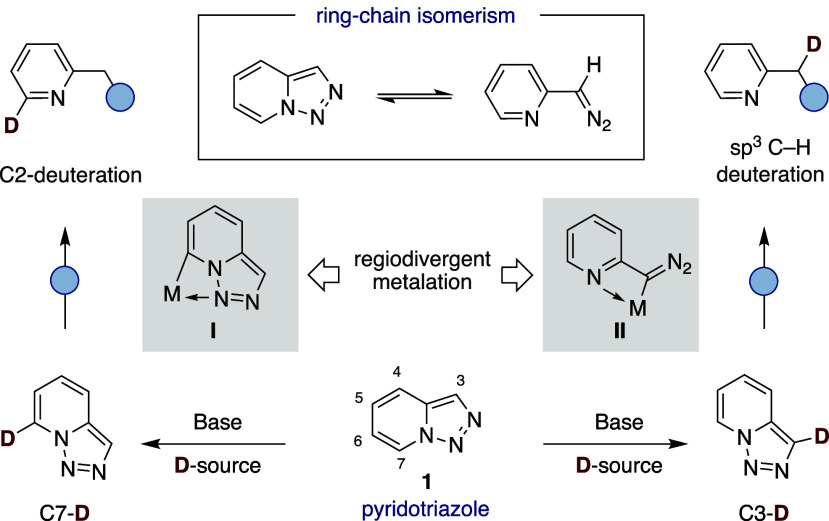 Figure 2
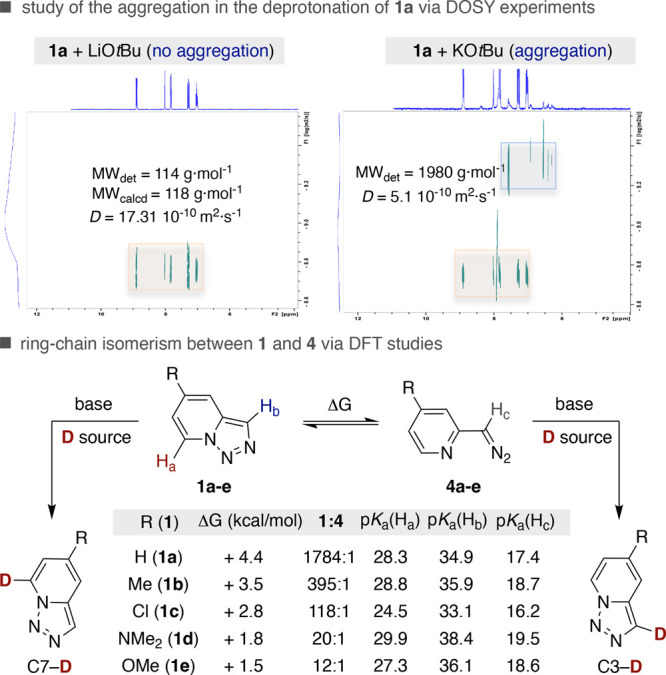 Figure 3
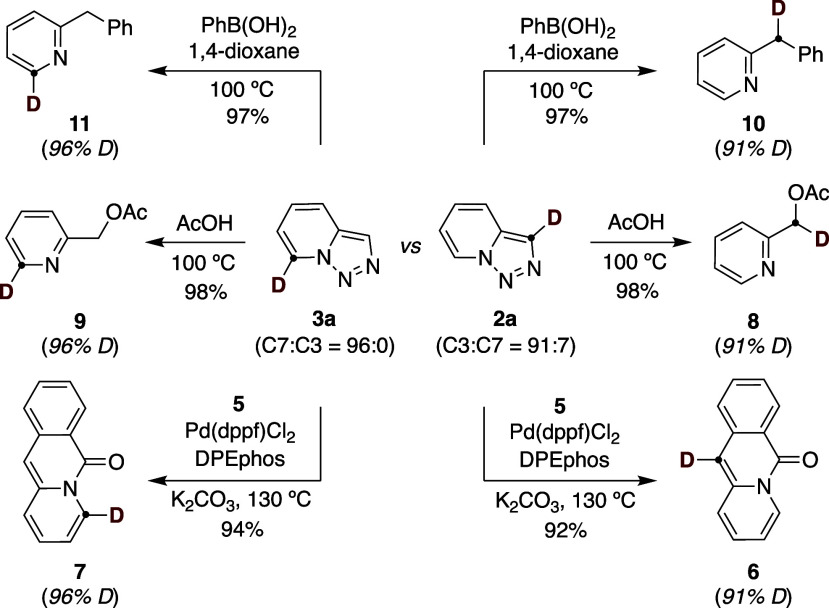 Figure 4
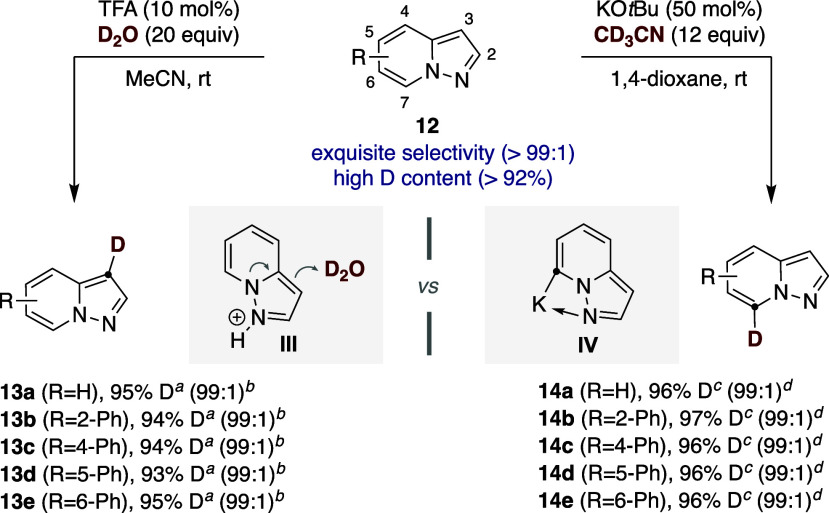 Figure 5
 Figure 6
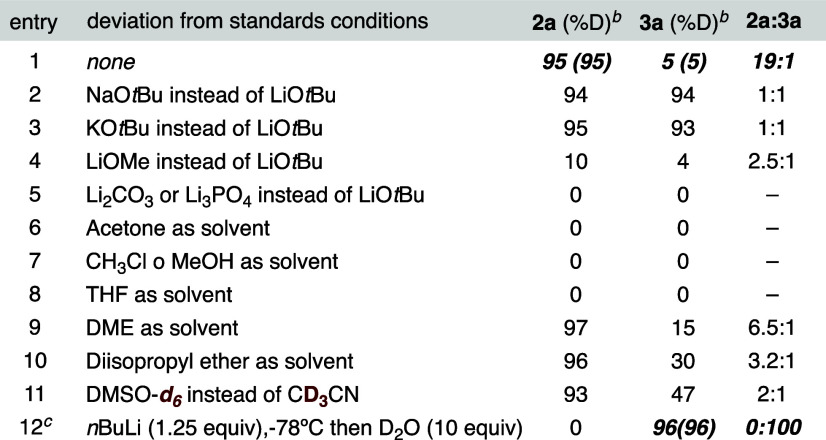 Figure 7
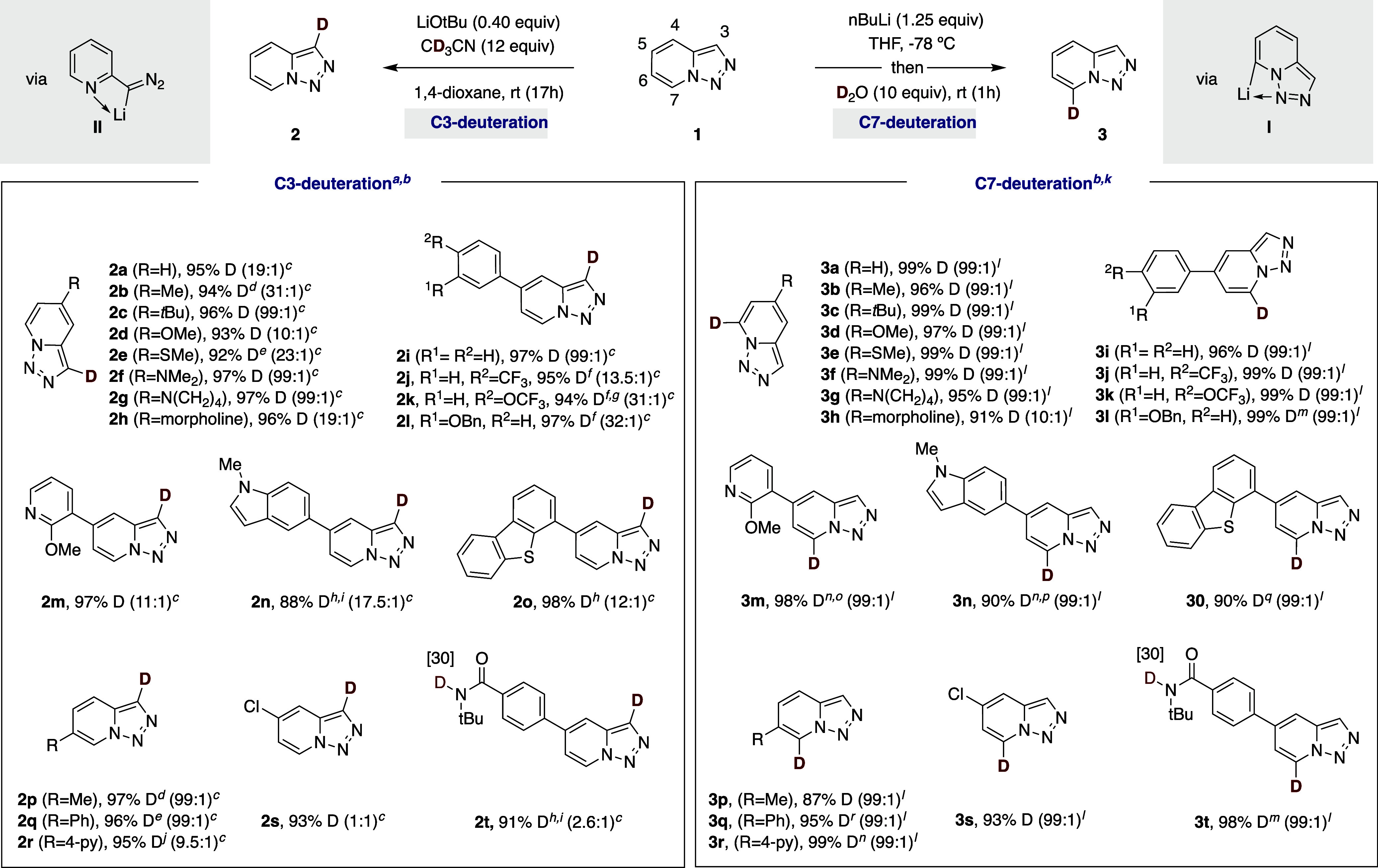 Figure 8
 Figure 9
 Figure 10
- —Ministerio de Ciencia, Innovaci?n y Universidades10.13039/100014440
- —Ministerio de Ciencia, Innovaci?n y Universidades10.13039/100014440
- —Ministerio de Ciencia, Innovaci?n y Universidades10.13039/100014440
- —Ministerio de Ciencia, Innovaci?n y Universidades10.13039/100014440
- —HORIZON EUROPE Marie Sklodowska-Curie Actions10.13039/100018694
- —China Scholarship Council10.13039/501100004543
Peer Reviews
No public reviews on file for this paper yet. If you reviewed it on a platform where reviews are public (OpenReview, ICLR, NeurIPS, ICML), you can paste yours below so the community can read it here.
Videos
No videos yet. Explain this paper in a talk, walkthrough, or lecture? Add one.
Taxonomy
TopicsChemical Reactions and Isotopes · Chemical Reaction Mechanisms · Asymmetric Hydrogenation and Catalysis
Deuterium labeling is becoming increasingly important in drug discovery.? Indeed, the incorporation of deuterium atoms alters the physical and chemical properties of the parent compound, increasing selectivity, metabolic stability and potency of drug candidates.? Driven by the prevalence of azines in marketed drugs (Scheme, top),? chemists have been challenged to introduce deuterium atoms at pyridine backbones with improved modularity and site-selectivity.? Despite the advances realized with transition metal catalysts, ?−? ? ? ? ? ? supercritical fluids (SCF),? electrochemical settings? or by leveraging the potential of phosphonium salts for C4-deuteration,? a site-selective C2-deuteration of pyridines still remains a particularly unexplored endeavor (bottom right).?
A close inspection into the literature data reveals that pyridotriazoles 1 can serve as “masked” pyridines due to their ability to undergo ring–chain isomerization via diazo intermediates and subsequent denitrogenative events (Scheme).? Given that pyridotriazoles 1 are readily available either through reaction of pyridine-2-yl acetates with benzenesulfonyl azides or oxidative N–N coupling of hydrazones from ketones,? we envisioned that a site-selective deuteration of these heterocycles might provide a new entry point to access isotopically labeled pyridines at later stages. We anticipated that regiodivergent deuteration could be dictated by a subtle interplay of electronic effects and site-selective deprotonation at the pyridotriazole core, either favoring metalation at C7 via I (Scheme, left) or leveraging a ring–chain isomerism en route to II (Scheme, right). If successful, such a regiodivergent scenario might not only offer new opportunities in isotope labeling but also overcome existing limitations when selectively incorporating deuterium atoms in pyridine-based heterocycles. As part of our interest in site-selective functionalization of heterocycles,? we report the successful realization of this goal. The protocol is distinguished by its broad applicability and an exquisite, yet predictable, site-selectivity pattern, thus setting the scene for postmodifications that enable access to a variety of differently substituted deuterated pyridine-type heterocycles.
We began our work by evaluating the deuteration of 1a (Table), easily accessed in three steps from pyridine on a large scale.? After some experimentation,? we found that the utilization of LiOtBu (0.40 equiv) and CD_3_CN (12 equiv) in 1,4-dioxane (0.20 M) at rt resulted in 2a with 95% deuterium content and excellent site-selectivity (2a:3a = 95:5). Interestingly, we noticed a strong solvent effect on selectivity; while nonethereal solvents provided traces, if any, of 2a (entries 6 and 7), an erosion in site-selectivity was observed with THF, DME or iPr_2_O (entries 7–9). In addition, lower selectivities were found with DMSO-d 6 as the deuterium source (entry 11). Equally striking was the influence of the base and the escorting counterion. Specifically, statistical mixtures of 2a and 3a were found when employing NaOtBu or KOtBu (entries 2 and 3) whereas a 2.5:1 ratio of 2a:3a was observed for LiOMe (entry 4), revealing a noninnocent behavior exerted by both countercation and counterion in both reactivity and site-selectivity. In addition, weaker bases such as Li_2_CO_3_ or Li_3_PO_4_ resulted in no conversion of 1a to either 2a or 3a (entry 5). It is worth noting that nBuLi in THF at −78 °C followed by D_2_O quench resulted in exclusive C7-deuteration, thus showing the subtleties of controlling deuteration at C3 (2a) or C7 (3a).?
Intrigued by the results compiled in Table, we wondered whether aggregation of the metal cation in different ethereal solvents might be responsible for the observed site-selectivity.? To this end, we turned our attention to study the diffusion coefficients of the intermediate species in the reaction of 1a and MOtBu (M = Li, K) in THF-d 8 or 1,4-dioxane-d 8 by Diffusion-Ordered NMR Spectroscopy (DOSY).? Intriguingly, a different scenario was observed depending on the nature of the base utilized. Specifically, a high diffusion coefficient (MW_det_ = 114 g·mol^–1^; D = 17.31·10^–10^ m^2^·s^–1^) was observed with LiOtBu (Scheme, top left). In sharp contrast, the lower diffusion coefficient found with KOtBu (MW_det_ = 1980 g·mol^–1^; D = 5 × 10^–10^ m^2^·s^–1^) suggests the intervention of aggregated species (top right) due to the larger size of the ionic radius of K^+^ (1.38 Å) when compared to its Li analogue (0.76 Å).? Putting these results into perspective, we concluded that aggregation has a negative impact on selectivity and that solvated ion pairs might be responsible for C3-selectivity en route to 2a. ?,?
Aiming at shedding light on the origin of site-selectivity, we wondered whether a subtle interplay between the pK a values at C3 and C7 in the pyridazole core and its proclivity for dynamic ring–chain isomerism en route to 2-diazomethylpyridines might come into play (Scheme, bottom). To this end, we turned our attention to DFT calculations. Although the calculated pK a values at the 1a core argued against a preferential metalation at C3 (pK a = 34.9) vs C7 (pK a = 28.3), the higher acidity of H_c_ in 4a (pK a = 17.4) suggested that C3-selectivity might be attributed to the ring–chain isomerism of the pyridazole core. Interestingly, DFT calculations revealed that the equilibrium of 1 and 4 was heavily influenced by the nature of the C5 substituent at the pyridotriazole core.? Indeed, 1a was favored over 4a (population ratio of 1a:4a = 1784:1) whereas the inclusion of electron-donating groups at C5 resulted in a markedly lower 1:4 ratio. In light of these results, we tentatively propose a canonical Curtin–Hammett scenario,? with product formation not arising from the equilibrium distribution of 1 and 4, but rather by a preferential deprotonation at H_c_ with weaker bases such as LiOtBu, thus leading to C3-selectivity. In contrast, the utilization of nBuLi (pK a = 50) might result in a deprotonation at the most acidic H_a_ prior to ring–chain isomerism, thus ultimately leading to I (Scheme) where the lithium cation is stabilized by the lone pair of the adjacent nitrogen atom at the pyridazole core. ?,?
With the optimized conditions in hand, we turned our attention to exploring the generality of our site-selective deuteration in a variety of substituted pyridotriazole motifs (Table). As shown, site-selective C3-deuteration could be applied across a wide number of substituents at the pyridotriazole core, including alkyl groups (2b, 2c), electron-donating motifs (2d, 2e) or even in the presence of acyclic or cyclic amines (2f, 2g, 2h). Likewise, the inclusion of arenes at the pyridotriazole core did not interfere with the site-selective incorporation of deuterium at C3 (2i–2l). Even heterocyclic rings such as pyridine (2m), indole (2n) or dibenzothiophene (2o) could be employed with similar ease, resulting in high selectivities for C3-deuteration. Note, however, that pyridotriazoles bearing electron-withdrawing groups such as chlorine (2s) or amides (2t) resulted in a non-negligible erosion in site-selectivity. This result can tentatively be ascribed to the lower acidity at C7 when the pyridotriazole is decorated with electron-withdrawing groups (Scheme, 1c; pK a H_a_ = 24.5).? As for site-selective C7-deuteration with an nBuLi regime, the reaction turned out to be widely applicable to a variety of substrates bearing either alkyl or arene substituents at the pyridotriazole core. Exclusive C7-selectivity was observed in most cases under the standard conditions regardless of the nature of the substituents at the pyridotriazole core. Unlike the slight erosion in C3-selectivity found for a protocol based on LiOtBu, nitrogen-containing heterocycles such as indole (3n), pyridine (3m) or dibenzothiophene (3o) resulted in an exquisite C7-deuteration under an nBuLi regime. Given that triazolopyridines serve as an entry point to access a variety of pyridyl-containing heterocycles via ring–chain isomerism,? we focused our attention on the versatility of 2a and 3a as vehicles for downstream applications (Scheme). As shown, pyridoquinolinones were easily within reach by reaction of 2a or 3a with 2-formylphenyl trifluoromethanesulfonate (5) under a protocol based on Pd/DPEPhos,? giving access to the targeted compounds in high yields and with high deuterium content at C11 (6) or C4 (7). Likewise, simple exposure of 2a or 3a to AcOH at 100 °C resulted in 8 or 9 in excellent yields.? In addition, reaction of 2a or 3a with phenyl boronic acid in 1,4-dioxane resulted in 10 and 11, thus allowing an effective incorporation of an aromatic ring at the benzylic sp^3^ C–H site. ?,?
Encouraged by the results shown in Table, we wondered whether we could apply an otherwise similar site-selective deuterated scenario to nitrogen-containing heterocycles other than triazolopyridines. As shown in Scheme, this turned out to be the case and a site-selective deuteration could also be within reach with pyrazolopyridines with similar ease.? Specifically, C3-deuteration of 12 could be accomplished with catalytic amounts of trifluoroacetic acid (TFA) and D_2_O in MeCN en route to 13 (>99:1)? whereas a site-selectivity switch was found by exposure to KOtBu (50 mol %) and CD_3_CN in 1,4-dioxane, leading to 14 (up to 99:1) with high deuterium content. These conditions were found to be widely applicable across a number of aryl-substituted pyrazolopyridines, resulting in either 13a–e or 14a–e with an exquisite site-selectivity pattern (>99:1) and deuterium content (>92%). Site-selectivity in the former can be interpreted on the basis of an initial protonolysis of the pyrazolopyridine ring (III) prior to site-selective reaction with D_2_O at C3,? whereas regioselective metalation at the heterocyclic ring preferentially occurs at the most acidic C7–H bond via IV.?
In summary, we have developed a regiodivergent deuteration of pyridotriazoles under mild conditions. Site-selectivity can be dictated by a subtle modulation of the ring–chain isomerism, where the nature of the base and the solvent utilized has a profound impact on the reaction outcome. Given the versatility of pyridotriazoles as linchpins for further functionalization and the extension to pyrazolopyridines, we believe the method might hold promise to offer a new gateway to access a variety of deuterium-labeled pyridine-containing heterocycles in a site-selective, yet predictable, manner.
Supplementary Material
The reference list from the paper itself. Each links out to its DOI / PubMed record.
- 1a Tung R.The development of deuterium-containing drugs Innovations Pharm. Technol.2010322426
- 2a Cargnin S.Serafini M.Pirali T.A primer of deuterium in drug design Fut. Med. Chem.2019112039204210.4155/fmc-2019-018331538524 · doi ↗ · pubmed ↗
- 3a Baumann M.Baxendale I. R.An Overview of the Synthetic Routes to the Best-Selling Drugs Containing 6-Membered Heterocycles Beilstein J. Org. Chem.201392265231910.3762/bjoc.9.26524204439 PMC 3817479 · doi ↗ · pubmed ↗
- 4a Wang F.Jiang H.Deng Y.Yu J.Zhan M.Zhao L.Chen Y.Design, synthesis and biological evaluation of deuterated Vismodegib for improving pharmacokinetic properties Bioorg. Med. Chem. Lett.2018282399240210.1016/j.bmcl.2018.06.02529929879 · doi ↗ · pubmed ↗
- 5a Atzrodt J.Derdau V.Kerr W. J.Reid M.C–H Functionalisation for Hydrogen Isotope Exchange Angew.Chem. Int. Ed.2018573022304710.1002/anie.20170890329024330 · doi ↗ · pubmed ↗
- 6a Gröll B.Schnürch M.Mihovilovic M. D.Selective Ru(0)-Catalyzed Deuteration of Electron-Rich and Electron-Poor Nitrogen-Containing Heterocycles J. Org. Chem.2012774432443710.1021/jo 300219 v 22497516 · doi ↗ · pubmed ↗
- 7a Schou S.The effect of adding Crabtree’s catalyst to rhodium black in direct hydrogen isotope exchange reactions J. Labelled Compd. Radiopharm.20095237638110.1002/jlcr.1612 · doi ↗
- 8a Zhao D.Luo H.Chen B.Chen W.Zhang G.Yu Y.Palladium-Catalyzed H/D Exchange Reaction with 8-Aminoquinoline as the Directing Group: Access to ortho-Selective Deuterated Aromatic Acids and β-Selective Deuterated Aliphatic Acids J. Org. Chem.2018837860786610.1021/acs.joc.8b 0073429972639 · doi ↗ · pubmed ↗