Pasteurized Milk Harboring Diarrheagenic E. coli Virulence Genes: Biosurveillance and New Insights for Enhancing Food Safety Standards
Samanta Stinghen de Abreu, Stael Málaga Carrilho, Aline Martins Mancebo, Marina Rocha Dorella, Edson Antônio Rios, Ronaldo Tamanini, Aline Romano Cunha, Ulisses de Pádua Pereira, Rafael Fagnani

TL;DR
This study found harmful E. coli genes in pasteurized milk, suggesting post-pasteurization contamination and the need for better food safety practices.
Contribution
The study identifies DEC-specific virulence genes in pasteurized milk, highlighting post-pasteurization contamination risks.
Findings
A 5% noncompliance rate was found in Enterobacteriaceae counts, indicating post-pasteurization contamination.
The ipaH and elt genes were detected in 14.28% of E. coli-positive milk samples.
The findings emphasize the need for improved food safety standards to protect vulnerable populations.
Abstract
Members of the family Enterobacteriaceae are often linked to foodborne outbreaks, including acute diarrhea, with diarrheagenic Escherichia coli (DEC) as the most common cause of this disease in low- and middle-income countries. A cross-sectional study was carried out to evaluate the sanitary conditions of ready-to-consume milk, involving 750 pasteurized milk samples. These samples were analyzed for the Enterobacteriaceae count, the presence of Salmonella spp., and the enumeration of E. coli, as well as checking for the presence of DEC-specific virulence genes. Two molecular assays were used to detect DEC-specific virulence genes (eae, bfpA, aggR, ipaH, est, elt, stx1, and stx2). Overall, a significant noncompliance rate (5%) was identified in the Enterobacteriaceae counts, indicating postpasteurization contamination. Two genes (ipaH and elt) were detected in 14.28% of E. coli-positive…
Genes, proteins, chemicals, diseases, species, mutations and cell lines named across the full text — each resolved to its canonical identifier and authoritative record.
Click any figure to enlarge with its caption.
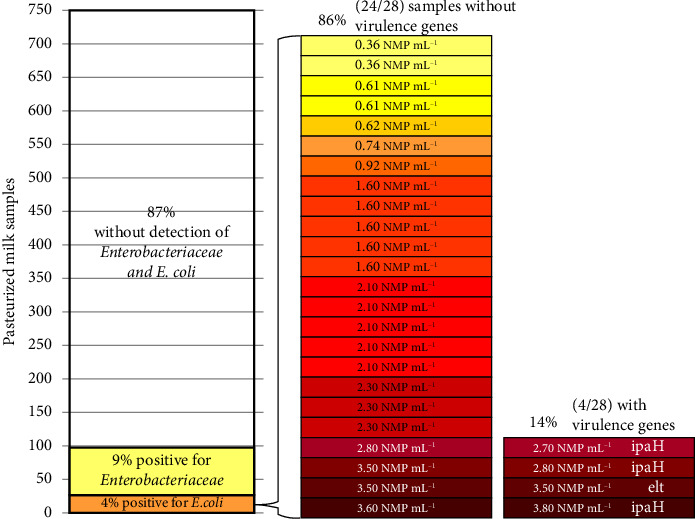 Figure 1
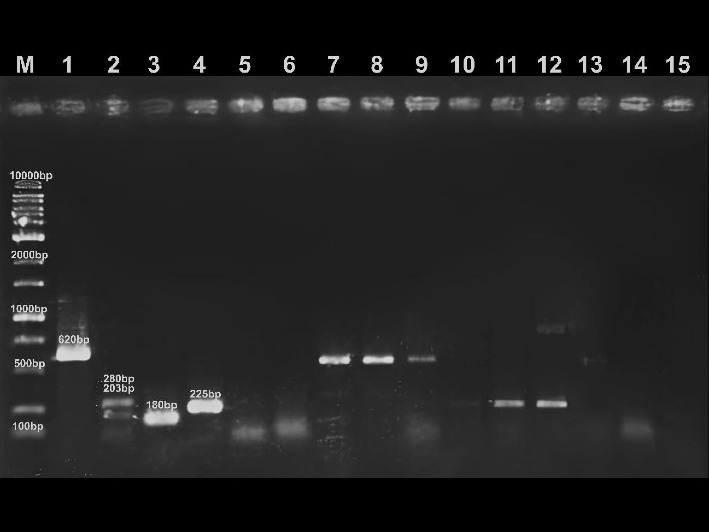 Figure 2
- —Conselho Nacional de Desenvolvimento Científico e Tecnológico
- —Superintendência de Ciência, Tecnologia e Ensino Superior (SETI)
- —Fundação Araucária
- —Universidade Estadual de Londrina
Peer Reviews
No public reviews on file for this paper yet. If you reviewed it on a platform where reviews are public (OpenReview, ICLR, NeurIPS, ICML), you can paste yours below so the community can read it here.
Videos
No videos yet. Explain this paper in a talk, walkthrough, or lecture? Add one.
Taxonomy
TopicsEscherichia coli research studies · Viral gastroenteritis research and epidemiology · Listeria monocytogenes in Food Safety
1. Introduction
Monitoring Salmonella spp., Enterobacteriaceae, and Escherichia coli is an essential tool for evaluating enteric contamination along the dairy chain, especially in ready-to-eat products such as pasteurized milk [1].
These microorganisms are frequently involved in foodborne outbreaks, mainly related to acute diarrhea, which is one of the major public health issues worldwide, characterized by high morbidity and mortality rates, particularly in young children in developing countries. Data released by the World Health Organization (WHO) indicate that diarrhea is the second leading cause of childhood mortality [2].
According to the WHO, the most common agents causing acute diarrhea in low- and middle-income countries are rotavirus and diarrheagenic E. coli (DEC) [3]. DECs are significant foodborne pathogens with considerable importance for public health, grouped into six pathogenic types: Shiga toxin-producing E. coli (STEC), enteropathogenic E. coli (EPEC), enterotoxigenic E. coli (ETEC), enteroinvasive E. coli (EIEC), enteroaggregative E. coli (EAggEC), and diffusely adherent E. coli (DAEC) [4].
Fallah et al. (2021) [5] found a high prevalence (26%) of DEC strains, primarily from hamburger and cheese samples, indicating food contamination with intestinal pathogens during processing or postprocessing. Additionally, a study conducted in northwest Paraná demonstrated a high diversity of E. coli populations found in pasteurized milk, likely due to the wide dispersion of these bacteria in nature, with different sources of contamination that can be incorporated into the milk [6]. Another study characterized 56 EPEC strains isolated from three different pasteurized milk brands in Rio de Janeiro, concluding that the environmental strains studied exhibited atypical characteristics, distinct from those observed in clinical strains of human origin, yet still capable of causing lesions and being potentially pathogenic [7]. These results highlight the importance of ongoing surveillance and research on this microorganism in food, with milk often cited as a potential vehicle for the transmission of DEC [8].
Considering that the circulation of bacteria from the Enterobacteriaceae family in ready-to-eat products is not an unusual phenomenon [9, 10], this study aimed to assess the sanitary conditions of pasteurized milk and detect specific virulence genes of DEC strains using molecular assays through polymerase chain reaction (PCR).
2. Materials and Methods
2.1. Sampling
A cross-sectional study was performed on data collected from 750 pasteurized milk samples, all originating from different production batches, from January 2019 to November 2022. The sampling plan involved periodic quality control analyses of three dairies in Londrina and Arapongas, Paraná, Brazil, as well as market surveillance conducted by the Brazilian Health Regulatory Agency (ANVISA), covering pasteurized milk from 21 dairy plants across 13 municipalities in the north and northwest of Paraná.
According to the national regulations in effect at the time, dairy plants were required to submit at least three samples per month for microbiological monitoring, which defined the frequency and flow of sample submissions.
The sample size in this study reflects the milk samples routinely submitted between January 2019 and November 2022 to a university-based laboratory that serves as a regional reference center for dairy quality control. The sampling followed a convenience approach, based on the laboratory's routine case load during the study period.
No a priori sample size calculation was performed, as the study design was retrospective and based on the existing data from regulatory monitoring. Although the nonprobabilistic nature of this sampling limits the extrapolation of findings to broader populations, the substantial number of samples collected over nearly 3 years allows for a representative overview of milk quality conditions in the northern region of Paraná.
2.2. Analysis of Pasteurized Milk Samples
The enumeration of Enterobacteriaceae followed ISO 21528:2017 [11], and the survey for Salmonella spp. followed ISO 6785:2001 recommendations [12].
The quantitative determination of E. coli using the most probable number (MPN) followed the guidelines included in the ISO 7251:2005 [13]. All samples were tested for the alkaline phosphatase presence following the official methodology outlined by the Association of Official Agricultural Chemists [14].
The results from compositional and microbiological analyses were based on the percentage of samples that complied with the parameters set by the Brazilian statutory regulations for pasteurized milk.
In the confirmatory step of the analysis, samples cultivated in EC broth that fermented lactose and produced gas indicated the presence of viable E. coli cells and were then isolated. From EC broth positive tubes, two loopfuls of broth were streaked onto MacConkey agar (HiMedia, India) plates using the quadrant streak method and incubated at 37°C for 24 h. Colonies with typical E. coli morphology—round, pink/brick red (lactose-fermenting) or occasionally white, nonmucoid colonies—were selected (3–5 colonies per plate) and subcultured onto nutrient agar to ensure purity. These isolates were then subjected to standard biochemical tests, as described below.
The oxidase test was performed using oxidase reagent strips (Merck), where a portion of each colony was transferred onto the strip with a sterile wooden stick. The absence of color change within 30 s was interpreted as a negative result, consistent with E. coli. Indole production was assessed using SIM medium, which was inoculated with a single colony and incubated at 37°C for 24–48 h. After incubation, Kovac's reagent was added, and the appearance of a red layer at the surface indicated a positive indole reaction. The methyl red (MR) and Voges–Proskauer (VP) tests were performed in MR-VP broth incubated at 37°C for 48 h. For the MR test, the addition of five drops of the MR indicator resulting in a red coloration was considered a positive result, indicating stable acid production from glucose fermentation. For the VP test, 15 drops of Barritt's reagent A (α-naphthol) and 5 drops of reagent B (KOH) were added to the same broth. A red color developing within 30 min indicated a positive result; however, E. coli typically yields a negative VP result. Finally, citrate utilization was evaluated using Simmons citrate agar slants. The slants were streaked and incubated at 37°C for 24–48 h. A color change from green to blue indicated citrate utilization, while no color change (retaining the green color) was considered a negative result, as expected for E. coli. Confirmed E. coli strains were selected for DNA extraction and subsequent molecular analysis.
2.3. Preparation of DNA Samples and PCR Amplification
DNA extraction from samples with cultivated E. coli was performed using the boiling method, according to Ribeiro Junior [15], with modifications. Phosphate-buffered saline (PBS) and Tris-HCl EDTA (TE) were used as reagents. To obtain the bacterial mass, 1000 μL of broths containing E. coli were pipetted into microtubes, which were then centrifuged (14,500 rpm, 5 min). The supernatant was discarded, and the precipitate was treated with the aforementioned reagents, followed by boiling (100°C, 15 min) and cooling in an ice bath (15 min). Finally, a second centrifugation was performed (14,500 rpm, 10 min), and 50 μL of the supernatant was recovered for use in molecular analyses. This protocol ensures that the bacterial mass from E. coli cultivated in the broth was specifically targeted for DNA extraction.
The aliquots containing extracted genetic material were subjected to molecular assays to detect eight specific virulence genes of DEC. The selected targets for investigation and possible classification in groups were the eae and bfpA genes for EPEC, the aggR gene for EAggEC, ipaH gene for EIEC, est and elt genes for ETEC, and stx1 and stx2 genes for STEC.
The assays adopted were performed according to Fujioka et al. [16]. The first assay included the detection of eae, bfpA, and aggR genes and involved preparing a 20-μL reaction mix with 10x Tris-HCl buffer (200 mM Tris-HCl, 50 mM KCl, pH 8.4), 2 mM MgCl_2_, 2.5 μM of each phosphorylated deoxynucleotide, 20 μM of each primer, 1.25 U of Taq DNA polymerase (Invitrogen), and a final DNA volume of 5 μL. The second assay was used for the detection of ipaH, est, elt, stx1, and stx2 genes and was performed with a 24-μL reaction mix containing 10x Tris-HCl buffer (200 mM Tris-HCl, 50 mM KCl, pH 8.4), 1.5 mM MgCl_2_, 2.5 μM of each phosphorylated deoxynucleotide, 20 μM of each primer, 1.5 U of Taq DNA polymerase (Invitrogen), and a final DNA volume of 1 μL.
To ensure the validity and reproducibility of the PCR results, each reaction set included both a positive and a negative control. Positive controls consisted of DNA extracted from E. coli reference strains known to harbor the target virulence genes (as shown in Figure 1), while negative controls used ultrapure water instead of DNA template to monitor contamination.
The E. coli reference strains used in this study were as follows: E. coli EIEC O152 (ipaH-positive; labcode E23), E. coli ETEC H302 (elt and est-positive; labcode E12), E. coli STEC H301 (stx1-positive; labcode E17), and E. coli STEC 43889 (stx2-positive; labcode E6). All strains were obtained from the existing culture collection of the Laboratory of Inspection of Products of Animal Origin (LIPOA), State University of Londrina (UEL), Brazil. These controls were included in every PCR run, following standard laboratory quality assurance protocols.
The reactions followed amplification in the thermal cycler ThermoAssist Aeris-BD048 (Esco Micro Pte), and the reaction products were separated by electrophoresis (100 V, 60 min, LPS Power Supply 300 V, Loccus do Brasil) in 1.5% agarose gel containing ethidium bromide. The results were read in darkroom of an ultraviolet transluminator (UVCI-1200, Major Science).
Details about the primers employed in the study are in Table 1. All the oligonucleotides were synthesized by Invitrogen (Thermo Fisher Scientific, Brazil).
Descriptive statistical analysis was conducted to evaluate the absolute and relative frequencies of virulence genes across the samples. Binary logistic regression was also used to assess whether the E. coli load influences the likelihood of virulence genes being present. All statistical analyses were performed using Statistica software 13.0 (Statsoft, USA), with p < 0.05 considered statistically significant.
3. Results and Discussion
Of 750 pasteurized milk samples analyzed during the period, 68 (9%) were positive for Enterobacteriaceae, 28 (4%) for E. coli, and no sample showed the presence of Salmonella. The relative and absolute frequencies of detection of Enterobacteriaceae and E. coli, along with the E. coli microbiological load (MPN mL^−1^), are detailed in Figure 2. Approximately 5% of the samples exceeded the Brazilian statutory limit of 10 CFU·mL^−1^ for Enterobacteriaceae (Table 2). The mean values and standard deviations for all microorganism counts are presented in Table 2. All noncompliant milk samples were negative for alkaline phosphatase, indicating contamination after pasteurization.
These findings align with global research, reinforcing the fact that postpasteurization contamination remains a common concern for dairy processors worldwide [21]. To better illustrate this issue, around 50% of pasteurized fluid milk spoilage in the United States of America is attributed to postpasteurization contamination [22]. Flaws in cleaning and sanitization protocols, cross-contamination, and absence of preventive maintenance are the main reasons for this kind of issue. Thus, efforts are needed to reduce postprocessing contamination and to identify its causative factors, mainly through approaches such as root-cause analysis and/or source tracking of contamination. Recently, predictive models and digital tools have been developed to support improved decision-making regarding postprocessing contaminations interventions, concluding in a good and cost-effective approach for enhancing fluid milk quality [23].
A number of studies indicate contamination of pasteurized milk by Enterobacteriaceae family members, including total coliforms and E. coli [24, 25], with the formation of resistant biofilms in the equipment pipes and the use of nonpotable water being the main factors responsible for the contaminations. Biofilms' formation is a constant concern in food factories, since they cause serious hygienic problems and generate deterioration of the products, also configuring economic losses [26].
The frequency of contamination with DEC genes in all 28 samples contaminated with E. coli was 14.28% (4/28) (Figure 2). The genes detected were ipaH (10.71%) and elt (3.57%) (Figure 1). Binary logistic regression revealed that the E. coli load is a significant predictor of virulence genes, with the likelihood of these genes occurring in pasteurized milk increasing 7.21 times for each additional unit of E. coli (MPN mL^−1^) (Table 3).
Due to the low frequency of samples with DEC genes, it was not possible to identify risk factors associated with the presence of these genes through statistical analyses such as binomial logistic regression and/or cluster analysis. Of the 28 samples contaminated with E. coli, the 4 that tested positive for DEC genes came from different dairies, with no single establishment being responsible. All 24 dairies involved in this study utilized high temperature and short-time (HTST) pasteurization. No differences were identified in pasteurization procedures between the dairies with positive samples and those without detection of DEC genes; however, it is reasonable to assume that a deeper investigation into the processing practices and quality control of each dairy could provide additional insights. With a larger collection of dairies having positive samples for DEC genes, it would be possible to identify which variables are related to this type of contamination, representing a relevant aspect for future studies.
Although the results improved upon previous publications, some limitations need to be considered. Initially, DNA-based tests can identify both living and nonliving pathogens, which can be beneficial given the cultivable characteristics of E. coli, such as being time-consuming and labor-intensive. However, this can also lead to some disadvantages. Detecting genetic material from nonviable cells can result in positive test results. To minimize this type of bias, the protocol includes a confirmatory step that focuses on assessing cell viability prior to DNA extraction. By employing selective media that enriches viable cells, the aim was to enhance the accuracy of findings and reduce the likelihood of false positives associated with nonviable genetic material.
Thus, the presented results do not detract from the fact that there is circulation of DEC strains in the dairy chain, inspires ongoing investigation to trace the origin of this contamination, possibly stemming from bacteria in raw milk, consequently causing cross-contamination in the dairy plants. Additional studies, such as strain isolation and characterization, will be essential to confirm these hypotheses and deepen the understanding of the associated risks.
The expression of virulence factor genes can be affected by environmental factors, such as pH, temperature, osmolarity, short-chain fatty acids, glucose, oxygen concentration, and probiotics. All these variables can be found in pasteurized milk, and how they interact with the expression of virulence genes could be evaluated by further studies. In addition to the reduced shelf life caused by the presence of coliforms in milk, it is necessary to discuss the sanitary risk associated with the presence of E. coli strains, which can become part of contaminating microbiota in dairy plants, acquiring and transferring virulence genes, and developing pathogenic potential.
The possibility of gene transfer involving the pathogenic strains of E. coli is a phenomenon that can easily occur in biofilms. E. coli is one of the more versatile bacteria adopting genetic information for secreting virulence genes by horizontal gene transfer, conferring pathogenic properties on innocuous strains [27]. Virulence genes are often located in regions called pathogenicity islands (PAIs), characterized by large size (> 10 kb), usually adjacent to tRNA genes, flanked by repeated sequences and may be unstable regions, and are considered to have evolved through horizontal gene transfer. An example of this genetic phenomenon occurring in practice is an outbreak of hemolytic uremic syndrome and bloody diarrhea started in Germany caused by a hybrid pathogenic EAEC-STEC strain (O104:H4), with most of the isolates showing virulence genes of typical EAEC and production of Shiga Toxin 2 [28].
Although virulence genes were detected and directly associated with the E. coli load, all four samples contained low counts of E. coli, ranging from 2.7 to 3.8 MPN mL ^−1^. Therefore, even though all cells had virulence genes, the microbiological load present would not be sufficient to make a healthy person ill. DuPont et al. [29] tested the virulence of 2 E. coli samples in experimental in vitro and in vivo models, and volunteers that ingested solutions of control strains (enterotoxigenic and enteroinvasive) in cell concentrations below 10^6^ CFU·mL^−1^ showed no symptoms. However, the ingestion dose of Enterohemorrhagic E. coli seems to be lower and is usually estimated to range between fewer than 10 and few hundred [30, 31]. Notably, the ingestion of E. coli cells with virulence genes is worrisome in infants, children with immature immune systems, and immunocompromised people [32]. Although, in terms of a public health, the microbiological load present in the aliquots was not sufficient to generate severe symptoms resulting from the clinical course caused by enteroinvasive and enterotoxigenic strains; the detection of these genes in the samples demonstrates the urgent need for hygienic-sanitary improvements in milk processing.
At this point, it is clear that monitoring the microbial load of E. coli can provide valuable insights into food safety, particularly for individuals with immune disorders, which prompts a comprehensive discussion about current international milk quality regulations. The European Union, the United States of America, and the Southern Common Market (MERCOSUR) are aligned regarding the maximum statutory limit of 10 CFU·mL^−1^, established exclusively for Enterobacteria in pasteurized milk. While these guidelines are sufficient for the healthy population, the results encourage new lines of research to understand the real risk posed by DEC strains to immunocompromised individuals or those with immature immune systems.
Within this framework, stringent regulations alone may not be ample to fully prevent foodborne outbreaks, even in highly developed countries. For instance, a large foodborne outbreak related to ultrahigh pasteurized milk served in school lunches occurred in 2021 in Toyama City [33]. Over 1800 children from 25 schools were reported. The causative pathogen was an atypical DEC, notably presenting a microbiological load ranging from 7.0 to 8.4 MPN 100 mL^−1^.
In this context, regulatory compliance is more effective when accompanied by preventive strategies to minimize the risk of postpasteurization contamination. Traditionally, certain quality management practices have been associated with reducing postpasteurization contamination in fluid milk, such as cleaning and sanitation protocols, personal hygiene and training, preventive maintenance of equipment, and adherence to good manufacturing practices. More recently, updated research is attempting to better describe patterns of postpasteurization contamination and predict this kind of issue through machine learning and other advanced statistical modeling [21] concluded that to truly take advantage of these analytical approaches, more frequent assessment of microbiological data and high-quality metadata is essential.
The results indicate that implementing microbiological monitoring of E. coli, even if not required by regulatory agencies, can aid dairy industries in preventing postpasteurization contamination issues and/or accelerate corrective measures if such issues occur, and the frequency of this monitoring could be further studied using predictive statistical models.
4. Conclusions
Although most pasteurized milk samples meet established quality standards, E. coli harboring virulence genes persist throughout the pasteurized milk production chain. Due to the direct association between bacterial load and these genetic determinants, the results of this study also highlight the importance of continuous microbiological monitoring in the dairy production chain, not only to allow inferences about the legal compliance of samples but also, more importantly, to emphasize the need for new lines of research to understand the sources of contamination and the real risk posed by pathogenic strains to immunocompromised individuals or those with immature immune systems.
Even with the limitations in generalizing the results to other regions or populations, it is reasonable to suggest advanced biosurveillance approaches along with virulence gene monitoring in dairy plants. In this context, the present study provides insights that can aid public health authorities in enhancing food safety policies [34].
The reference list from the paper itself. Each links out to its DOI / PubMed record.
- 1Kumar A. Patyal A. An Insight on Microbial Flora of Milk and Milk Products The Microbiology, Pathogenesis and Zoonosis of Milk Borne Diseases 2024 Elsevier 699410.1016/B 978-0-443-13805-8.00004-1 · doi ↗
- 2Behera D. K. Mishra S. The Burden of Diarrhea, Etiologies, and Risk Factors in India From 1990 to 2019: Evidence From the Global Burden of Disease Study BMC Public Health 2022221 p. 9210.1186/s 12889-022-12515-3PMC 875919635027031 · doi ↗ · pubmed ↗
- 3World Health Organization (WHO)Diarrhoeal Disease Fact Sheet 2019 World Health Organization (WHO)
- 4Gambushe S. M. Zishiri O. T. El Zowalaty M. E. Review of Escherichia coli O 157:H 7 Prevalence, Pathogenicity, Heavy Metal and Antimicrobial Resistance, African Perspective Infection and Drug Resistance 2022154645467310.2147/idr.s 36526936039321 PMC 9420067 · doi ↗ · pubmed ↗
- 5Fallah N. Ghaemi M. Ghazvini K. Rad M. Jamshidi A. Occurrence, Pathotypes, and Antimicrobial Resistance Profiles of Diarrheagenic Escherichia coli Strains in Animal Source Food Products From Public Markets in Mashhad, Iran Food Control 2021121 p. 10764010.1016/j.foodcont.2020.107640 · doi ↗
- 6Oltramari K. Cardoso R. F. Patussi E. V. Santos A. C. B. Mikcha J. M. G. Genetic Heterogeneity of Escherichia coli Isolated From Pasteurized Milk in State of Paraná, Brazil Brazilian Journal of Pharmaceutical Sciences 201450233734310.1590/s 1984-825020140002000132-s 2.0-84907998531 · doi ↗
- 7Carneiro L. A. M. Lins M. Garcia F. Phenotypic and Genotypic Characterisation of Escherichia coli Strains Serogrouped as Enteropathogenic E. coli (EPEC) Isolated From Pasteurised Milk International Journal of Food Microbiology 20061081152110.1016/j.ijfoodmicro.2005.10.0102-s 2.0-3364540532016490272 · doi ↗ · pubmed ↗
- 8Aditya A. Tabashsum Z. Alvarado Martinez Z. Diarrheagenic Escherichia coli and Their Antibiotic Resistance Patterns in Dairy Farms and Their Microbial Ecosystems Journal of Food Protection 2023863 p. 10005110.1016/j.jfp.2023.10005136916558 · doi ↗ · pubmed ↗