Ancient genomes from eastern Kazakhstan reveal dynamic genetic legacy of Inner Eurasian hunter-gatherers
Haechan Gill, Madina Seidualy, Juhyeon Lee, Jiyoung Lee, Hyungmin Moon, Antonia Walter, Raffaela Angelina Bianco, Arman Kurmangaliev, Erbolat Rakhmankulov, Zainolla Samashev, Azat Aitkali, Galymzhan Kiyasbek, Zhuldyz Tashmanbetova, Aidyn Zhuniskhanov, Johannes Krause

TL;DR
Ancient genomes from eastern Kazakhstan reveal how prehistoric hunter-gatherers were genetically diverse and influenced later pastoralist populations.
Contribution
The study provides new genome-wide data from eastern Kazakhstan, revealing genetic diversity and admixture patterns among ancient hunter-gatherers and pastoralists.
Findings
Two Early Neolithic individuals were second-degree relatives with distinct genetic profiles.
Middle-Late Bronze Age individuals showed genetic similarity to other steppe pastoralists but also evidence of admixture with local populations.
Riverine geography influenced the genetic structure of hunter-gatherer populations in the region.
Abstract
Because of limited availability of ancient genomes, the genetic history of prehistoric Inner Asian hunter-gatherers remains incomplete, especially for eastern Kazakhstan where the Eurasian Steppe meets mountain forests of Inner Asia. Here we report genome-wide data of two Early Neolithic (EN) hunter-gatherers and 19 Middle-Late Bronze Age (MLBA) pastoralists, from the site of Koken in the Upper Irtysh River region in eastern Kazakhstan. We find that the two EN individuals differed in their genetic profiles and yet were second-degree relatives. They were genetically most similar to subsequent Neolithic individuals in the Irtysh region, while contemporaneous hunter-gatherers from the Tobol-Ishim and Upper Ob River regions had distinct genetic profiles, likely influenced by riverine geography. The Koken MLBA individuals were genetically similar to other MLBA steppe pastoralists, while…
Genes, proteins, chemicals, diseases, species, mutations and cell lines named across the full text — each resolved to its canonical identifier and authoritative record.
Click any figure to enlarge with its caption.
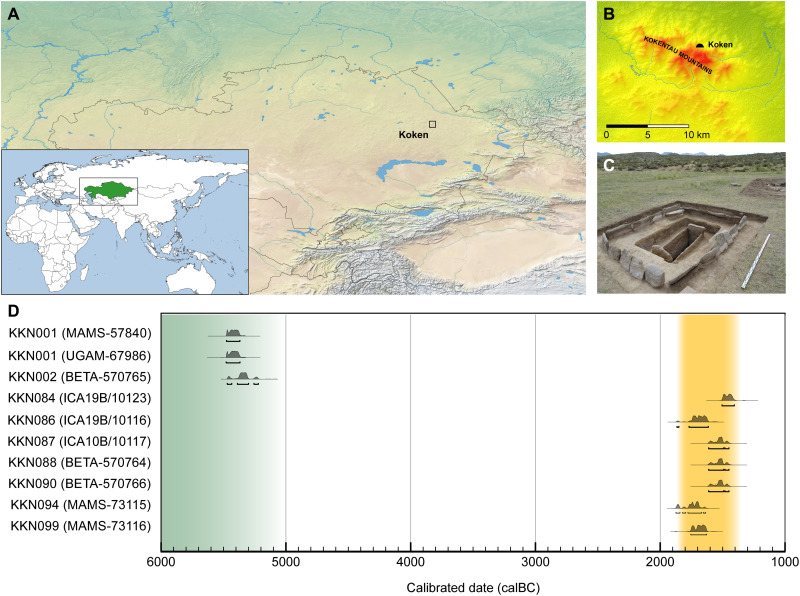 Figure 1
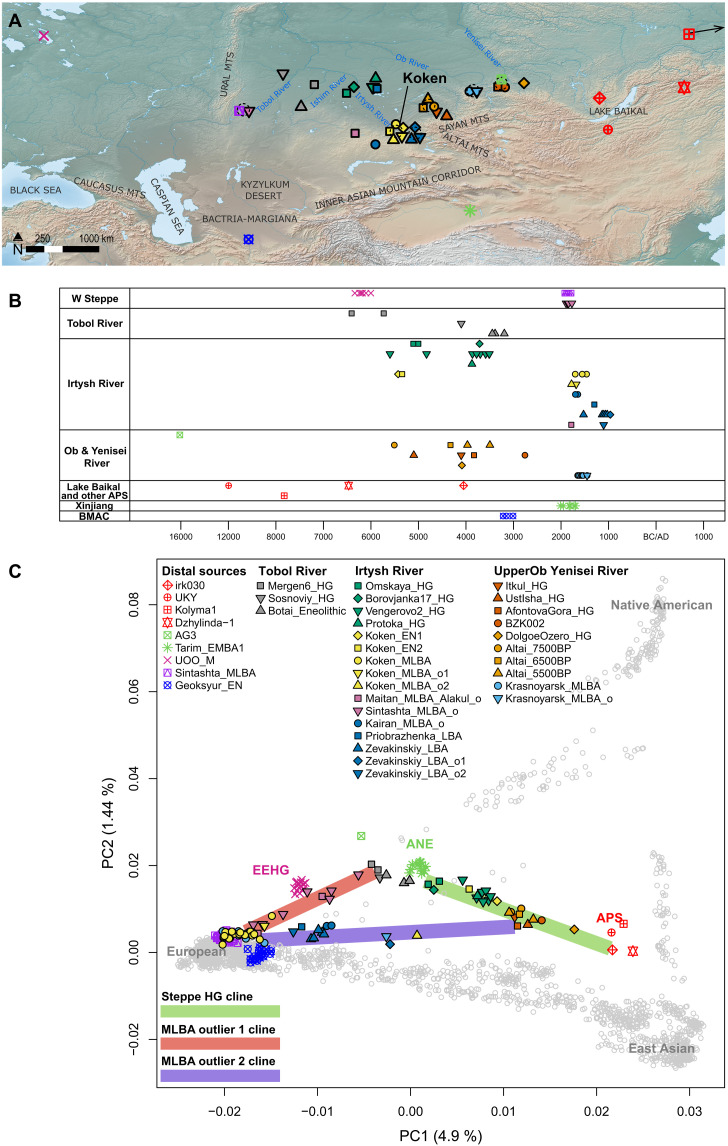 Figure 2
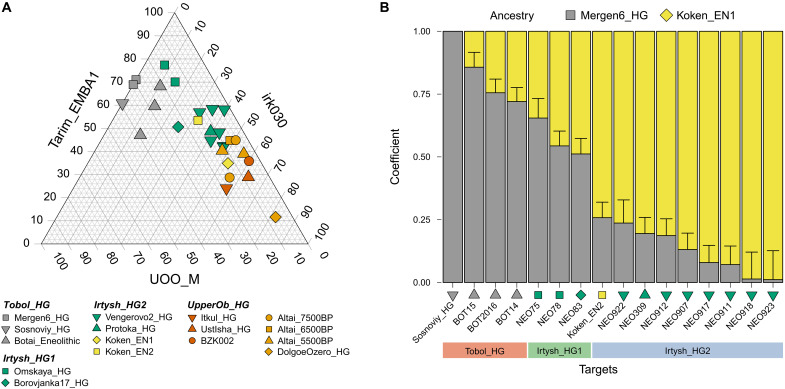 Figure 3
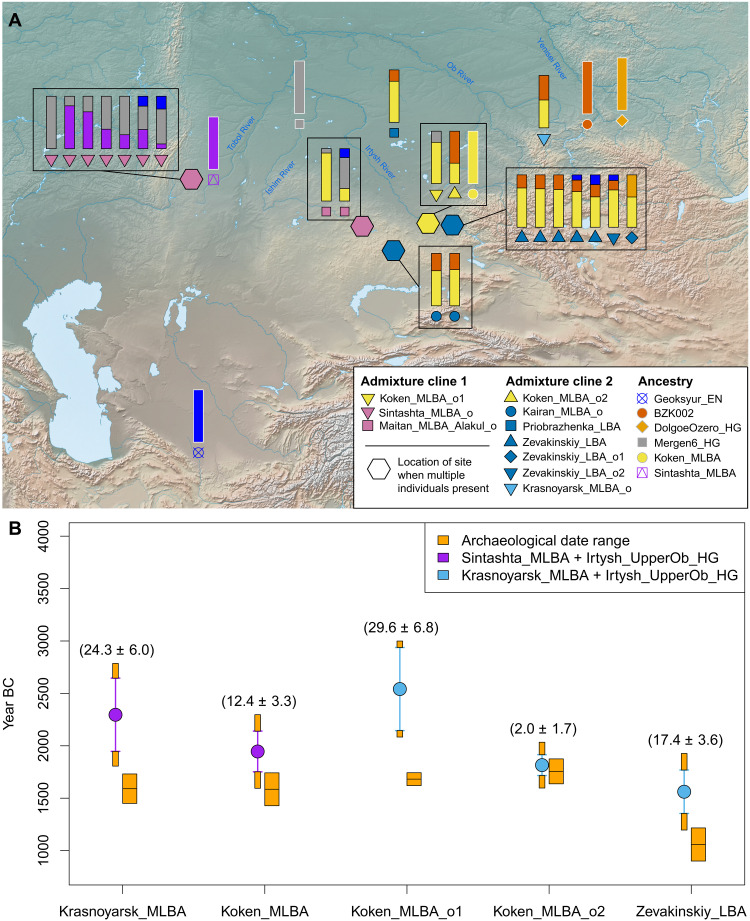 Figure 4
Peer Reviews
No public reviews on file for this paper yet. If you reviewed it on a platform where reviews are public (OpenReview, ICLR, NeurIPS, ICML), you can paste yours below so the community can read it here.
Videos
No videos yet. Explain this paper in a talk, walkthrough, or lecture? Add one.
Taxonomy
TopicsForensic and Genetic Research · Genetic diversity and population structure · Forensic Anthropology and Bioarchaeology Studies