EF1α and αTUB Are Stable Reference Gene Pairs for RT-qPCR-Based Gene Expression Studies in Salix suchowensis Under Nitrogen Treatment Conditions
Lei Huang, Yuyi Zhang, Fei Gao, Yu Fu, Jing Sun, Jie Zhou, Jun Tao, Xudong He, Nan Guo

TL;DR
This study identifies EF1α and αTUB as reliable reference genes for gene expression analysis in Salix suchowensis under different nitrogen conditions.
Contribution
The study provides the first validated reference gene pairs for RT-qPCR normalization in Salix species under varying nitrogen treatments.
Findings
EF1α and αTUB showed the highest expression stability across tissues and nitrogen treatments.
Five genes were excluded due to poor amplification or irregular melting curves.
EF1α + αTUB is recommended as the optimal reference gene pair for RT-qPCR normalization in Salix under nitrogen stress.
Abstract
Salix suchowensis is an ideal model organism for investigating nitrogen (N) transport mechanisms due to its low N-input requirements. Accurate quantification of gene expression is essential for elucidating these processes, with quantitative real-time PCR (RT-qPCR) being the preferred method. However, the identification of stable reference genes for normalization in Salix suchowensis under varying N conditions remains unresolved. In this study, thirteen commonly employed candidate reference genes were evaluated across root, stem, and leaf tissues, under four N treatments (NH4NO3, NH4+, NO3−, and N deficiency). Five genes (UBQ1, UBQ3, 18S, H2A2, and H2B2) were excluded due to poor amplification efficiency or irregular melting curves. The remaining eight genes were further assessed for expression stability using the geNorm, NormFinder, and BestKeeper algorithms. Integrated ranking via…
Genes, proteins, chemicals, diseases, species, mutations and cell lines named across the full text — each resolved to its canonical identifier and authoritative record.
Click any figure to enlarge with its caption.
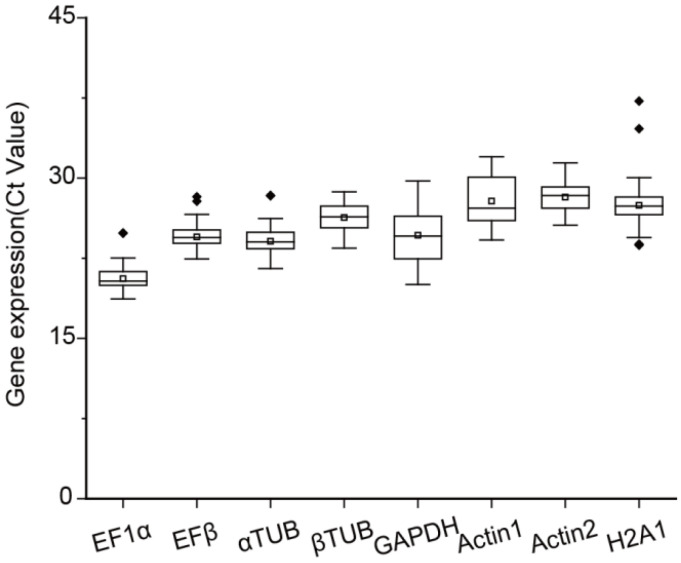 Figure 1
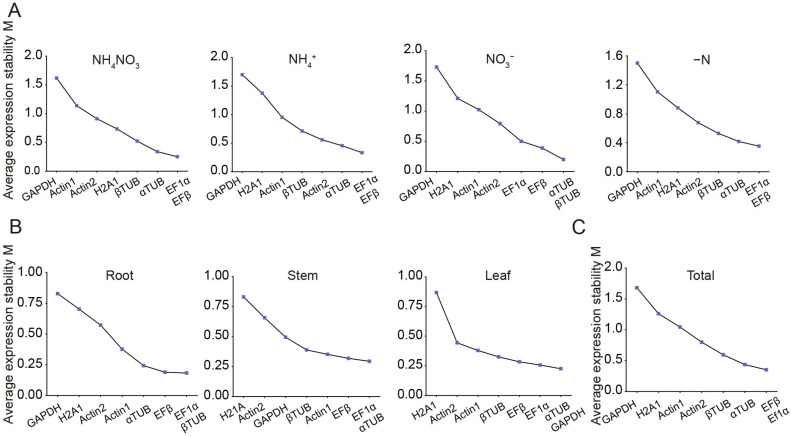 Figure 2
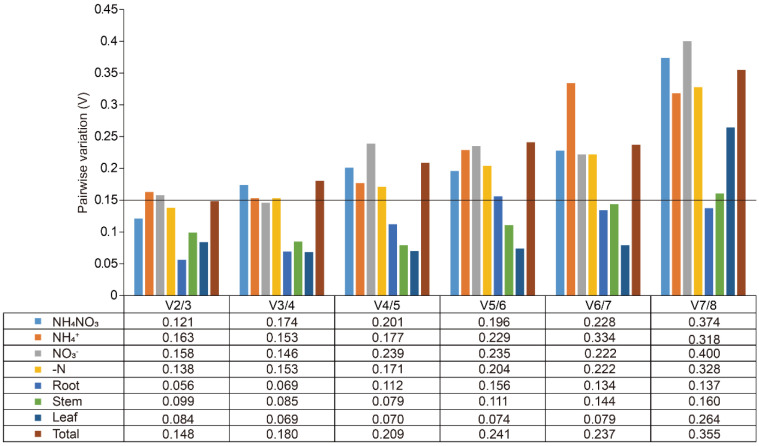 Figure 3
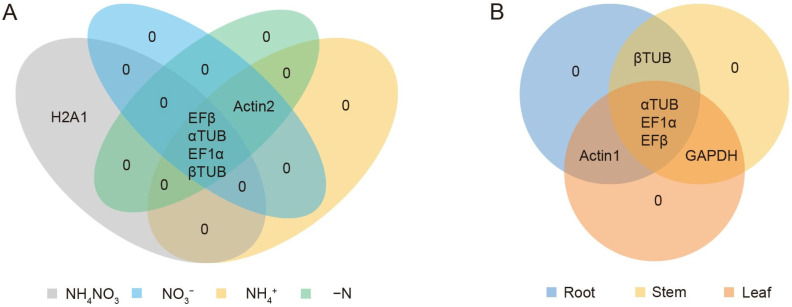 Figure 4
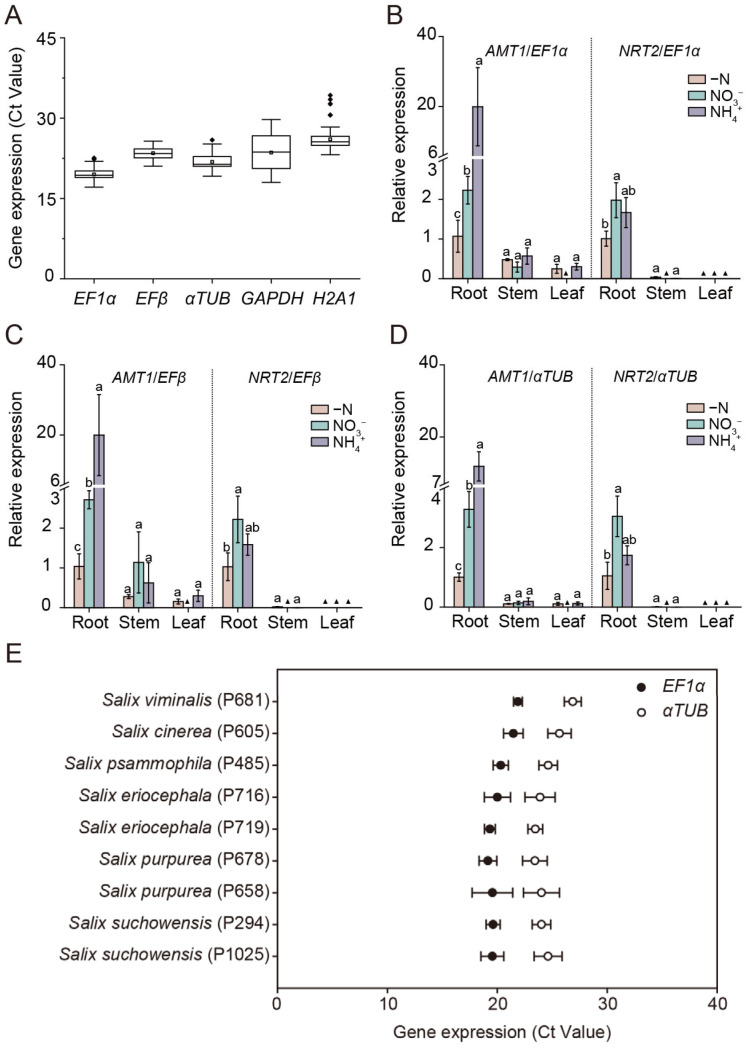 Figure 5
 Figure 6
 Figure 7
 Figure 8
 Figure 9
 Figure 10
 Figure 11
 Figure 12
 Figure 13
 Figure 14
 Figure 15
 Figure 16
 Figure 17
 Figure 18
 Figure 19
 Figure 20
 Figure 21
Peer Reviews
No public reviews on file for this paper yet. If you reviewed it on a platform where reviews are public (OpenReview, ICLR, NeurIPS, ICML), you can paste yours below so the community can read it here.
Videos
No videos yet. Explain this paper in a talk, walkthrough, or lecture? Add one.
Taxonomy
TopicsMolecular Biology Techniques and Applications · Soil Carbon and Nitrogen Dynamics · Agriculture, Soil, Plant Science