Effects of a Standing Program for Ambulatory Children with Myelomeningocele: A Single-Subject Design
Marianne Hanover, Elizabeth M. Ardolino, Megan B. Flores

TL;DR
A standing program improved muscle flexibility and movement quality in ambulatory children with myelomeningocele, but more research is needed.
Contribution
This study provides evidence for the effectiveness of home-based standing programs in ambulatory children with myelomeningocele.
Findings
Improvements in hip and knee muscle flexibility were observed during the intervention phases.
Functional movement quality improved in both children, but gait velocity and daily activity scores remained stable.
Parental feedback indicated increased independence and high engagement with the home program.
Abstract
Background/Objectives: Children with myelomeningocele (MMC) often experience lower extremity muscular contractures, which can impact their functional mobility. While standing programs have demonstrated benefits for children with other neuromuscular conditions, there is limited evidence on their use in ambulatory children with MMC who have joint deformities. This single-subject design study examined the impact of a home-based standing program on two ambulatory children with MMC, focusing on lower extremity muscle flexibility, functional movement quality, gait velocity, and participation in daily activities. Methods: Two children participated in a multi-phase single-subject (ABABA) withdrawal design beginning with the baseline phase and then alternating between the intervention and withdrawal phases. The intervention consisted of 60-minute standing sessions, five days a week, using a…
Genes, proteins, chemicals, diseases, species, mutations and cell lines named across the full text — each resolved to its canonical identifier and authoritative record.
Click any figure to enlarge with its caption.
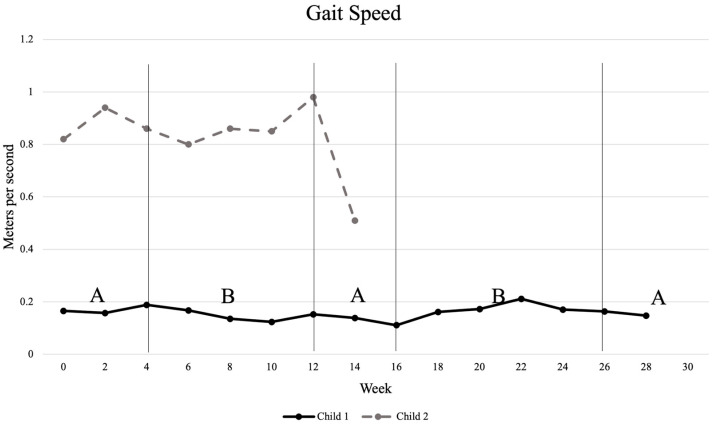 Figure 1
Peer Reviews
No public reviews on file for this paper yet. If you reviewed it on a platform where reviews are public (OpenReview, ICLR, NeurIPS, ICML), you can paste yours below so the community can read it here.
Videos
No videos yet. Explain this paper in a talk, walkthrough, or lecture? Add one.
Taxonomy
TopicsSpinal Dysraphism and Malformations · Cerebral Palsy and Movement Disorders · Family and Disability Support Research