Molecular Adaptations to Repeated Radiation Exposure in Triple-Negative Breast Cancer: Dysregulation of Cell Adhesion, Mitochondrial Function, and Epithelial–Mesenchymal Transition
Noah Dickinson, Alyssa Murray, Megan Davis, Kaitlyn Marshall-Bergeron, Jessica Dougherty, Wuroud Al-Khayyat, Ramya Narendrula, Maggie Lavoie, Emma Mageau, Ronan Derbowka, A. Thomas Kovala, Douglas R. Boreham, Natalie Lefort, Christopher Thome, Tze Chun Tai

TL;DR
This study explores how triple-negative breast cancer cells adapt to repeated radiation, leading to resistance and changes in cell adhesion and function.
Contribution
The study identifies specific molecular adaptations in radiation-resistant triple-negative breast cancer cells, including dysregulated cell adhesion and mitochondrial pathways.
Findings
Radiation-adapted cells showed reduced adhesion receptor expression and impaired cell adhesion to extracellular matrix substrates.
Mitochondrial dysfunction was observed with downregulation of oxidative phosphorylation genes and reduced membrane potential.
Epithelial–mesenchymal transition markers indicated increased migratory potential in radiation-adapted cells.
Abstract
Radiation resistance presents a significant challenge in the treatment of triple-negative breast cancer (TNBC). To investigate the molecular adaptations associated with radiation therapy resistance, MDA-MB-231 cells were subjected to a repeated radiation (RR) regimen totaling 57 Gy over 11 weeks, followed by clonal selection. The resulting radiation-adapted cells (MDA-MB-231RR) were analyzed using whole-transcriptome RNA sequencing, revealing substantial dysregulation of pathways related to cell adhesion, mitochondrial function, and epithelial–mesenchymal transition (EMT). These transcriptional changes were corroborated by functional assays. MDA-MB-231RR cells exhibited reduced expression of adhesion receptors (ITGB1, ITGA2, ITGA6) and extracellular matrix proteins (fibronectin, collagen, laminins), accompanied by significantly impaired cell adhesion to fibronectin, collagen, and…
Genes, proteins, chemicals, diseases, species, mutations and cell lines named across the full text — each resolved to its canonical identifier and authoritative record.
Click any figure to enlarge with its caption.
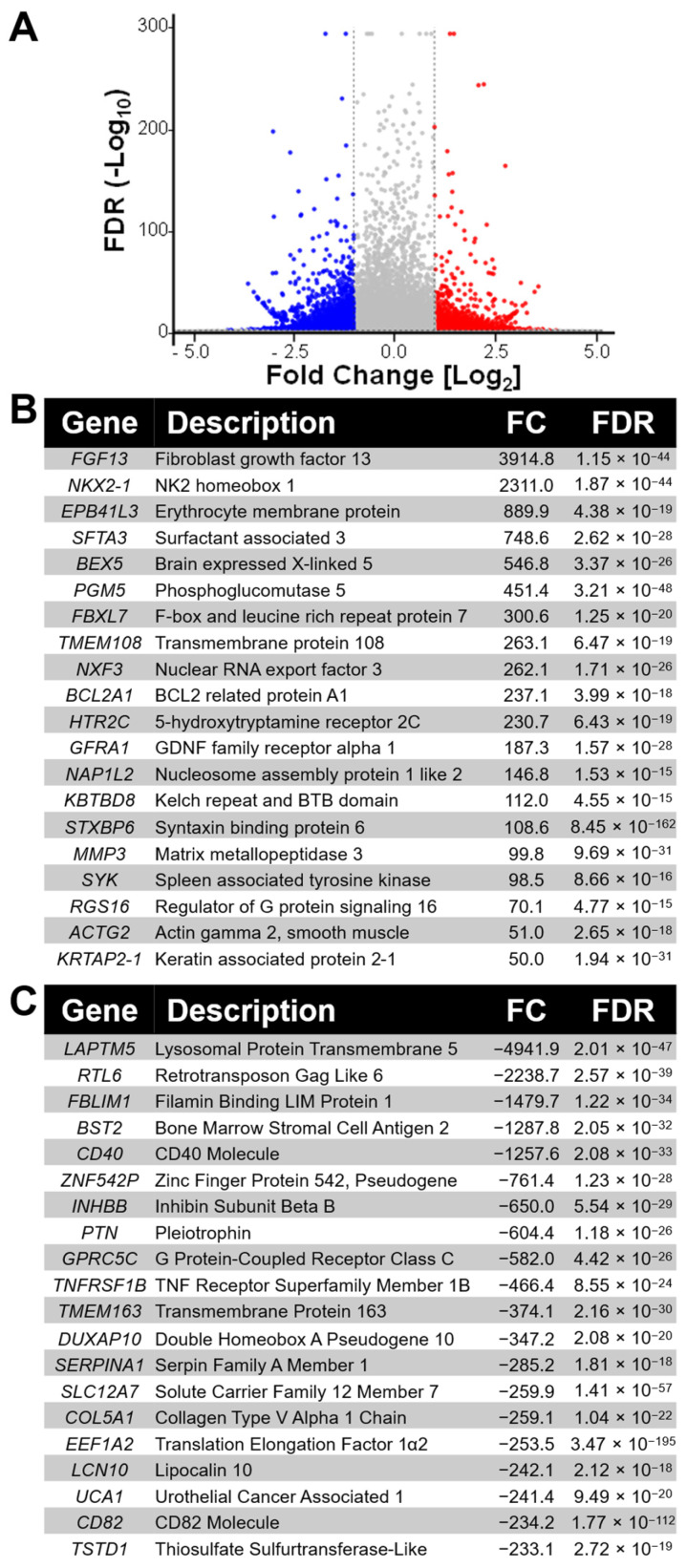 Figure 1
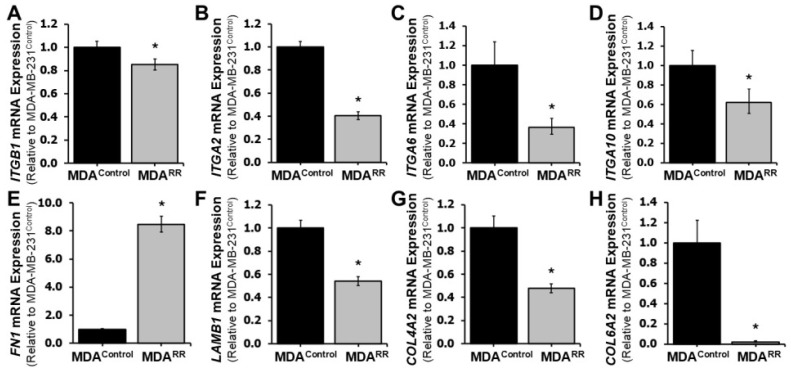 Figure 2
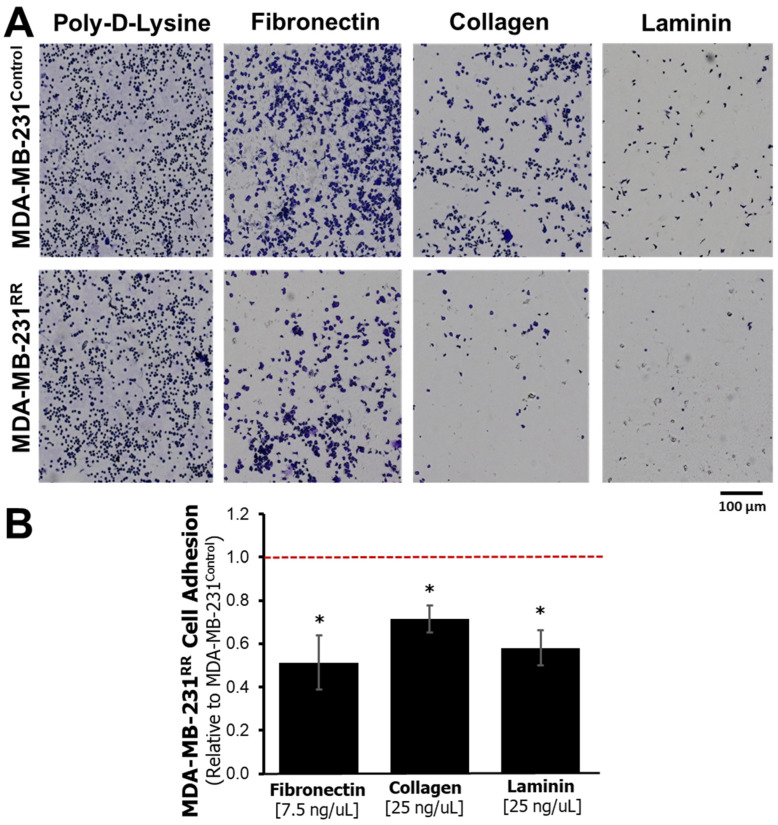 Figure 3
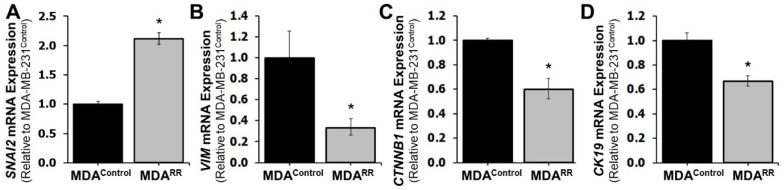 Figure 4
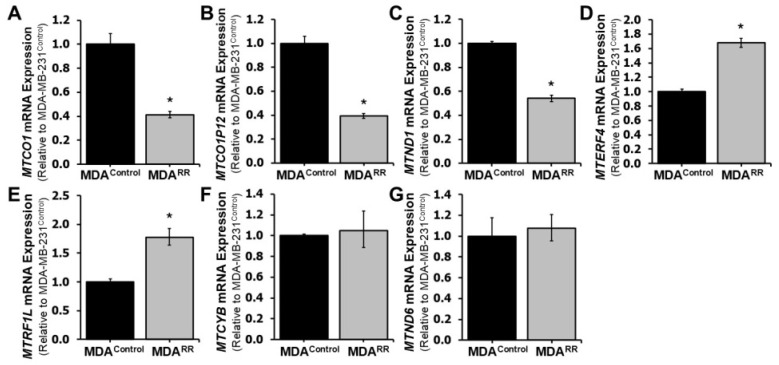 Figure 5
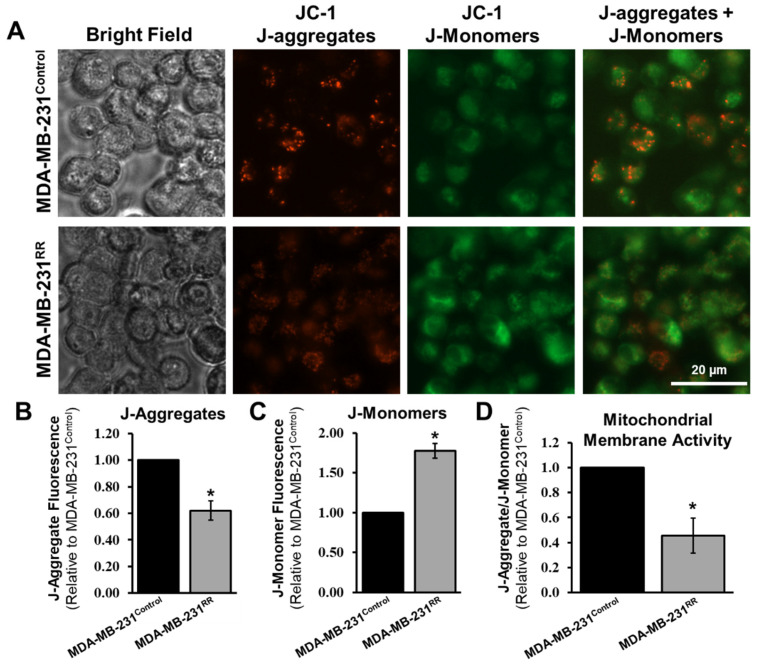 Figure 6
Peer Reviews
No public reviews on file for this paper yet. If you reviewed it on a platform where reviews are public (OpenReview, ICLR, NeurIPS, ICML), you can paste yours below so the community can read it here.
Videos
No videos yet. Explain this paper in a talk, walkthrough, or lecture? Add one.
Taxonomy
TopicsCancer Cells and Metastasis · Cancer Genomics and Diagnostics · Breast Cancer Treatment Studies