Serotonergic and Cholinergic Imbalance in the Offspring of Rats Exposed to Bisphenol A and Bisphenol S During Pregnancy and Lactation: Short- and Long-Term Effects
Keila A. Semeão, Ana Carolina Dutra-Tavares, Anderson Ribeiro-Carvalho, Jemima Isnardo-Fernandes, Letycia D. Lopes, Gabriel S. M. Souza, André L. Nunes-Freitas, Beatriz S. Silva, Claudio C. Filgueiras, Alex C. Manhães, Patricia C. Lisboa, Yael Abreu-Villaça

TL;DR
Exposure to BPA and BPS during pregnancy and lactation disrupts cholinergic and serotonergic systems in rat offspring, leading to sex-dependent short- and long-term effects.
Contribution
This study reveals sex- and compound-specific neurodevelopmental effects of BPA and BPS on neurotransmitter systems in offspring.
Findings
BPA and BPS exposure disrupted cholinergic and serotonergic systems in rat offspring.
Effects varied by sex, brain region, and time point, with BPA showing more pronounced changes.
Both BPA and BPS are identified as neurotoxicants that may program later-life disorders.
Abstract
Considering the increased risk of cognitive deficits and mood disorders programming associated with bisphenol exposure, we used a preclinical model to identify short- and long-term effects of early exposure to Bisphenol A (BPA) and its replacement, Bisphenol S (BPS), on the central cholinergic and serotonergic systems. Wistar female and male rats born to dams exposed to BPA or BPS (both at 10 μg/kg/day or 50 μg/kg/day) during pregnancy and lactation were euthanized at weaning or adulthood. Cholinergic and serotonergic biomarkers were assessed in the frontal cortex and pons + medulla oblongata. BPA and BPS disrupted these systems, with outcomes depending on the specific bisphenol, biomarker, and time point. Effects also varied across brain regions and between sexes. The nicotinic cholinergic receptor showed more pronounced alterations than the presynaptic choline transporter. Both…
Genes, proteins, chemicals, diseases, species, mutations and cell lines named across the full text — each resolved to its canonical identifier and authoritative record.
Click any figure to enlarge with its caption.
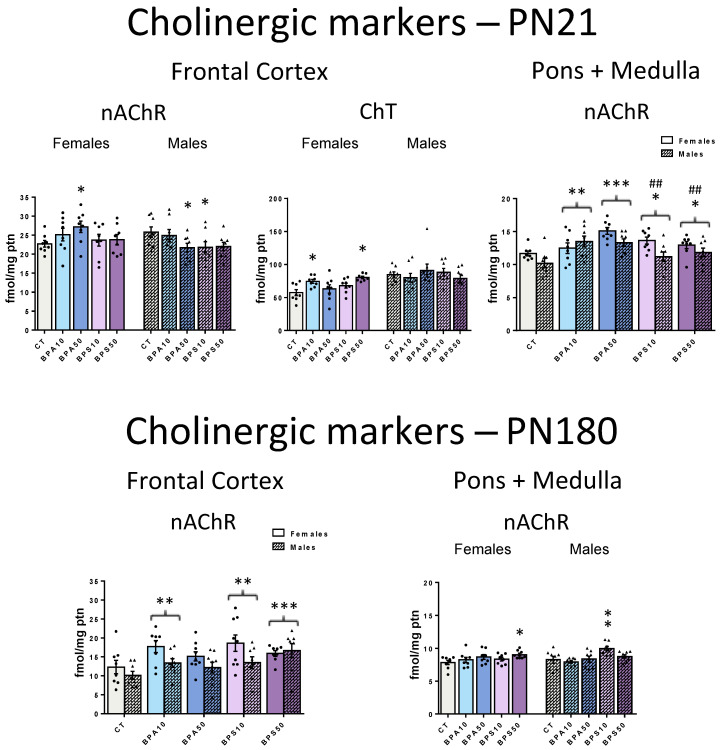 Figure 1
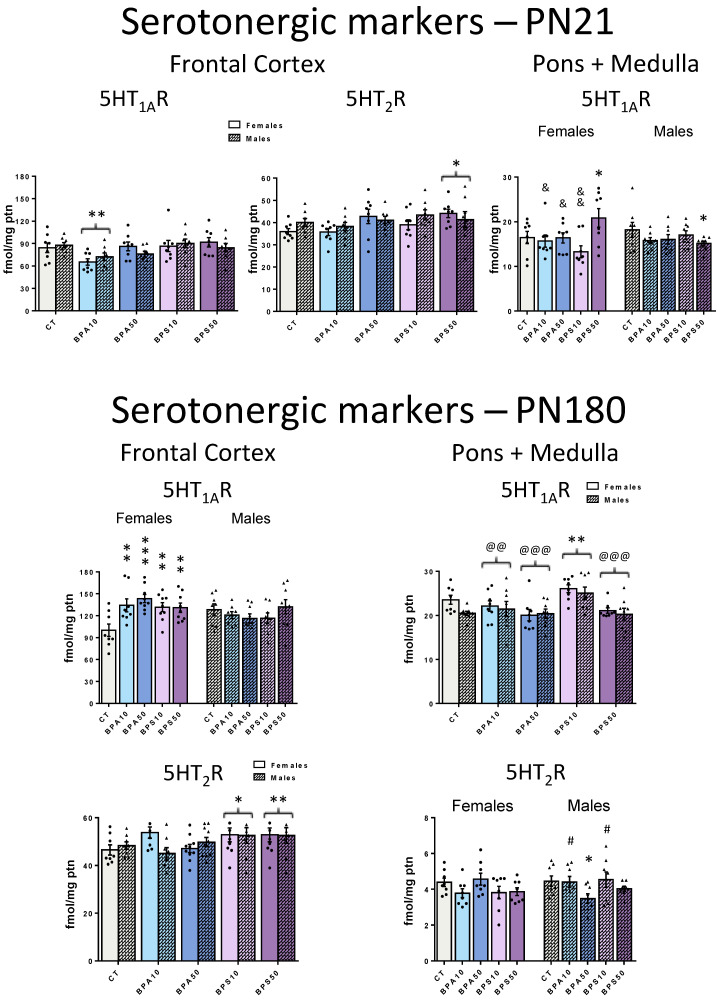 Figure 2
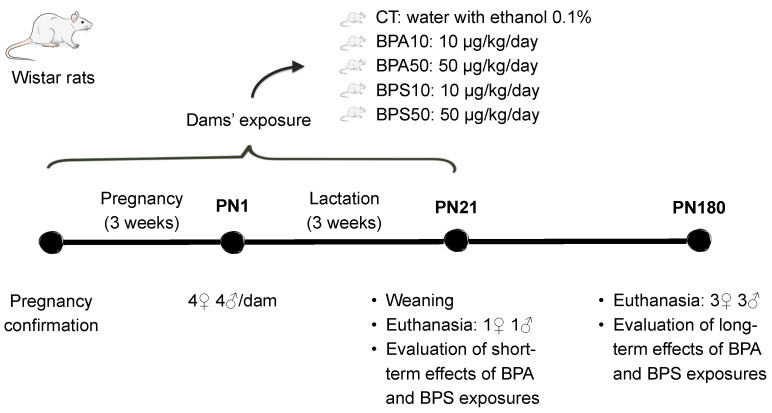 Figure 3
Peer Reviews
No public reviews on file for this paper yet. If you reviewed it on a platform where reviews are public (OpenReview, ICLR, NeurIPS, ICML), you can paste yours below so the community can read it here.
Videos
No videos yet. Explain this paper in a talk, walkthrough, or lecture? Add one.
Taxonomy
TopicsEffects and risks of endocrine disrupting chemicals