Spatiotemporal Distribution Patterns and Conservation Priorities of Gymnosperms With Different Leaf Shapes in China Under Climate Change
Jinyi Fu, Wenjie Song, Chuncheng Wang, Xiaolong Jiang, Xiangbao Shen, Rong Yi

TL;DR
This study models how climate change will affect the distribution of rare gymnosperms in China, finding that many species will lose habitat and shift to higher altitudes.
Contribution
The study identifies spatiotemporal distribution patterns of gymnosperms with different leaf shapes under climate change scenarios in China.
Findings
Approximately half of the gymnosperm species will experience notable range contractions and migrate to higher altitudes.
Lanceolate-leaved gymnosperms show an expansionary trend, while other groups face range reductions.
High species richness hotspots have limited overlap with existing nature reserves, indicating a need for new conservation strategies.
Abstract
Leaf morphology is one of the important indicators for studying the response of plants to climate change. Gymnosperms play a crucial role in maintaining biodiversity and ecosystem stability in China. However, the geographical and altitudinal distribution patterns of gymnosperms with different leaf morphologies in China in response to climate change are not yet fully understood. This study utilized occurrence data for 71 rare gymnosperm species (including varieties) and 15 environmental variables to model the contemporary geographical distribution for the 2070s and the 2090s under two shared socioeconomic pathway scenarios (SSP2‐4.5 and SSP5‐8.5). Gymnosperm species were classified into five groups based on their leaf shapes (needle‐shaped, scale‐shaped, lanceolate‐shaped, fan‐shaped, and strip‐shaped), and the analysis revealed that the primary climatic variable driving ecological niche…
Genes, proteins, chemicals, diseases, species, mutations and cell lines named across the full text — each resolved to its canonical identifier and authoritative record.
Click any figure to enlarge with its caption.
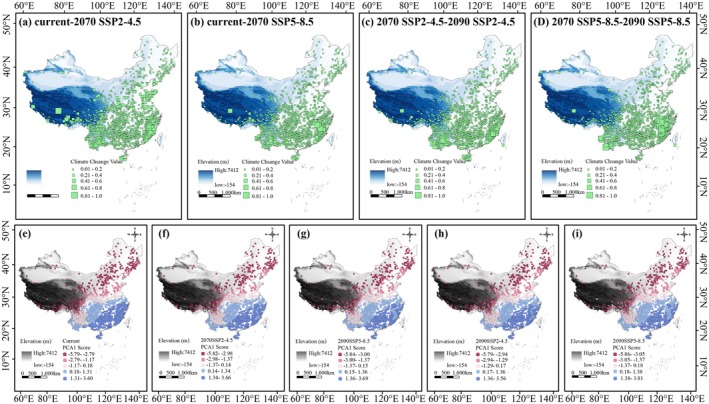 Figure 1
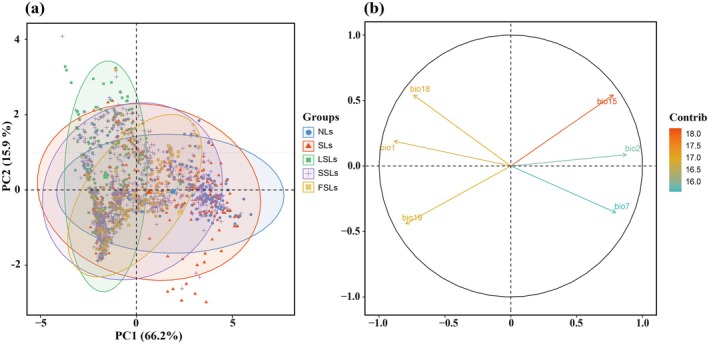 Figure 2
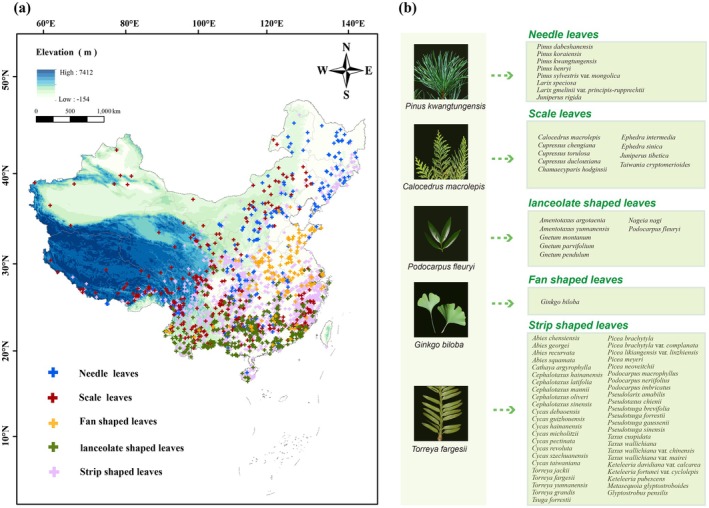 Figure 3
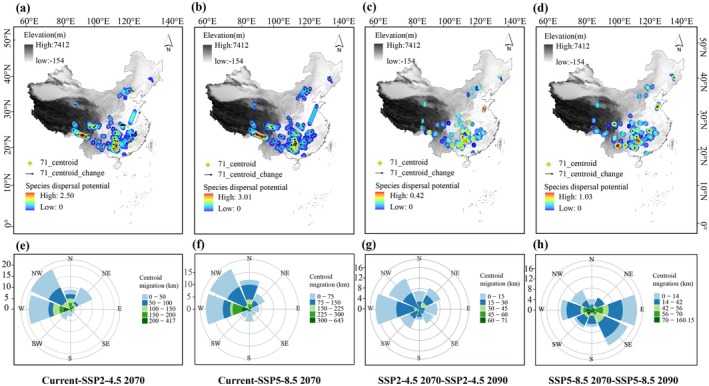 Figure 4
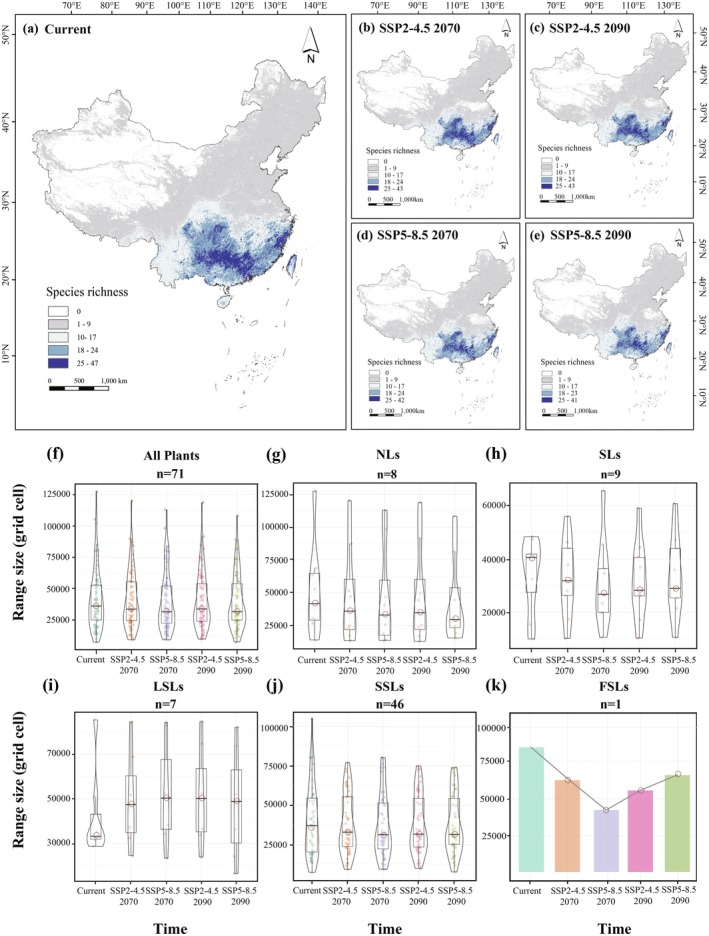 Figure 5
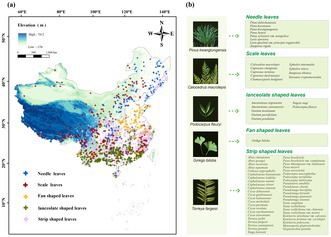 Figure 6
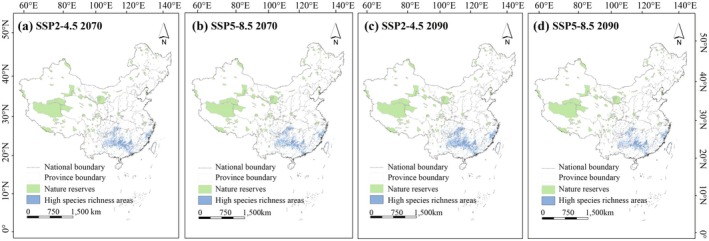 Figure 7
Peer Reviews
No public reviews on file for this paper yet. If you reviewed it on a platform where reviews are public (OpenReview, ICLR, NeurIPS, ICML), you can paste yours below so the community can read it here.
Videos
No videos yet. Explain this paper in a talk, walkthrough, or lecture? Add one.
Taxonomy
TopicsForest, Soil, and Plant Ecology in China