Unexpected Stroke Two Years After Atrial Septal Defect Closure: A Case of Late Device Embolization
Nuria Pueyo‐Balsells, Ignacio Barriuso, Marta Zielonka, Carlos Izurieta, Kristian Rivera

TL;DR
A woman experienced a stroke two years after heart defect closure due to device embolization, highlighting the need for long-term monitoring.
Contribution
This case highlights inherited thrombophilia's role in embolic events and the importance of long-term surveillance after device implantation.
Findings
Device embolization occurred two years after ASD closure, causing an ischemic stroke.
Conservative management was successful despite device migration.
Multimodal imaging was crucial for diagnosis and guiding treatment decisions.
Abstract
A 42‐year‐old woman with a C677T mutation in the methylenetetrahydrofolate reductase gene and a history of transient ischemic attack underwent transcatheter closure of an ostium secundum atrial septal defect (ASD‐OS) using a Figulla Flex II device. Two years later, she presented with an ischemic stroke. Imaging revealed late embolization of the occluder device to the aorto‐iliac bifurcation. As she remained asymptomatic, a conservative approach was adopted. A second transcatheter ASD‐OS closure was successfully performed. This case underscores the potential contribution of inherited thrombophilia to recurrent embolic events, the importance of long‐term surveillance for device complications, and the value of multimodal imaging in guiding clinical decision making.
Genes, proteins, chemicals, diseases, species, mutations and cell lines named across the full text — each resolved to its canonical identifier and authoritative record.
Click any figure to enlarge with its caption.
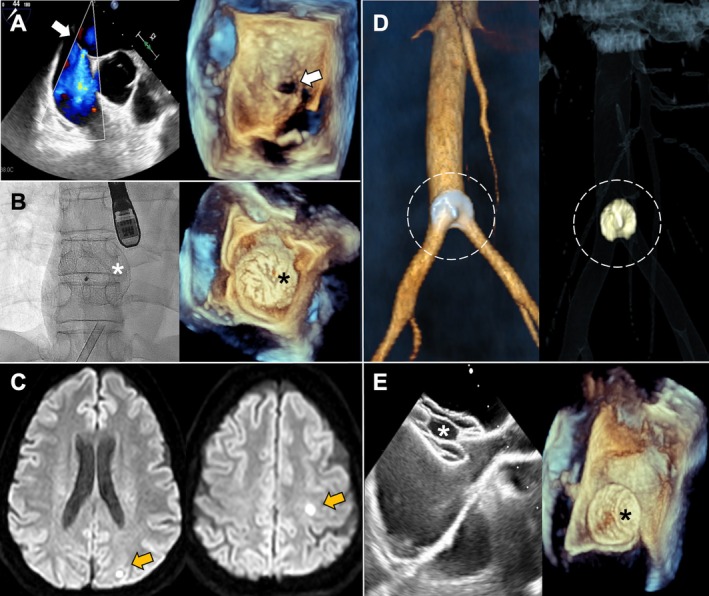 Figure 1
Peer Reviews
No public reviews on file for this paper yet. If you reviewed it on a platform where reviews are public (OpenReview, ICLR, NeurIPS, ICML), you can paste yours below so the community can read it here.
Videos
No videos yet. Explain this paper in a talk, walkthrough, or lecture? Add one.
Taxonomy
TopicsCardiovascular and Diving-Related Complications · Atrial Fibrillation Management and Outcomes · Venous Thromboembolism Diagnosis and Management