Infertility screening in unmarried women: A scoping review protocol
Sanam Borji-Navan, Nasser Mogharabian, Godwin Banafo Akrong, Godwin Banafo Akrong, Godwin Banafo Akrong, Godwin Banafo Akrong

TL;DR
This study outlines a plan to review what is known about infertility screening for unmarried women, aiming to improve understanding and care for this often-overlooked group.
Contribution
The study introduces a systematic scoping review protocol focused on the under-researched topic of infertility screening in unmarried women.
Findings
The review will map current screening practices and barriers for unmarried women.
It will identify gaps in knowledge and guide future culturally sensitive interventions.
Findings will be synthesized through narrative and visual summaries.
Abstract
This scoping review aims to systematically map the landscape of infertility screening in unmarried women. Infertility screening in unmarried women represents a significant and often neglected area within reproductive health. This population faces unique challenges and barriers, including social stigma, cultural norms, and limited access to care, making a comprehensive understanding of current screening practices essential. Study selection will be guided by the PCCT framework (Population, Concept, Context, and study type), considering diverse study designs (quantitative, qualitative, mixed-methods, reviews) and grey literature, focusing on infertility screening in unmarried women. This scoping review will follow the PRISMA-ScR guidelines and utilize a 14-step framework based on Arksey and O’Malley’s methodology, incorporating enhancements by Tricco and Peters. A comprehensive search…
Genes, proteins, chemicals, diseases, species, mutations and cell lines named across the full text — each resolved to its canonical identifier and authoritative record.
Click any figure to enlarge with its caption.
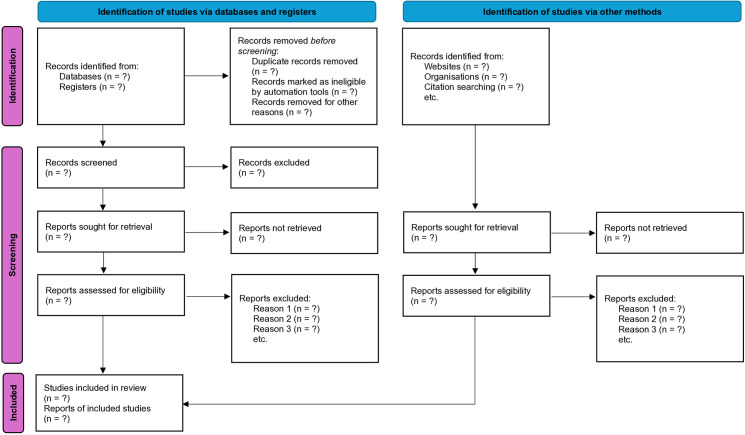 Fig 1
Fig 1Peer Reviews
No public reviews on file for this paper yet. If you reviewed it on a platform where reviews are public (OpenReview, ICLR, NeurIPS, ICML), you can paste yours below so the community can read it here.
Videos
No videos yet. Explain this paper in a talk, walkthrough, or lecture? Add one.
Taxonomy
TopicsAssisted Reproductive Technology and Twin Pregnancy · Reproductive Health and Technologies
Introduction
Infertility, defined as the inability to achieve pregnancy after 12 months of regular unprotected sexual intercourse, is a significant global health issue affecting approximately 10–15% of couples of reproductive age [1]. While infertility encompasses both male and female factors [2], women frequently experience a disproportionate burden of social, emotional, and psychological consequences, particularly in societies where cultural norms tie reproductive capacity to marital status [3]. Within this context, unmarried women constitute a unique and often understudied population, facing distinct challenges in accessing infertility screening and care. These challenges are compounded by societal stigma, legal restrictions, and limited healthcare resources, which may delay diagnosis and exacerbate reproductive health disparities [4].
In females, the primary focus of infertility screening is on assessing ovarian reserve and uterine health. Infertility screening involves clinical assessments, hormonal assays (e.g., FSH, LH, AMH), and imaging techniques (e.g., pelvic ultrasonography) to evaluate reproductive status [5]. In specific cases, advanced procedures such as hysteroscopy or laparoscopy may be employed [6]. These measures collectively facilitate the identification of infertility etiologies and guide subsequent therapeutic interventions.
The importance of infertility screening for unmarried women is increasingly recognized, yet significant barriers persist [7]. Societal perceptions often frame fertility concerns as relevant only to married individuals, marginalizing unmarried women who seek reproductive health services [4,8]. This stigma may deter timely screening, potentially leading to poorer health outcomes due to delayed identification of treatable conditions such as tubal factor infertility or ovulatory dysfunction [9–11]. Furthermore, unmarried women may encounter structural obstacles, including lack of partner involvement, financial constraints, and restrictive policies governing access to fertility treatment [12,13].
Guidelines concerning fertility screening and counseling are limited [7]. Despite these considerations, based on our knowledge the current literature lacks a synthesis of evidence specific to infertility screening in unmarried women. This gap hinders the development of targeted guidelines and equitable healthcare policies. To address this, the present scoping review protocol outlines a structured approach to map existing research, identify knowledge gaps, and elucidate key concepts related to infertility screening in this population.
Objectives
Primary outcomes
To identify existing guidelines for female infertility screening and evaluate their applicability and specific recommendations for unmarried women.To map the range and types of infertility screening methods currently used, or that could potentially be used, for unmarried women.
Secondary outcomes
To synthesize the advantages and disadvantages of infertility screening specifically for unmarried women.To identify knowledge gaps, areas requiring further research, and policy implications related to infertility screening in unmarried women.
Review question
What is the current state of knowledge regarding infertility screening in unmarried women?
Inclusion and exclusion criteria
Study eligibility was determined using the PCCT framework, detailed in Table 1.
Table 1: PCCT framework.
Inclusion and exclusion criteria may be refined iteratively. Machine translation ensured language inclusivity. The search covered publications from inception to May 31, 2025.
Methods and analysis
This scoping review, following PRISMA-P (protocol) (S1 Checklist) [14] and PRISMA-ScR (reporting) [15] guidelines, utilizes a 14-step framework. This framework, based on Arksey and O’Malley’s [16] methodology and incorporating improvements by Tricco and Peters [17,18], includes: protocol development, question/objectives formulation, eligibility criteria definition, literature search (in resources, reference lists and grey literature), which will be informed by engagement with key stakeholders to refine the search strategy and identify relevant grey literature, study screen, study selection, design and perform data charting, results and flowchart presentation, and identification of research and practical implications.
Search methods and sources (search strategy)
To ensure comprehensive literature retrieval, this review’s search strategy, compliant with PRISMA-S [19], identified key concepts and keywords. This involved utilizing established thesauri (MeSH, EMTREE, ERIC), free-text method as well as employing wildcards and truncation to broaden the search terms. Database-specific search strategies were developed for Web of Science (Institute of Scientific Information (ISI)), PubMed, Scopus, and search engines such as Google Scholar, using Boolean operators (“OR” and “AND”) appropriately (S1 File). Forward and backward citation tracking of influential articles, further enhanced the search. A detailed log of search terms and strategies will be provided in Supplementary File.
Initial search for studies will be conducted by S.B. (the principal investigator). We will not be seeking assistance from an external expert in Library and Information retrieval for the search itself. However, to ensure the robustness of our search strategy, we will consult with subject-matter experts in the field when developing and refining the keywords used.
Study records
Data management.
Retrieved records will be managed in HubMeta [20], with duplicates removed. Two independent reviewers will screen titles and abstracts, followed by full-text review of potentially eligible articles.
Selection process.
Study selection will involves two phases: title/abstract screening and full-text review against pre-defined criteria. Disagreements will resolve by consensus or a third reviewer. A PRISMA flowchart (Fig 1) will detail the process. Authors will be contacted for missing data. Inter-rater reliability (Kappa) will be calculated.
PRISMA flowchart.
Data collection and analysis.
Two independent extractors will thoroughly review the full text of each study that meets the inclusion criteria using a standardized data charting form. This form, developed and piloted by the research team, aligns with the PCCT framework and the objectives of the scoping review.
It will systematically capture key study characteristics, including authors, publication year, study design, country, and language. Additionally, participant characteristics such as age range, subgroups, recruitment methods, sample size, and contextual details will be documented. The form will also address infertility screening details, including the types of methods discussed, motivations for screening. Contextual details will cover the study setting (clinical, community, etc.) and relevant geographical or cultural influences.
The process of data extraction will be iterative, with the form being reviewed and refined based on initial extractions to ensure comprehensive data capture. Any discrepancies between the two extractors will be resolved through discussion, and if necessary, a third reviewer will be consulted. The extracted data will be synthesized into tables and diagrams, accompanied by a narrative summary that highlights key themes, gaps, and the overall scope of research in this area.
S.B. will be contacted for any essential missing information to ensure a complete data synthesis. A rigorous quality assurance process will be implemented to address discrepancies, involving consensus-building with a third researcher to guarantee the accuracy of the data. Finally, the finalized data will be systematically categorized and organized for efficient analysis.
Critical appraisal
Consistent with scoping review methodology, a formal quality appraisal of included studies will not be conducted [15].
Data synthesis and analysis
Data will be synthesized and presented in tables and diagrams, aligned with the review’s objectives, and supported by a narrative summary. For qualitative and mixed-methods studies, we will employ thematic analysis.
Ethics and dissemination
Any protocol amendments will be documented. Due to data complexity, results may be disseminated in multiple publications.
Discussion
This scoping review protocol addresses a critical gap in the literature by outlining a systematic approach to mapping the evidence on infertility screening in unmarried women. By identifying relevant guidelines, mapping screening methods, and synthesizing their advantages and disadvantages, we anticipate that this review will identify key knowledge gaps and inform the development of targeted interventions to improve reproductive health outcomes for this underserved population.
A key strength of this protocol is its adherence to PRISMA-ScR guidelines, ensuring transparency and reproducibility.
This study will provide a critical foundation for future research, policy, and practice related to infertility screening in unmarried women.
Supporting information
S1 ChecklistPRISMA-P 2015 checklist.(DOCX)
S1 FileSearch strategy (Terms can be used in the search strategy in PubMed database).(DOCX)
The reference list from the paper itself. Each links out to its DOI / PubMed record.
- 1Organization WH. WHO fact sheet on infertility. Glob Reprod Health. 2021;6(1):e 52.
- 2Kay VJ, Howie R, Campbell MJ. Female and male infertility. In: Mahmood T, Savona-Ventura C, Messinis I, Mukhopadhyay S, editors. The EBCOG postgraduate textbook of obstetrics & gynaecology: gynaecology. Cambridge: Cambridge University Press; 2021. p. 124–34.
- 3Gulzar U, Randhawa RK, Chaudhary P. Infertility as a burden-women as victim. Infertility. 2021;7(12).
- 4Mohammadi F, Kohan S, Mostafavi F, Gholami A. The stigma of reproductive health services utilization by unmarried women. Iran Red Crescent Med J. 2016;18(3):e 24231. doi: 10.5812/ircmj.24231 27247794 PMC 4884608 · doi ↗ · pubmed ↗
- 5Carson SA, Kallen AN. Diagnosis and management of infertility: a review. JAMA. 2021;326(1):65–76.34228062 10.1001/jama.2021.4788 PMC 9302705 · doi ↗ · pubmed ↗
- 6Sharma P, Jhanwar A, Kumari K, Arya J, Bharti B, Majeed B, et al. A prospective study to evaluate the role of combined diagnostic laparoscopy and hysteroscopy in the management of female infertility. Cureus. 2024;16(1):e 52170. doi: 10.7759/cureus.52170 38344511 PMC 10859148 · doi ↗ · pubmed ↗
- 7Bakkensen JB, Goldman KN. Women’s preventive services initiative: fertility counseling overlooked. Am J Obstet Gynecol. 2022;226(4):524–8. doi: 10.1016/j.ajog.2021.06.100 34228971 · doi ↗ · pubmed ↗
- 8Kohan S, Mohammadi F, Mostafavi F, Gholami A. Being single as a social barrier to access reproductive healthcare services by Iranian girls. Int J Health Policy Manag. 2017;6(3):147–53. doi: 10.15171/ijhpm.2016.107 28812794 PMC 5337252 · doi ↗ · pubmed ↗