Draft genome of Staphylococcus epidermidis clinical isolate OGSA-Sep-145 from an implant-related spinal infection
Vincenzo Pennone, Matteo Briguglio, Elena De Vecchi, Riccardo Cecchinato, Arianna B. Lovati

TL;DR
This paper presents the draft genome of a Staphylococcus epidermidis strain from a spinal infection, offering insights into its resistance and virulence.
Contribution
The paper introduces a new draft genome from a clinical isolate linked to chronic implant-related infections.
Findings
The genome provides insights into antimicrobial resistance mechanisms.
It reveals potential virulence factors associated with chronic infections.
Abstract
Staphylococcus epidermidis, a skin commensal, is a major cause of orthopedic implant-related infections due to its biofilm-forming ability and immune evasion strategies. Here, we present the draft genome of strain OGSA-Sep-145, isolated from a spinal infection, providing insights into antimicrobial resistance and virulence mechanisms in chronic infections.
Genes, proteins, chemicals, diseases, species, mutations and cell lines named across the full text — each resolved to its canonical identifier and authoritative record.
Click any figure to enlarge with its caption.
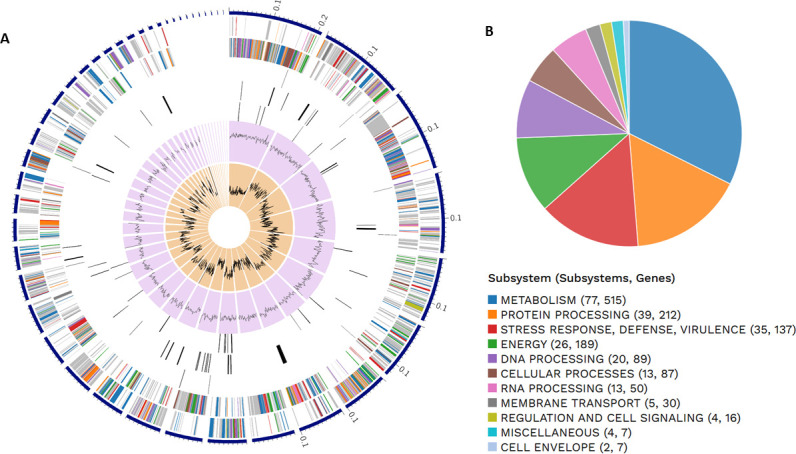 Fig 1
Fig 1| Feature | Count |
|---|---|
| GenBank accession number |
|
| BioProject number |
|
| BioSample |
|
| SRA accession number |
|
| 44 | |
| Largest contig | 208,828 |
| Total length | 2,416,621 |
| GC | 31.94 |
| N50 | 101,596 |
| N90 | 36,385 |
| L50 | 8 |
| L90 | 24 |
| CDS (PGAP) | 2,245 |
| tRNA (PGAP and PATRIC) | 48 |
| rRNA (PGAP and PATRIC) | 4 |
| Hypothetical proteins (PATRIC) | 434 |
| Pseudogenes (total) | 55 |
| Pseudogenes (ambiguous residues and PATRIC) | 0 of 55 |
| Pseudogenes (frameshifted and PATRIC) | 41 of 55 |
| Pseudogenes (incomplete and PATRIC) | 26 of 55 |
| Pseudogenes (internal stop and PATRIC) | 16 of 55 |
| Pseudogenes (multiple problems and PATRIC) | 20 of 55 |
| Proteins with functional assignments (PATRIC) | 1,851 |
| Proteins with pathway assignments (PATRIC) | 518 |
| Antibiotic resistance (PATRIC and CARD) | 15 |
| Antibiotic resistance (PATRIC and NDARO) | 8 |
| Antibiotic resistance (PATRIC and PATRIC) | 40 |
| Drug target (PATRIC and DrugBank) | 24 |
| Drug target (PATRIC and TTD) | 12 |
| Transporter (PATRIC and TCDB | 37 |
| Virulence factor (PATRIC and VFDB | 2 |
| Virulence factor (PATRIC and Victors) | 19 |
- —Fondazione Regionale per la Ricerca Biomedicahttp://dx.doi.org/10.13039/501100022720
Peer Reviews
No public reviews on file for this paper yet. If you reviewed it on a platform where reviews are public (OpenReview, ICLR, NeurIPS, ICML), you can paste yours below so the community can read it here.
Videos
No videos yet. Explain this paper in a talk, walkthrough, or lecture? Add one.
Taxonomy
TopicsMycobacterium research and diagnosis · Microbial Metabolism and Applications · Antimicrobial Resistance in Staphylococcus
ANNOUNCEMENT
Implant-related orthopedic infections represent a major clinical concern due to persistent biofilm-forming pathogens and the rise of antimicrobial resistance (1). Staphylococcus epidermidis, a commensal bacterium of human skin, has emerged as a leading cause of implant-related infections. Its ability to form biofilms on abiotic surfaces and evade host immune responses makes it a formidable pathogen in chronic infections (2). Whole-genome analysis of clinical S. epidermidis isolates is crucial for elucidating virulence factors, resistance determinants, and strain-level epidemiological features. We report the draft genome of an S. epidermidis strain isolated at the IRCCS Ospedale Galeazzi Sant’Ambrogio (45.52234 N 9.09638 E). Following national and institutional guidelines, written informed consent was obtained on 24 June 2024. This study is exempt from Institutional Review Board approval. The patient was a 62-year-old male with chronic spinal implant infection complicated by abscess formation in 2020, after the first arthrodesis surgery in 2018. Strain OGSA-Sep-145 was isolated by swabbing a titanium screw from an infected spinal implant at the L4–L5 level during surgery. Sample processing was carried out under a biosafety cabinet following Good Diagnostic Laboratory Practices, within an ISO 9001-certified laboratory. The strain was recovered from enrichment broths (Brain Heart Infusion and Thioglycollate) after 4 days of incubation at 37°C. Phenotypical identification was performed using the Vitek2 system (BioMerieux Mercy L'Etoile, France) with a Gram Positive (GP) identification card.
For sequencing, a single colony was subcultured at 37°C in 10 mL of Brain Heart Infusion (BHI) broth overnight. Genomic DNA was extracted using the DNeasy PowerSoil Pro Kit (Qiagen, Milan, Italy). Libraries and sequencing were outsourced to Novogene (https://www.novogene.com/amea-en/) using the Next Generation Sequencing (NGS) DNA Library Prep Set kit (Cat No PT004) and Illumina NovaSeq X Plus Series (PE150) with 2 × 150 bp paired-end reads, achieving ~400× coverage. The library was quantified using Qubit and quantitative Polymerase Chain Reaction (qPCR), and fragment sizes were assessed using an Agilent 5400 (Agilent, CA, US). Raw reads were downloaded from the Novogene Customer Service System (CSS) platform and analyzed using PATRIC tools on the Bacterial and Viral Bioinformatics Resource Center (https://www.bv-brc.org/) (3). Reads were trimmed using TrimGalore v0.6.10 (4) and normalized with BBNorm (5), and assembly errors were polished with Bowtie 2 v2.5.4 (6) and corrected with Pilon v1.24 (7). The genome was assembled using Unicycler v0.4.8 (8) with default parameters. Contigs <500 bp were excluded. Assembly quality was assessed with Quast v5.0.2 (9), resulting in 44 contigs with a total genome length of 2,416,621 bp (Table 1). Contamination screening using the NCBI FCS-GX toolset via Galaxy (https://usegalaxy.org/) (10) established the absence of sequencing adaptors and contaminants. Genome annotation was performed with NCBI PGAP v6.10 (11), and taxonomic identification was performed by PATRIC RASTtk (12), revealing 2,245 Coding Sequences (CDS), 48 tRNA, and 4 rRNA genes. A total of 1,851 proteins had functional assignments, including 518 with Kyoto Encyclopedia of Genes and Genomes (KEGG) pathway mapping, while 434 were hypothetical proteins.
Detected genes included known transporters, drug targets, virulence factors, and antibiotic resistance determinants (Table 1). Subsystems and functional annotations are graphically presented in Fig. 1. Default parameters were used unless stated otherwise.
(A) Circular graphical display of the distribution of the genome annotations. This includes, from outer to inner rings, the contigs, CDS on the forward strand, CDS on the reverse strand, RNA genes, CDS with homology to known antimicrobial resistance genes, CDS with homology to known virulence factors, GC content, and GC skew. (B) An overview of subsystems is shown in the pie chart. The color palette used in both panels A and B indicates the subsystems to which these genes belong.
The reference list from the paper itself. Each links out to its DOI / PubMed record.
- 1Salam MA, Al-Amin MY, Salam MT, Pawar JS, Akhter N, Rabaan AA, Alqumber MAA. 2023. Antimicrobial resistance: a growing serious threat for Global Public Health. Healthcare (Basel) 11:1946. doi:10.3390/healthcare 1113194637444780 PMC 10340576 · doi ↗ · pubmed ↗
- 2Bottagisio M, Palombella S, Lopa S, Sangalli F, Savadori P, Biagiotti M, Sideratou Z, Tsiourvas D, Lovati AB. 2022. Vancomycin-nanofunctionalized peptide-enriched silk fibroin to prevent methicillin-resistant Staphylococcus epidermidis-induced femoral nonunions in rats. Front Cell Infect Microbiol 12:1056912. doi:10.3389/fcimb.2022.105691236683682 PMC 9851397 · doi ↗ · pubmed ↗
- 3Wattam AR, Davis JJ, Assaf R, Boisvert S, Brettin T, Bun C, Conrad N, Dietrich EM, Disz T, Gabbard JL, et al.. 2017. Improvements to PATRIC, the all-bacterial bioinformatics database and analysis resource center. Nucleic Acids Res 45:D 535–D 542. doi:10.1093/nar/gkw 101727899627 PMC 5210524 · doi ↗ · pubmed ↗
- 4Krueger F. 2021. Trim galore. Available from: 10.5281/zenodo.7598955 · doi ↗
- 5Bushnell B, Rood J, Singer E. 2017. BB Merge - Accurate paired shotgun read merging via overlap. P Lo S One 12:e 0185056. doi:10.1371/journal.pone.018505629073143 PMC 5657622 · doi ↗ · pubmed ↗
- 6Langmead B, Salzberg SL. 2012. Fast gapped-read alignment with Bowtie 2. Nat Methods 9:357–359. doi:10.1038/nmeth.192322388286 PMC 3322381 · doi ↗ · pubmed ↗
- 7Walker BJ, Abeel T, Shea T, Priest M, Abouelliel A, Sakthikumar S, Cuomo CA, Zeng Q, Wortman J, Young SK, Earl AM. 2014. Pilon: an integrated tool for comprehensive microbial variant detection and genome assembly improvement. P Lo S One 9:e 112963. doi:10.1371/journal.pone.011296325409509 PMC 4237348 · doi ↗ · pubmed ↗
- 8Wick RR, Judd LM, Gorrie CL, Holt KE. 2017. Unicycler: resolving bacterial genome assemblies from short and long sequencing reads. P Lo S Comput Biol 13:e 1005595. doi:10.1371/journal.pcbi.100559528594827 PMC 5481147 · doi ↗ · pubmed ↗