The Fabrication of Porous Al2O3 Ceramics with Ultra-High Mechanical Strength and Oil Conductivity via Reaction Bonding and the Addition of Pore-Forming Agents
Ye Dong, Xiaonan Yang, Hao Li, Zun Xia, Jinlong Yang

TL;DR
Researchers created strong, oil-conductive porous ceramics using a new method that combines reaction bonding and pore-forming agents for better atomizer performance.
Contribution
A novel fabrication method for porous Al2O3 ceramics that simultaneously enhances mechanical strength and oil conductivity.
Findings
Bimodal pores improved mechanical strength by enhancing bonding force and oil-conduction channels.
The ceramics achieved 58.2% open porosity with 7.9 MPa compressive strength and 2.1 mg·s−1 oil conductivity.
The method overcomes the trade-off between strength and oil conductivity in atomizer applications.
Abstract
Reaction bonding (RB) using Al powder is an effective method for preparing porous ceramics with low shrinkage, high porosity, and high strength. However, it remains challenging to optimize mechanical strength and oil conductivity simultaneously for atomizer applications. Herein, aiming at addressing this issue, porous Al2O3 ceramics with ultra-high mechanical strength and oil conductivity were fabricated via the RB process using polymethyl methacrylate (PMMA) microspheres as the pore-forming agent. The pore structure was gradually optimized by regulating the additive amount, particle size, and particle gradation of PMMA microspheres. The bimodal pores, formed by Al oxidation-induced hollow structures (enhancing bonding force) and burnout of large-sized PMMA microspheres, significantly improved mechanical strength; meanwhile, three-dimensional interconnected pores derived from particle…
Genes, proteins, chemicals, diseases, species, mutations and cell lines named across the full text — each resolved to its canonical identifier and authoritative record.
Click any figure to enlarge with its caption.
 Figure 1
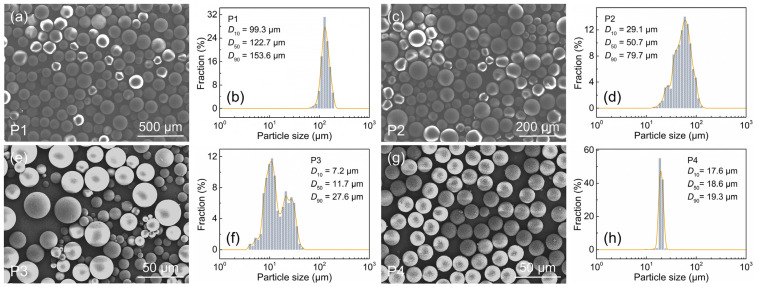 Figure 2
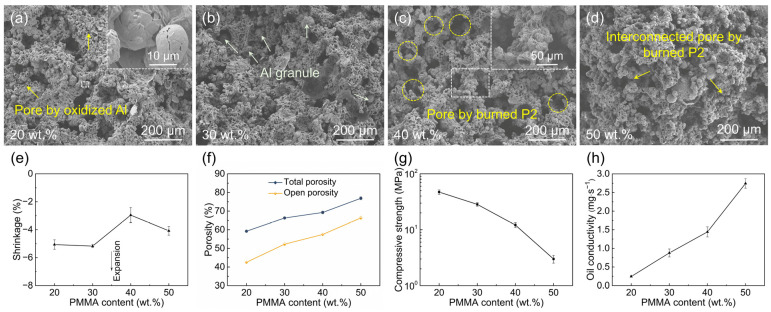 Figure 3
 Figure 4
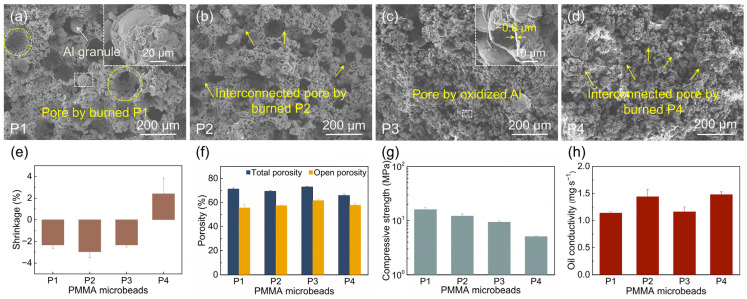 Figure 5
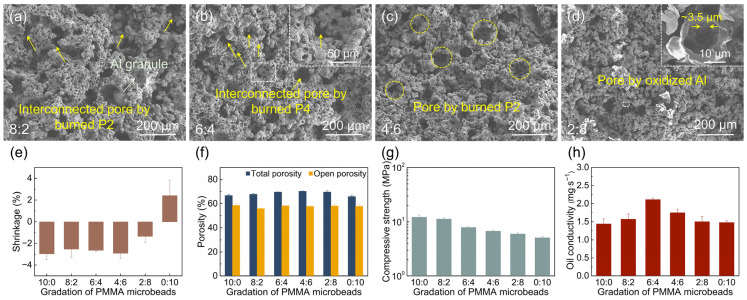 Figure 6
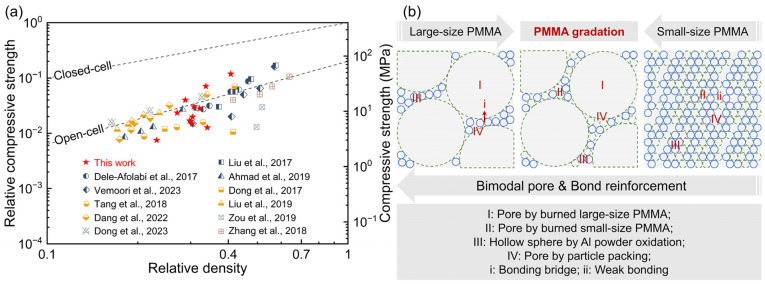 Figure 7
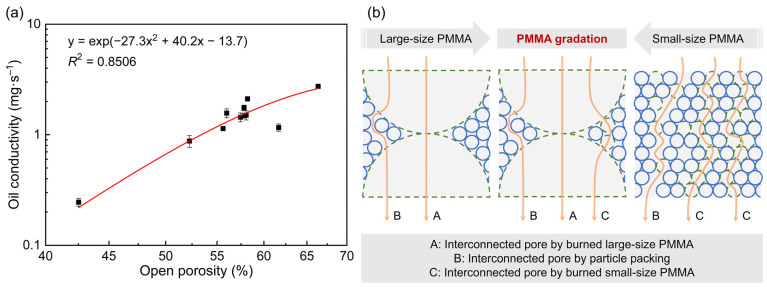 Figure 8
Peer Reviews
No public reviews on file for this paper yet. If you reviewed it on a platform where reviews are public (OpenReview, ICLR, NeurIPS, ICML), you can paste yours below so the community can read it here.
Videos
No videos yet. Explain this paper in a talk, walkthrough, or lecture? Add one.
Taxonomy
TopicsAdvanced Photocatalysis Techniques · Advanced ceramic materials synthesis · Electrospun Nanofibers in Biomedical Applications