Weighing options: empiric antibiotic use and stewardship opportunities in critically ill patients with community-acquired pneumonia
Nalea Trujillo, Calvin Diep, David Ha, Ariadna Garcia, Marisa Holubar

TL;DR
This study finds that critically ill patients with pneumonia often get broad antibiotics without clear need, but MRSA treatment is adjusted faster with better testing.
Contribution
The study highlights empiric antibiotic use patterns and de-escalation opportunities in ICU patients with community-acquired pneumonia.
Findings
Critically ill patients often received empiric anti-MRSA and antipseudomonal antibiotics without clear risk factors.
De-escalation of anti-MRSA therapy occurred more quickly, possibly due to MRSA PCR assays.
Abstract
In this retrospective study, critically ill patients with community-acquired pneumonia frequently received empiric anti-methicillin-resistant Staphylococcus aureus (MRSA) and antipseudomonal antibiotics despite having few or no guidelines-endorsed risk factors. De-escalation of anti-MRSA therapy was quicker, likely aided by MRSA polymerase chain reaction assays.
Genes, proteins, chemicals, diseases, species, mutations and cell lines named across the full text — each resolved to its canonical identifier and authoritative record.
Click any figure to enlarge with its caption.
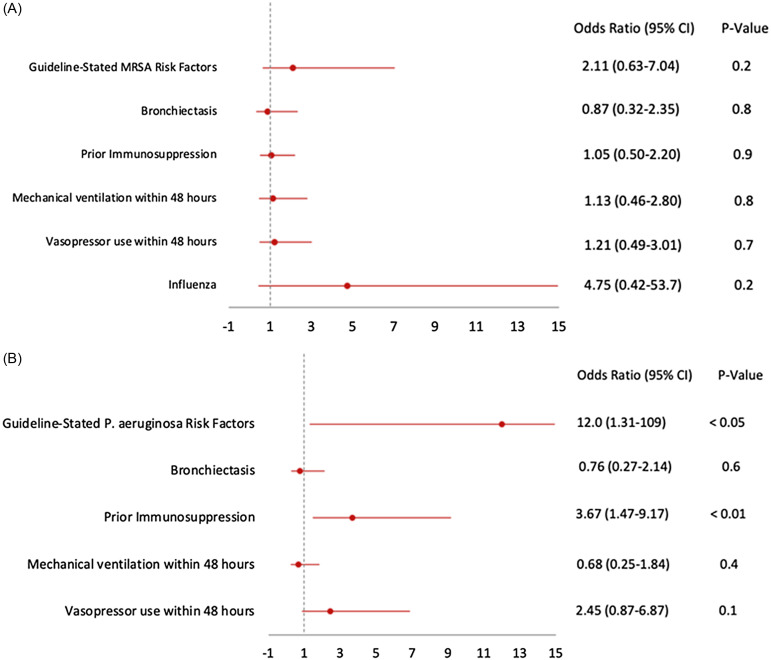 Figure 1
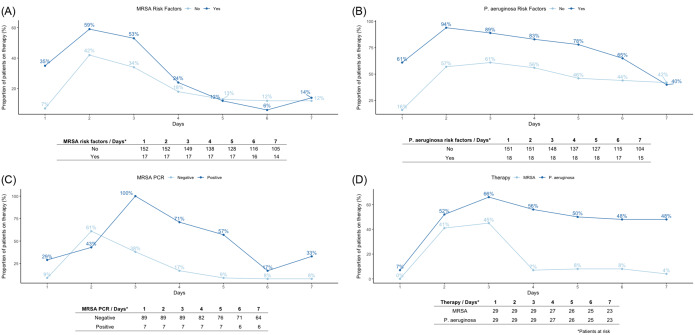 Figure 2
Peer Reviews
No public reviews on file for this paper yet. If you reviewed it on a platform where reviews are public (OpenReview, ICLR, NeurIPS, ICML), you can paste yours below so the community can read it here.
Videos
No videos yet. Explain this paper in a talk, walkthrough, or lecture? Add one.
Taxonomy
TopicsPneumonia and Respiratory Infections · Antimicrobial Resistance in Staphylococcus · Nosocomial Infections in ICU