Automatic phenotyping using exhaustive projection pursuit
Wayne A. Moore, Stephen W. Meehan, Connor Meehan, David R. Parks, Guenther Walther, Leonore A. Herzenberg

TL;DR
A new automated tool called EPP identifies cell populations in flow cytometry data by analyzing two-dimensional projections and optimizing gating regions.
Contribution
EPP introduces an automated, statistically significant method for phenotyping in flow cytometry data using exhaustive projection pursuit.
Findings
EPP identifies phenotypes through optimized two-dimensional projections and statistically significant gating regions.
The tool was validated on four well-characterized flow cytometry datasets.
EPP's C++ code is freely available and integrates with software like MATLAB and FlowJo.
Abstract
One of the most common objectives in the analysis of flow cytometry data is the identification and delineation of phenotypes, distinct populations of cells with shared characteristics in the measurement dimensions. We have developed an automated tool to comprehensively identify these cell populations by Exhaustive Projection Pursuit (EPP). The method evaluates all two-dimensional projections among the suitable data dimensions and creates an optimized sequence of statistically significant gating regions that identify all phenotypes supported by the data. We evaluate the results of EPP on four well characterized data sets from the literature. The C++ code for EPP can be called from any computing environment. We illustrate this with a MATLAB utility that integrates EPP with FlowJo. All source code is freely available. An automated tool (EPP) identifies distinct cell phenotypes in flow…
Genes, proteins, chemicals, diseases, species, mutations and cell lines named across the full text — each resolved to its canonical identifier and authoritative record.
Click any figure to enlarge with its caption.
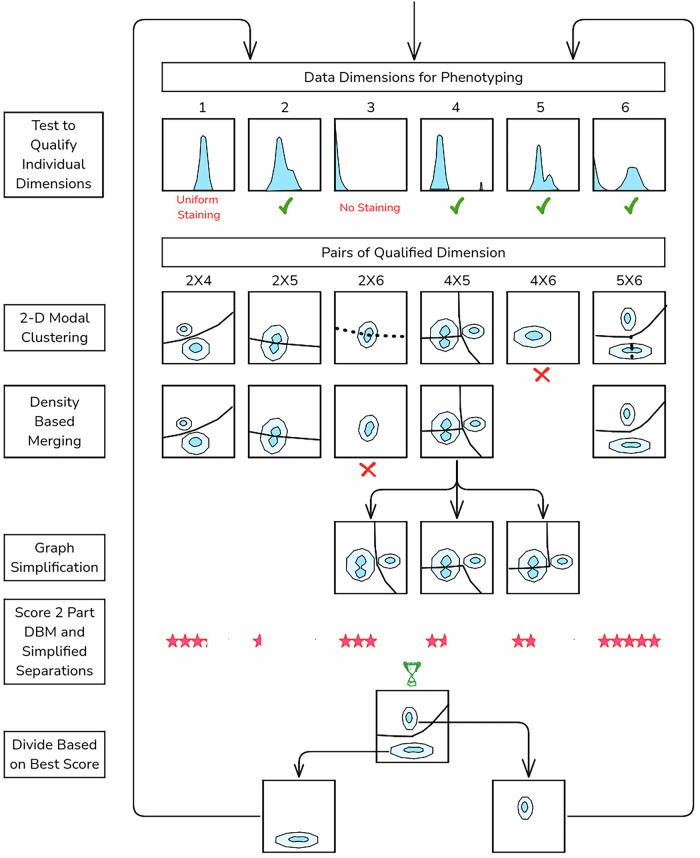 Figure 1
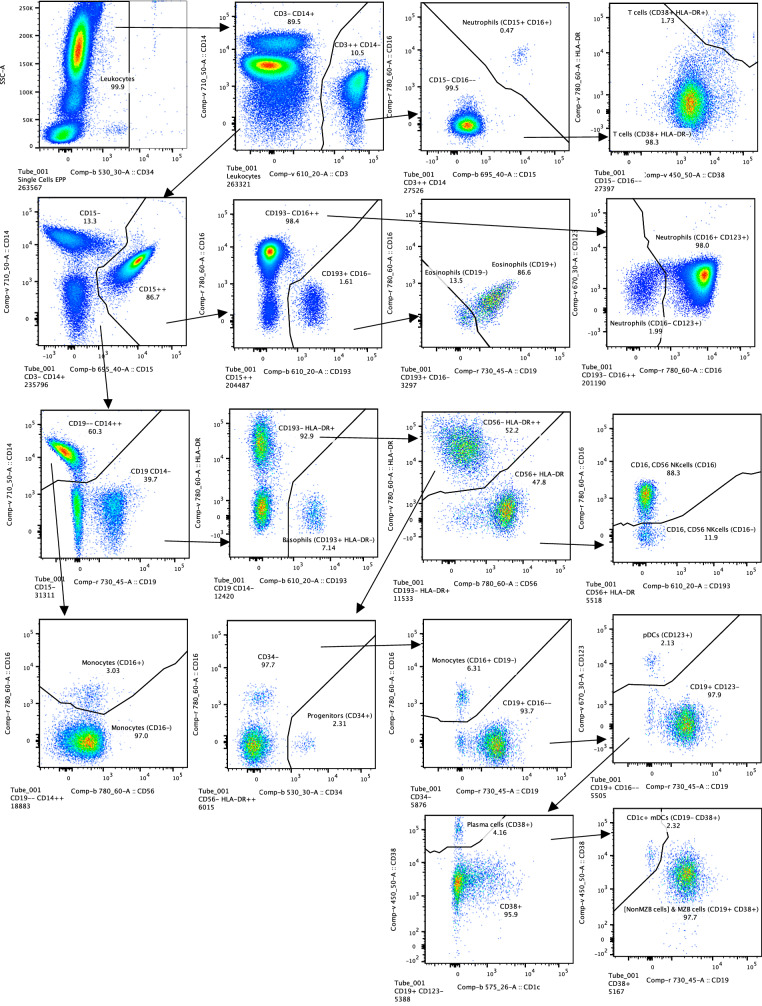 Figure 2
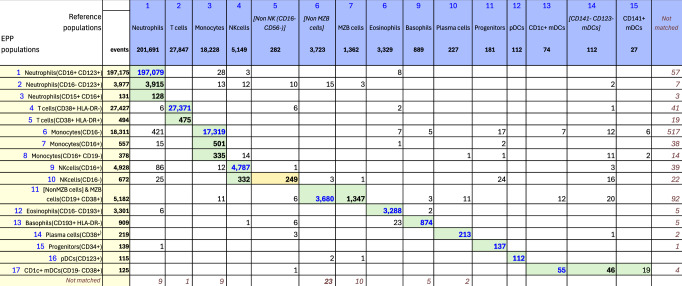 Figure 3
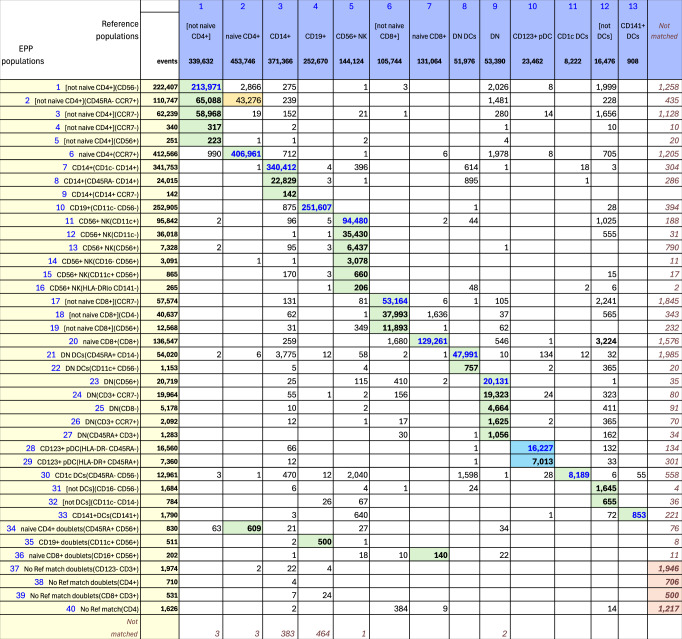 Figure 4
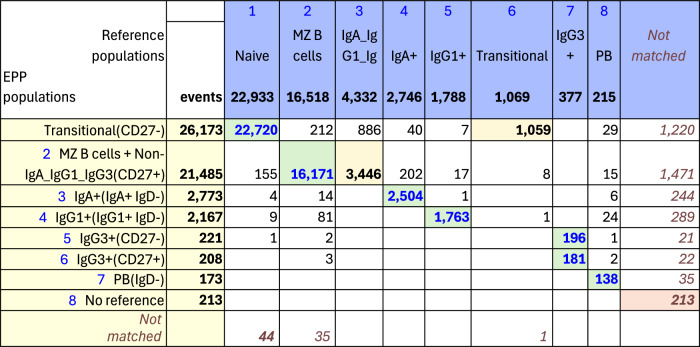 Figure 5
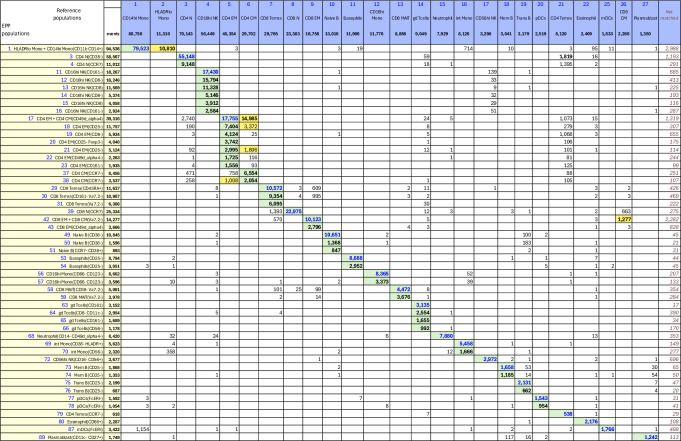 Figure 6
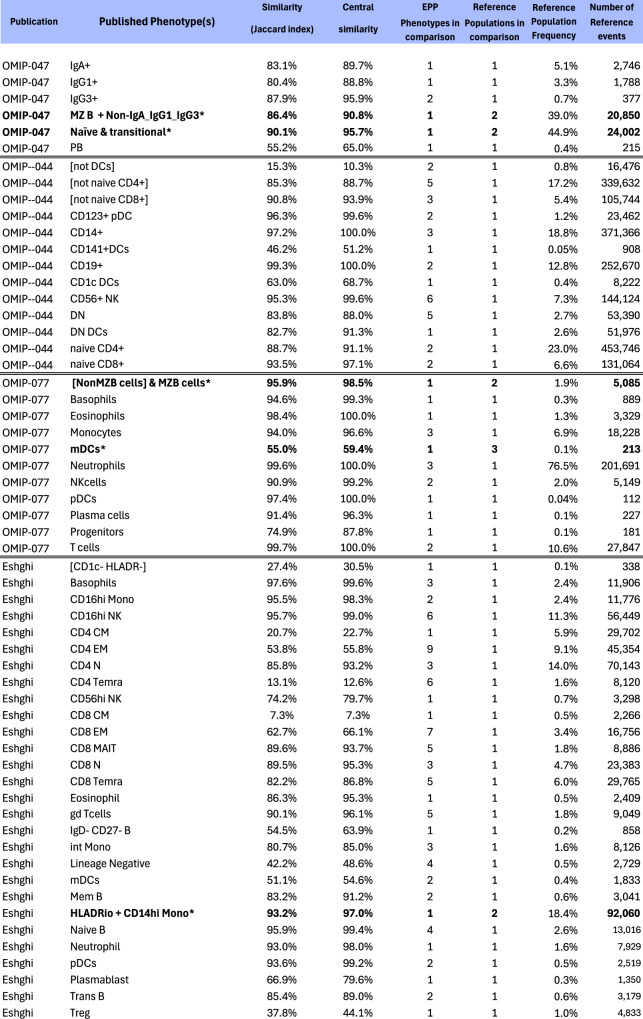 Figure 7
Peer Reviews
No public reviews on file for this paper yet. If you reviewed it on a platform where reviews are public (OpenReview, ICLR, NeurIPS, ICML), you can paste yours below so the community can read it here.
Videos
No videos yet. Explain this paper in a talk, walkthrough, or lecture? Add one.
Taxonomy
TopicsImage Processing Techniques and Applications · Advanced Image and Video Retrieval Techniques · Advanced Vision and Imaging