Comparative genomics uncovers organellar genome structural divergence in Caryophyllales and reveals widespread non-coding transcription in Bougainvillea glabra organellar
Shuo Zhang, Shengxin Chang, Xinge Lin, Shisong Xu, Qingyun Leng, Haiyan Li, Hernán Ariel López, Junmei Yin, Zhiqiang Wu, Junhai Niu

TL;DR
This study explores the organellar genomes of Bougainvillea glabra and other plants in the Caryophyllales order, revealing structural differences and transcription patterns in non-coding regions.
Contribution
The study provides new insights into organellar genome structure and transcriptional activity in Bougainvillea glabra and related species.
Findings
B. glabra's mitogenome consists of three circular chromosomes totaling 322.7 kb, while its plastome is a 154.7 kb circular molecule.
Non-coding regions of organellar genomes show widespread transcriptional activity, though novel transcripts have lower activity and editing proportions.
Mitogenomes in Caryophyllales evolve 6.1 times faster than plastomes, with distinct substitution rate patterns in protein-coding genes.
Abstract
Plant organellar genomes play a crucial role in metabolism and adaptation. In this study, the organellar genomes and transcriptome of Bougainvillea glabra (Nyctaginaceae) were sequenced and assembled using PacBio sequencing and strand-specific RNA sequencing, respectively. Structural and evolutionary comparisons of the plastidial and mitochondrial genomes (plastome and mitogenome) were conducted among Bougainvillea and five other taxa within Caryophyllales to elucidate the similarities and divergences between these two organellar genomes at a detailed level. The plastome of B. glabra was assembled into a 154.7 kb circular molecule with a typical quadripartite structure, while the mitogenome was assembled into three stable circular molecules measuring 160.7 kb, 97.6 kb, and 64.3 kb, respectively. Reconstruction of the organellar transcripts revealed extensive transcriptional activity in…
Genes, proteins, chemicals, diseases, species, mutations and cell lines named across the full text — each resolved to its canonical identifier and authoritative record.
Click any figure to enlarge with its caption.
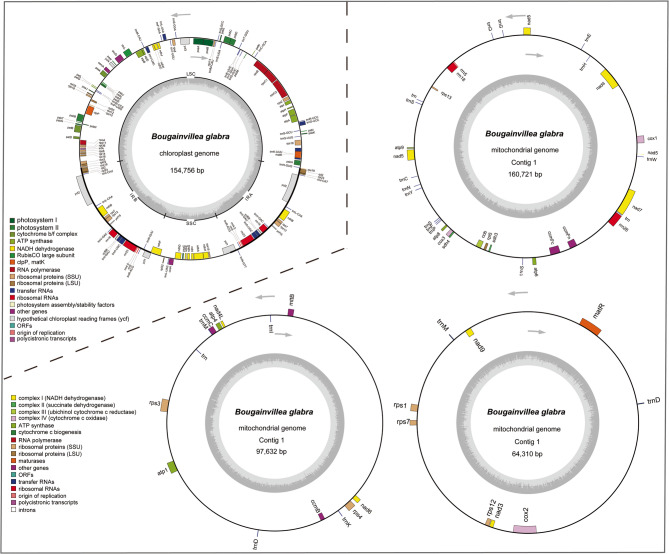 Figure 1
 Figure 2
 Figure 3
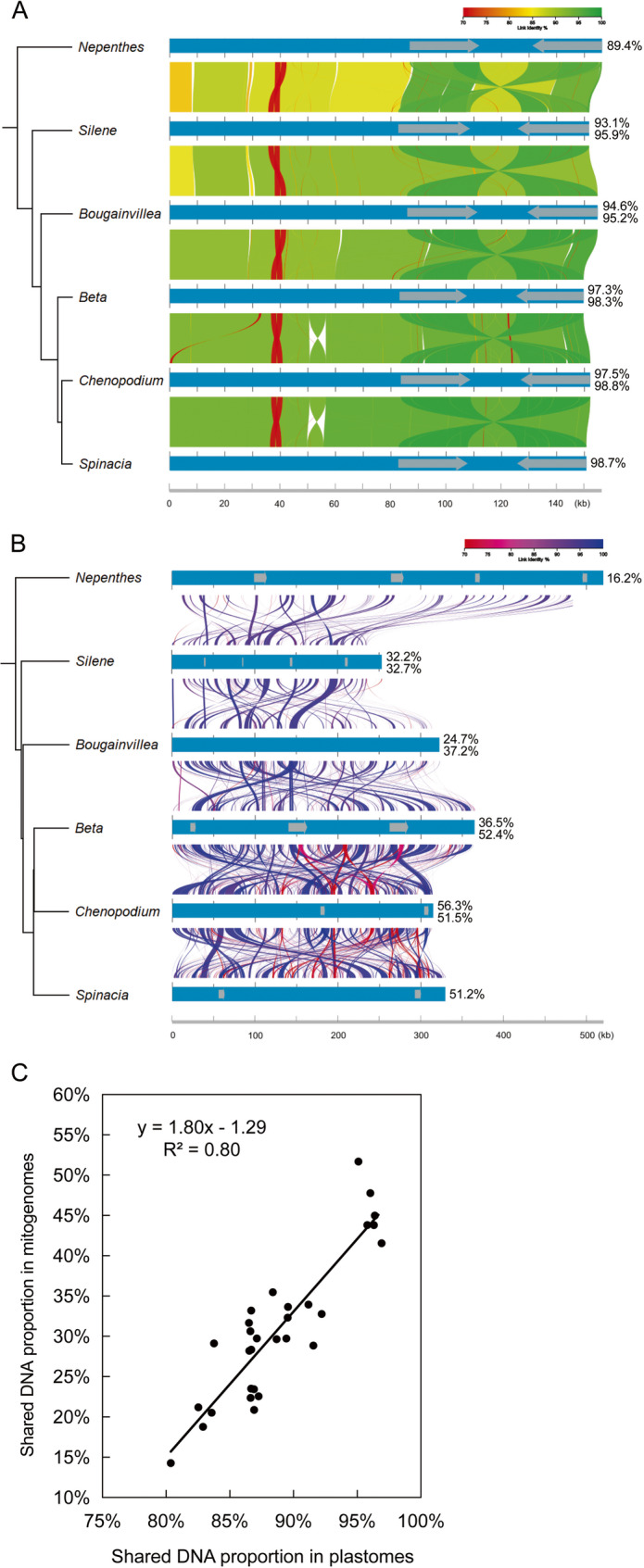 Figure 4
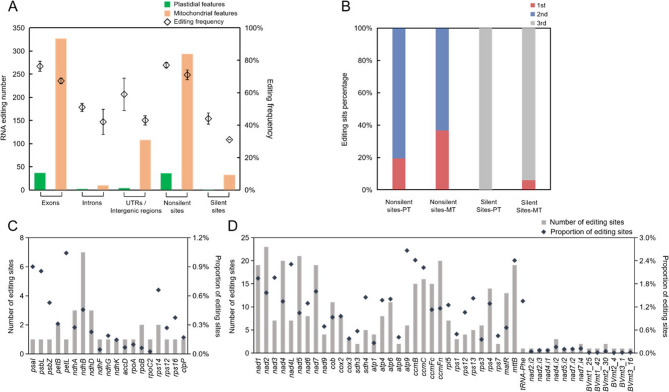 Figure 5
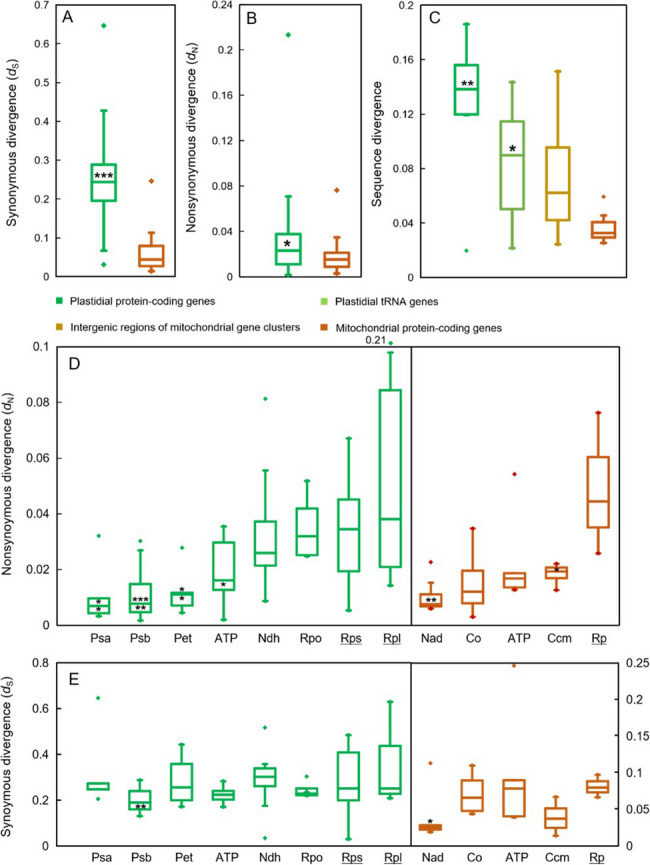 Figure 6
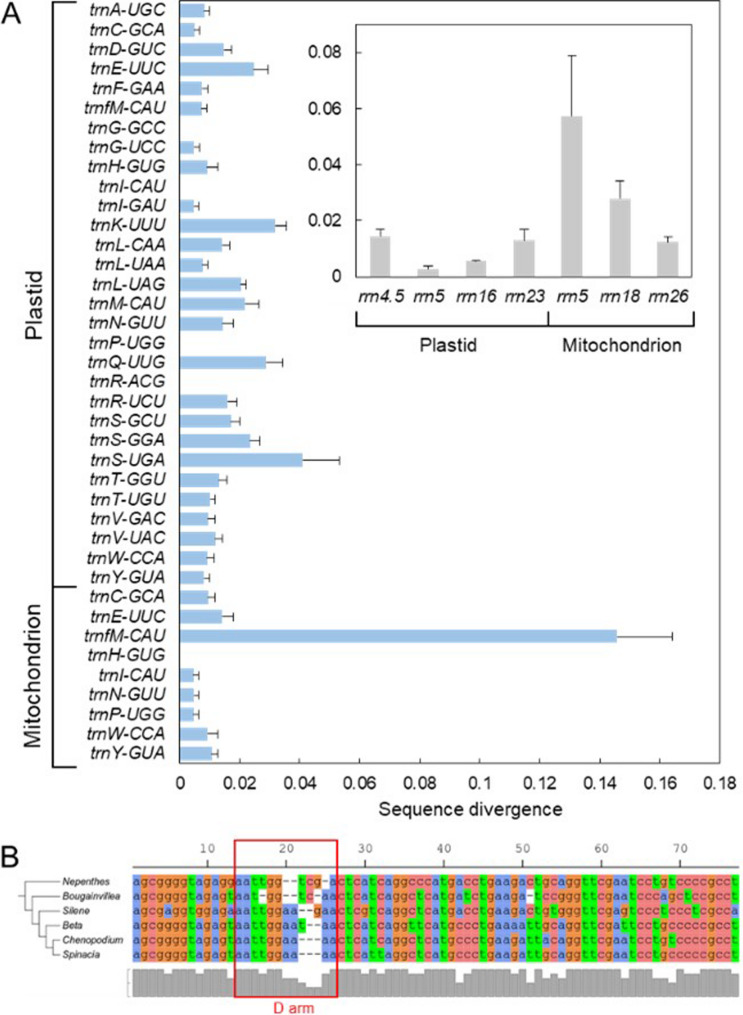 Figure 7
Peer Reviews
No public reviews on file for this paper yet. If you reviewed it on a platform where reviews are public (OpenReview, ICLR, NeurIPS, ICML), you can paste yours below so the community can read it here.
Videos
No videos yet. Explain this paper in a talk, walkthrough, or lecture? Add one.
Taxonomy
TopicsGenomics and Phylogenetic Studies · Chromosomal and Genetic Variations · Biofuel production and bioconversion