First organocatalytic, diastereoselective synthesis of tRNA wobble nucleosides: (R)- and (S)-methoxycarbonylhydroxymethyluridines (mchm5Us) and their acid analogues (chm5Us)
Tomasz Bartosik, Agnieszka Dziergowska, Blazej Kowalski, Grazyna Leszczynska

TL;DR
Scientists developed a new method to selectively synthesize two forms of modified RNA building blocks important for genetic code flexibility.
Contribution
First organocatalytic, diastereoselective synthesis of tRNA wobble nucleosides mchm5Us and chm5Us.
Findings
A diastereoselective synthesis of (R)- and (S)-mchm5Us was achieved using cyanosilylation and Pinner reaction.
The method was extended to synthesize their acid analogues, (R)- and (S)-chm5Us.
The approach uses organo- and organometallic catalysis for efficient and selective production.
Abstract
A diastereoselective organocatalytic synthesis of (R)- and (S)-methoxycarbonylhydroxymethyluridines (mchm5Us) and their acid analogues (chm5Us) was developed. The method employs organo- and organometallic-catalyzed cyanosilylation of 5-formyluridine to yield diastereomerically enriched TMS-protected cyanohydrins, which are converted via a Pinner reaction to (R)- and (S)-mchm5Us, then hydrolyzed to (R)- and (S)-chm5Us. First diastereoselective synthesis of biologically relevant (R)- and (S)- methoxycarbonylhydroxymethyluridines (mchm5Us) and their acid analogues (chm5Us) was developed.
Genes, proteins, chemicals, diseases, species, mutations and cell lines named across the full text — each resolved to its canonical identifier and authoritative record.
Click any figure to enlarge with its caption.
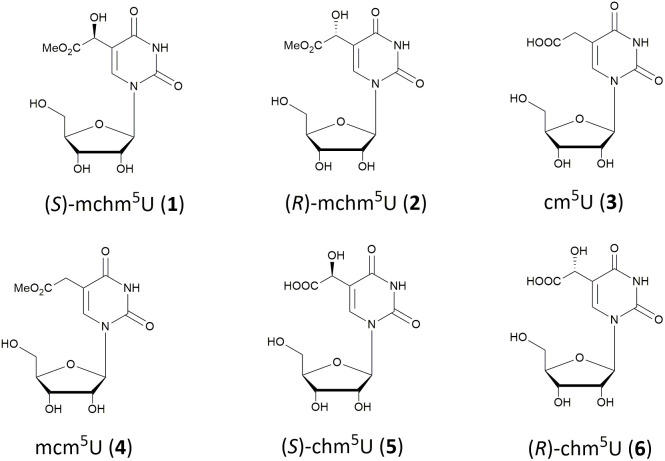 Figure 1
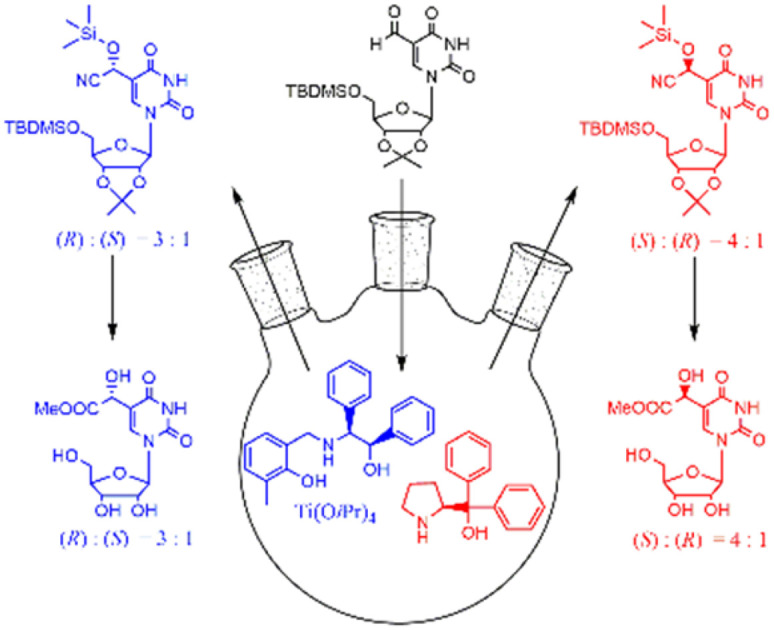 Figure 2
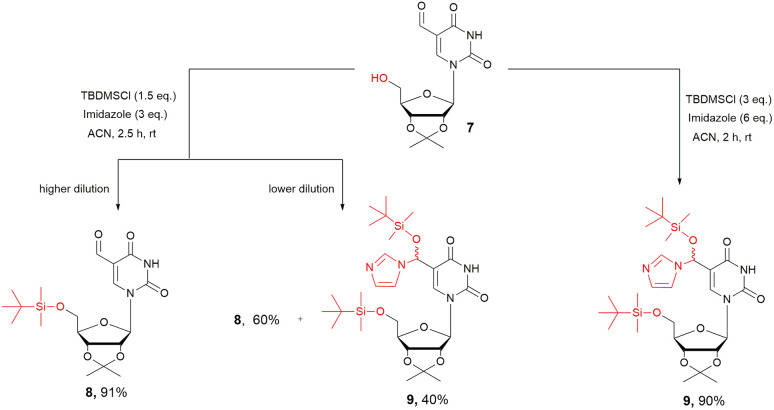 Figure 3
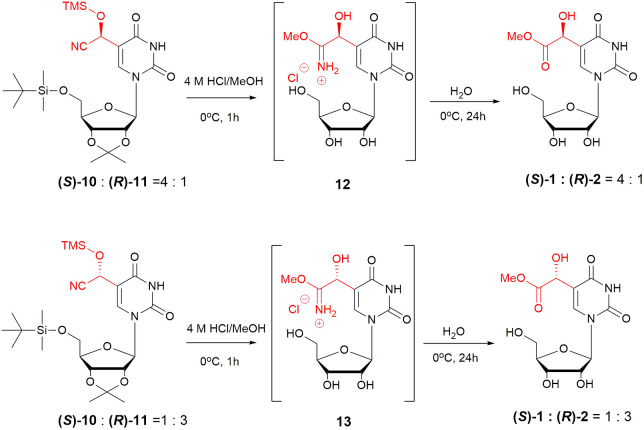 Figure 4
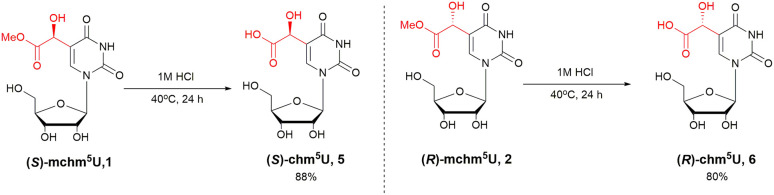 Figure 5
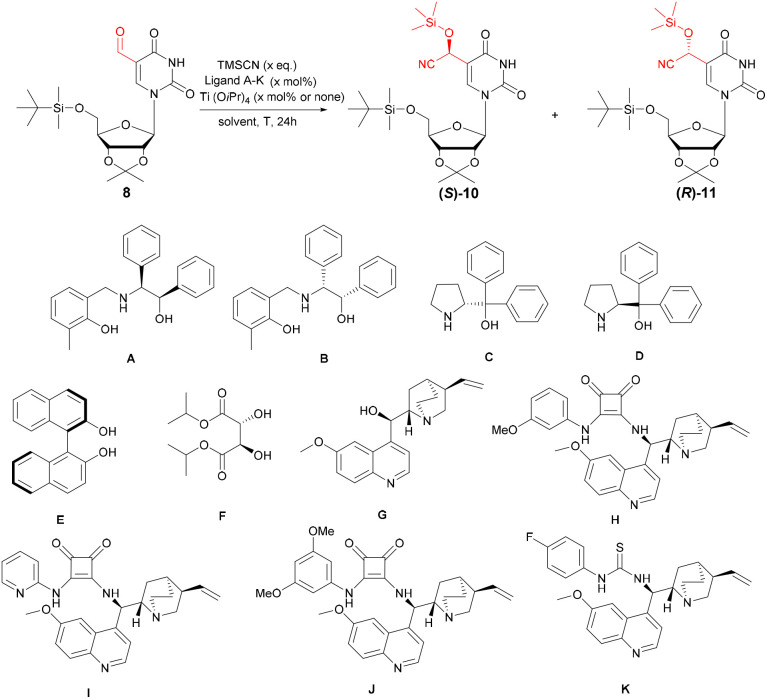 Figure 6
Peer Reviews
No public reviews on file for this paper yet. If you reviewed it on a platform where reviews are public (OpenReview, ICLR, NeurIPS, ICML), you can paste yours below so the community can read it here.
Videos
No videos yet. Explain this paper in a talk, walkthrough, or lecture? Add one.
Taxonomy
TopicsRNA modifications and cancer · RNA and protein synthesis mechanisms · Pneumocystis jirovecii pneumonia detection and treatment