Learning From a Missed Diagnosis: Complete Agenesis of the Corpus Callosum With Benign Hydrocephalus
J. E. Samaranayake, S. M. Kankanamge, P. Pirakash, U. A. Liyanage, Y. Mathangasinghe, D. G. Gonsalvez, N. Gunasekera

TL;DR
The paper discusses managing benign hydrocephalus in complete agenesis of the corpus callosum through regular monitoring rather than surgery.
Contribution
It emphasizes the importance of follow-up and non-interventional management in cases without cerebrospinal fluid obstruction.
Findings
Ventriculomegaly without fluid obstruction often does not require surgery.
Regular follow-up is essential to detect neurological decline or raised intracranial pressure.
Advanced imaging and surgical management should be considered if deterioration occurs.
Abstract
In agenesis of the corpus callosum, ventriculomegaly without evidence of cerebrospinal fluid obstruction often requires no surgical intervention. Regular follow‐up every 3–6 months, then annually, is essential to monitor for signs of raised intracranial pressure or neurological decline—prompting advanced imaging and consideration of surgical management if deterioration occurs.
Genes, proteins, chemicals, diseases, species, mutations and cell lines named across the full text — each resolved to its canonical identifier and authoritative record.
Click any figure to enlarge with its caption.
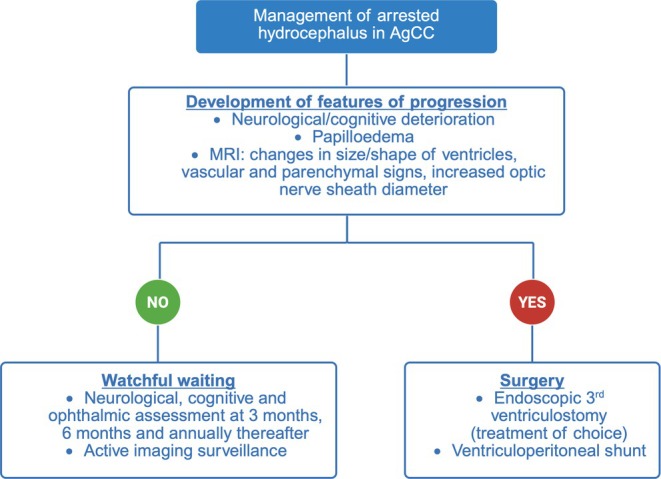 Figure 1
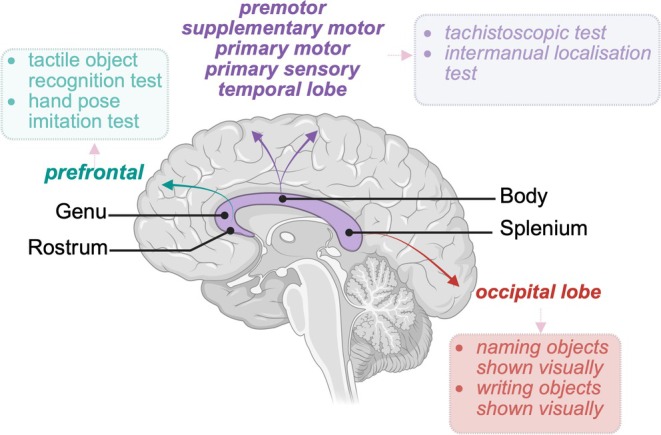 Figure 2
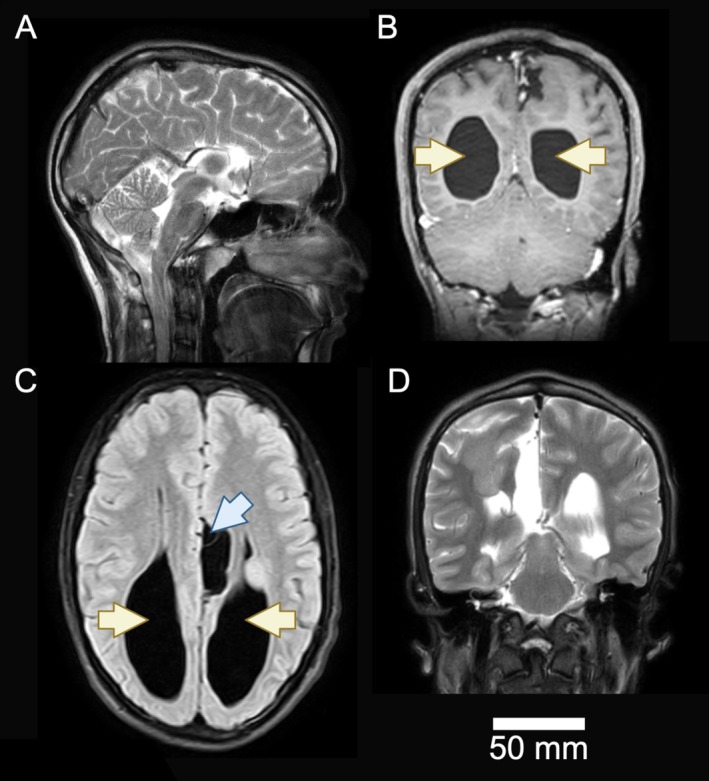 Figure 3
Peer Reviews
No public reviews on file for this paper yet. If you reviewed it on a platform where reviews are public (OpenReview, ICLR, NeurIPS, ICML), you can paste yours below so the community can read it here.
Videos
No videos yet. Explain this paper in a talk, walkthrough, or lecture? Add one.
Taxonomy
TopicsFetal and Pediatric Neurological Disorders · Cerebrospinal fluid and hydrocephalus · Neonatal and fetal brain pathology