Landing Biomechanics in Patients 2 Years After Augmented ACL Repair and 2 Years After Hamstring Autograft ACL Reconstruction Compared With Controls
Linda Bühl, Sebastian Müller, Corina Nüesch, Florian Samuel Halbeisen, Annegret Mündermann, Christian Egloff

TL;DR
This study compares leg biomechanics in patients who had two different types of ACL surgery and finds that both show lasting differences compared to healthy controls.
Contribution
The study provides new empirical evidence on long-term biomechanical outcomes of ACL-IB compared to ACLR and controls.
Findings
Patients who underwent ACL-IB showed greater leg differences in knee flexion angle and moment than controls.
Both ACL-IB and ACLR patients had significant biomechanical differences in landing mechanics two years post-surgery.
ACL-IB patients had lower peak knee flexion moment in the involved leg compared to control legs.
Abstract
InternalBrace-augmented anterior cruciate ligament repair (ACL-IB) is believed to restore natural knee mechanics. However, there is a dearth of data on in vivo leg biomechanics after ACL-IB and comparability with gold standard surgery. To (1) investigate differences in sagittal and frontal landing biomechanics of the legs in patients after ACL-IB (Comparison I) and after anterior cruciate ligament reconstruction (ACLR; Comparison II), compare the involved legs with controls (Comparison III), and (2) identify leg differences that were greater than those typically observed in controls. Cross-sectional study, Level of Evidence 3. A total of 29 patients who had ACL-IB, 27 sex- and age-matched patients who had ACLR, and 29 matched controls were asked to perform single-leg hops (SLH) for maximum forward distance 2 years postoperatively, assessed by marker-based motion analysis. Sagittal…
Genes, proteins, chemicals, diseases, species, mutations and cell lines named across the full text — each resolved to its canonical identifier and authoritative record.
Click any figure to enlarge with its caption.
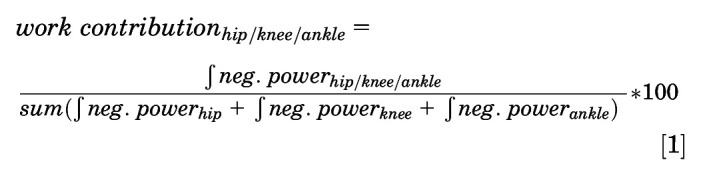 Figure 1
 Figure 2
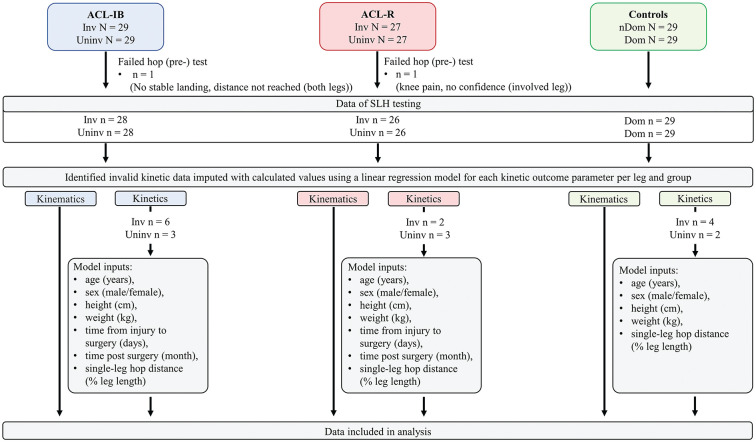 Figure 1
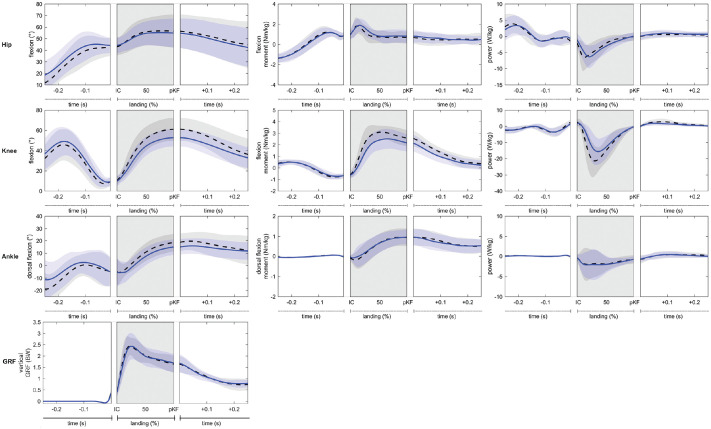 Figure 2
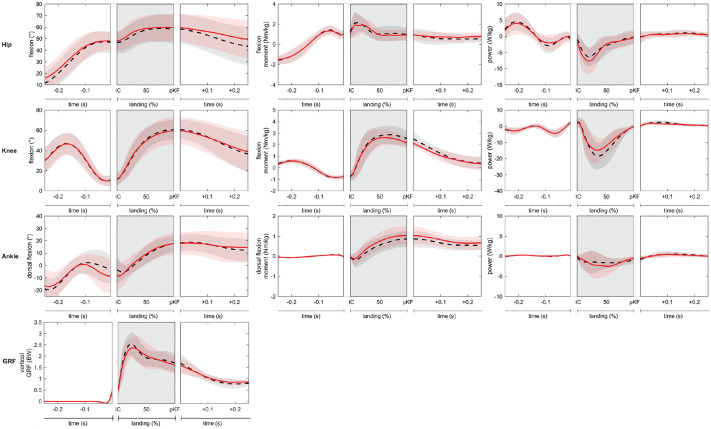 Figure 3
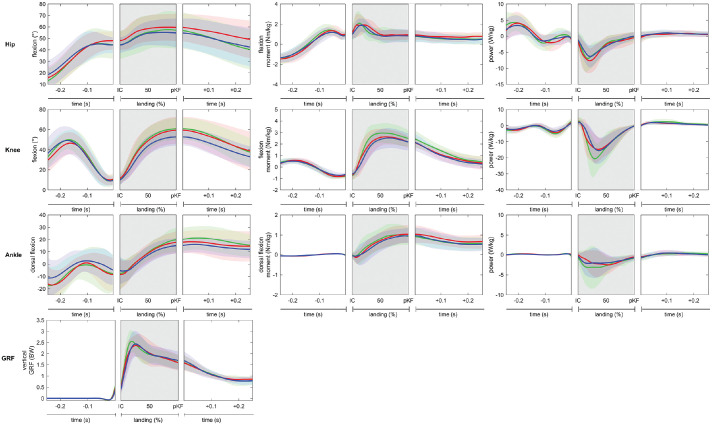 Figure 4
 Figure 7
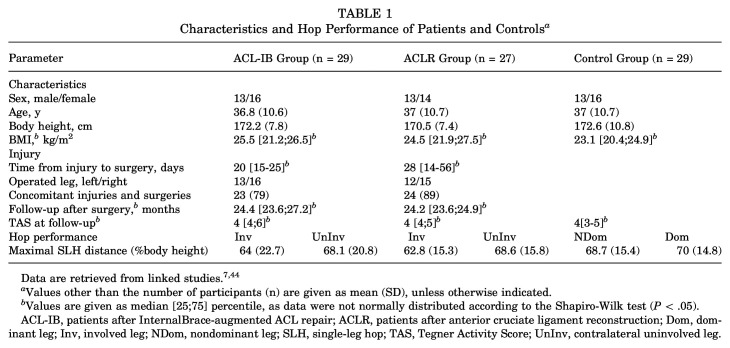 Figure 8
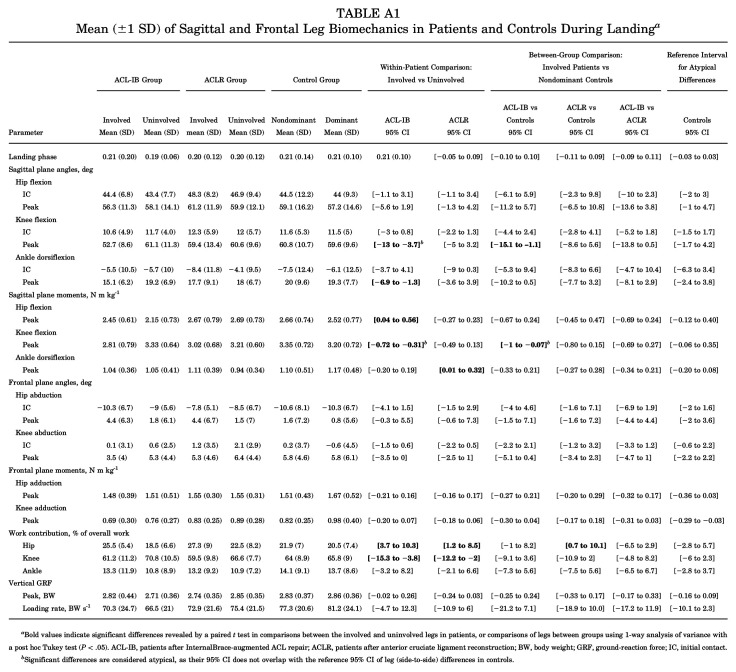 Figure 9
Peer Reviews
No public reviews on file for this paper yet. If you reviewed it on a platform where reviews are public (OpenReview, ICLR, NeurIPS, ICML), you can paste yours below so the community can read it here.
Videos
No videos yet. Explain this paper in a talk, walkthrough, or lecture? Add one.
Taxonomy
TopicsKnee injuries and reconstruction techniques · Total Knee Arthroplasty Outcomes · Bone fractures and treatments