Plasma proteomics-based risk scores for psoriasis prediction: a novel approach to early diagnosis
Siyu Wei, Zehong Yue, Chen Sun, Yuping Zou, Haiyan Chen, Junxian Tao, Jing Xu, Yuan Xu, Ning Wang, Yan Guo, Qinduo Ren, Chang Wang, Songlin Lu, Ye Ma, Yu Dong, Chen Zhang, Hongmei Sun, Guoping Tang, Fanwu Kong, Wenhua Lv, Zhenwei Shang, Mingming Zhang, Yongshuai Jiang

TL;DR
This study introduces a new plasma proteomics-based risk score to improve early diagnosis and prediction of psoriasis by combining proteomic, genetic, and clinical data.
Contribution
The novel contribution is the development of ProtRS-26, a plasma proteomics-based risk score that outperforms existing genetic and clinical models for psoriasis prediction.
Findings
ProtRS-26, built from 26 plasma proteins, significantly improves psoriasis prediction compared to polygenic risk scores and clinical factors alone.
Combining ProtRS-26 with genetic and clinical data further enhances prediction accuracy.
Key proteins in ProtRS-26 are linked to pro-inflammatory pathways and skin biology, with hypertension and obesity identified as major modifiable risk factors.
Abstract
Psoriasis is a chronic immune-mediated inflammatory skin disease with a significant global burden. Current risk assessment lacks integration of proteomic data with genetic and clinical factors. This study aimed to develop a plasma proteomics-based risk score (ProtRS) to improve psoriasis prediction. Using data from 53,065 UK Biobank (UKB) participants (1,122 psoriasis cases; 51,943 controls), we integrated 2,923 plasma proteins, polygenic risk score (PRS), and seven clinical risk factors. The Least Absolute Shrinkage and Selection Operator (LASSO) algorithm with 10-fold cross-validation identified stable proteins for ProtRS construction. Population Attributable Fractions (PAFs) for risk factors were calculated. LASSO regression identified 26 highly stable proteins forming ProtRS-26. ProtRS-26 significantly outperformed PRS and clinical risk factors alone. Combining ProtRS-26 with PRS…
Genes, proteins, chemicals, diseases, species, mutations and cell lines named across the full text — each resolved to its canonical identifier and authoritative record.
Click any figure to enlarge with its caption.
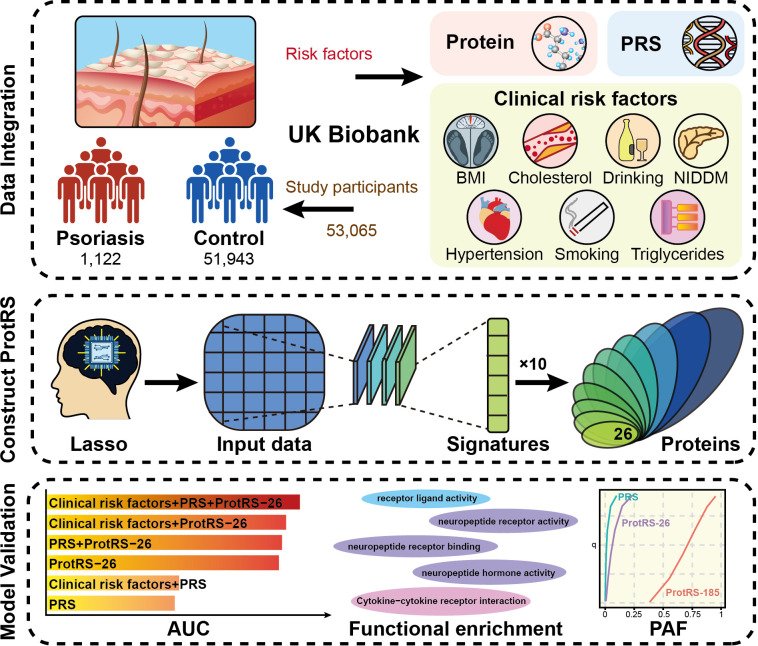 Figure 1
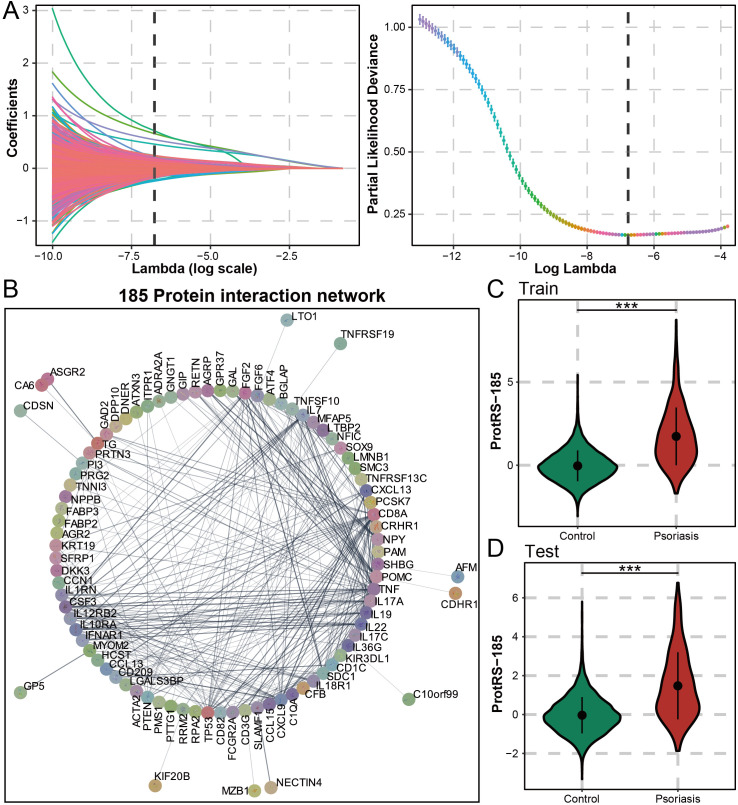 Figure 2
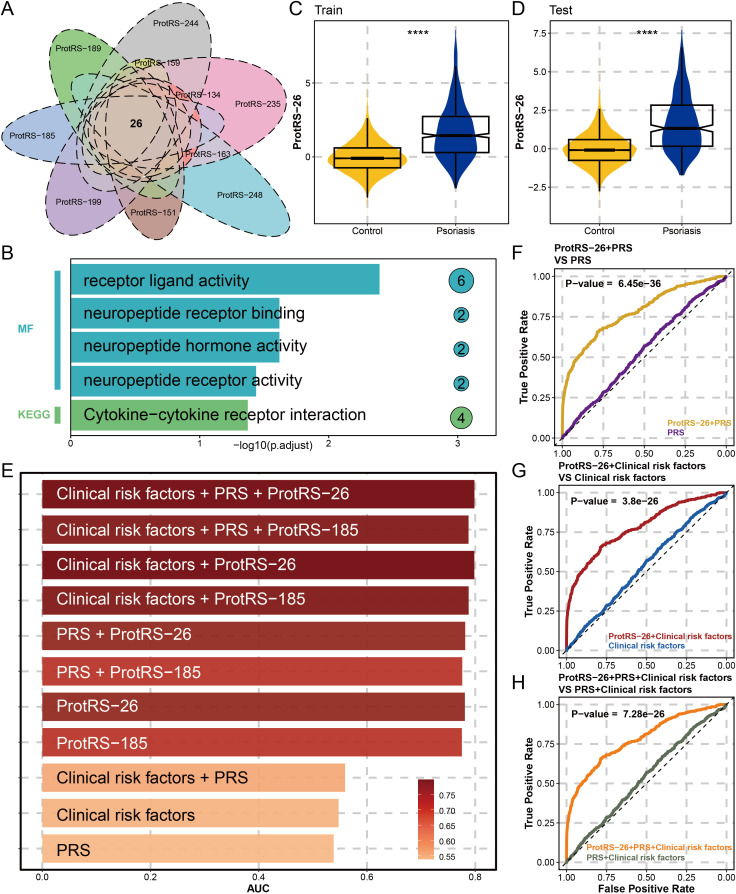 Figure 3
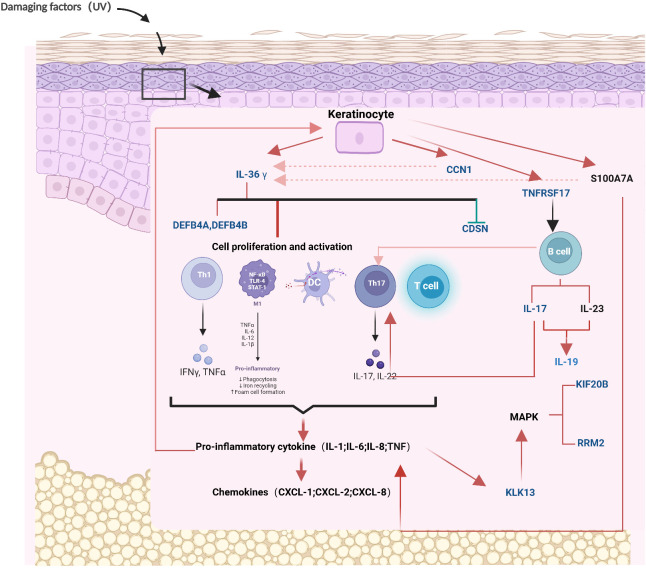 Figure 4
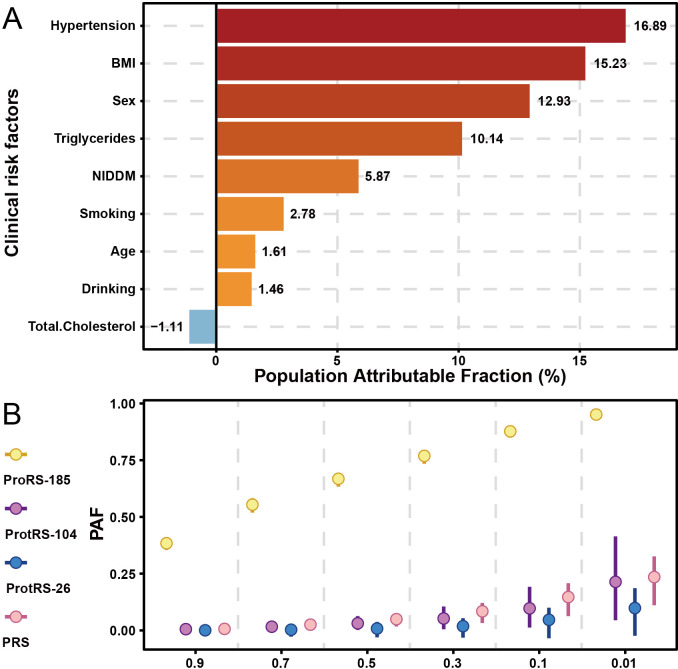 Figure 5
Peer Reviews
No public reviews on file for this paper yet. If you reviewed it on a platform where reviews are public (OpenReview, ICLR, NeurIPS, ICML), you can paste yours below so the community can read it here.
Videos
No videos yet. Explain this paper in a talk, walkthrough, or lecture? Add one.
Taxonomy
TopicsPsoriasis: Treatment and Pathogenesis · Bioinformatics and Genomic Networks · Genetic Associations and Epidemiology