Pathogenic characterization of Phialophora submersa, a new black yeast isolated from freshwater sediments in Spain
Ana Fernández-Bravo, Laura Camuña-Pardo, Marta Sanchis, Youssef Ahmiane, Javier Capilla, Josepa Gené

TL;DR
This paper studies a new black yeast, Phialophora submersa, from Spain, and finds it has pathogenic potential and similar antifungal susceptibility to related species.
Contribution
The study provides the first characterization of the pathogenicity and antifungal susceptibility of Phialophora submersa.
Findings
P. submersa induced higher phagocytosis than P. verrucosa but lower than P. americana in macrophages.
P. submersa showed similar antifungal susceptibility to azoles and echinocandins as P. americana and P. verrucosa.
Only one strain of P. submersa exhibited notable resistance to multiple stressors.
Abstract
Phialophora submersa is a recently described black yeast species (Chaetothyriales), isolated from freshwater sediments in Catalonia (Spain). It is closely related to P. americana and P. verrucosa, two opportunistic pathogens known to cause subcutaneous infections in humans and animals. This study investigates the pathogenic potential of P. submersa, its in vitro susceptibility to clinically relevant antifungal agents, and its response to various cellular stressors. Using a murine macrophage (J774A.1) infection model, we evaluated phagocytosis, intracellular survival, cell damage, and the expression of six immune-related genes (TNF-α, CCL20, RELA, TP53, NLRP3, IL-1β), in comparison with P. americana and P. verrucosa. The results showed that P. submersa induced higher phagocytosis rates in murine macrophages than the P. verrucosa, although lower than P. americana. Cell damage,…
Genes, proteins, chemicals, diseases, species, mutations and cell lines named across the full text — each resolved to its canonical identifier and authoritative record.
Click any figure to enlarge with its caption.
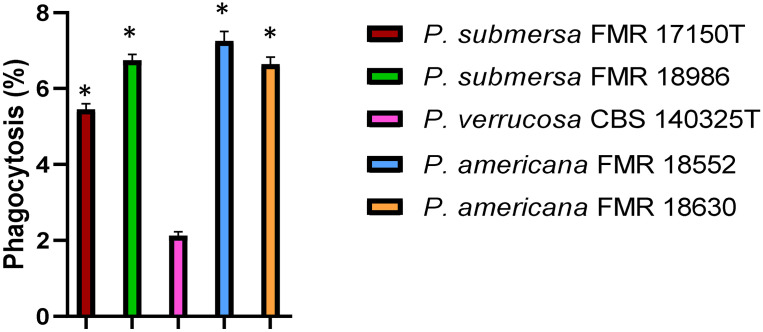 Figure 1
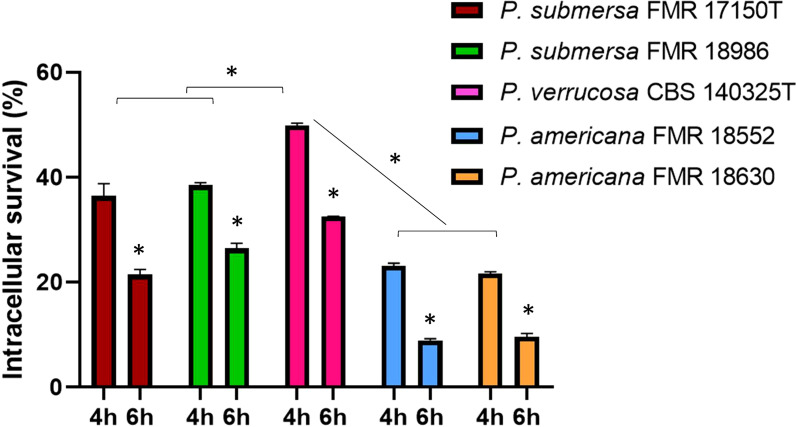 Figure 2
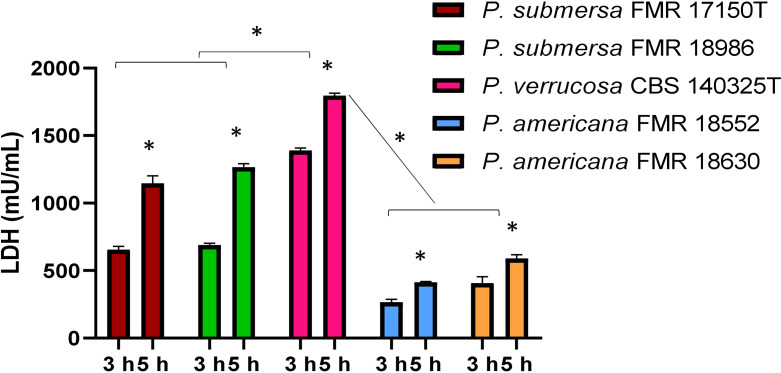 Figure 3
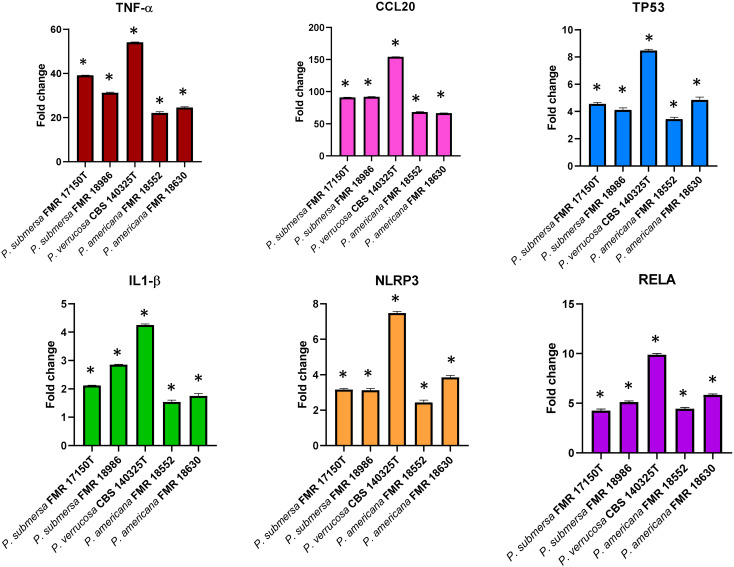 Figure 4
 Figure 5
 Figure 6
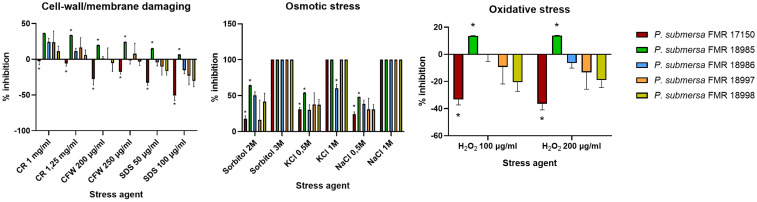 Figure 7
Peer Reviews
No public reviews on file for this paper yet. If you reviewed it on a platform where reviews are public (OpenReview, ICLR, NeurIPS, ICML), you can paste yours below so the community can read it here.
Videos
No videos yet. Explain this paper in a talk, walkthrough, or lecture? Add one.
Taxonomy
TopicsFungal Infections and Studies · Infectious Diseases and Mycology · Plant-Microbe Interactions and Immunity