Spurious Hyperphosphatemia From Alteplase‐Treated Catheter: A Case Report and Literature Review
Ahmad Matarneh, Sundus Sardar, Omar Salameh, Muhammad Abdulbasit, Wardah Iqbal, Monika Koirala, Taryn Millete, Ronald Miller, Nasrollah Ghahramani, Navin Verma

TL;DR
This paper reports a case where alteplase-treated dialysis catheters caused falsely high phosphate levels in blood tests.
Contribution
It highlights the importance of recognizing spurious hyperphosphatemia to avoid misdiagnosis and treatment errors.
Findings
Alteplase use in dialysis catheters can lead to falsely elevated phosphate levels.
Phosphorus-containing excipients in alteplase are responsible for the spurious readings.
Accurate phosphate monitoring is crucial for patients on hemodialysis.
Abstract
Falsely elevated phosphate levels can occur when blood is drawn after alteplase use in dialysis catheters due to phosphorus‐containing excipients. Recognizing spurious hyperphosphatemia is important to prevent misdiagnosis, avoid inappropriate treatment changes, and ensure accurate phosphate monitoring in patients undergoing maintenance hemodialysis.
Genes, proteins, chemicals, diseases, species, mutations and cell lines named across the full text — each resolved to its canonical identifier and authoritative record.
Click any figure to enlarge with its caption.
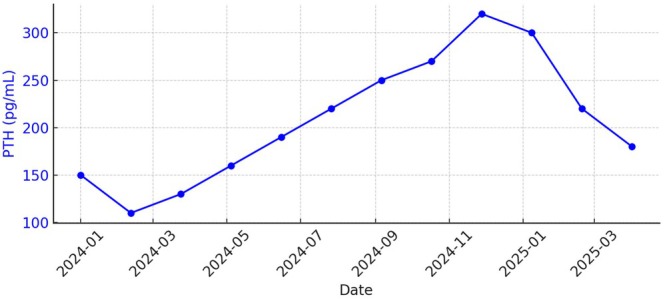 Figure 1
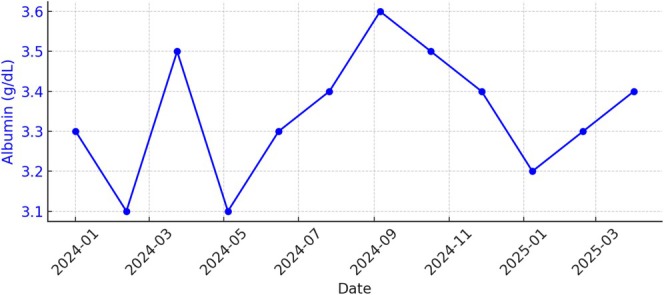 Figure 2
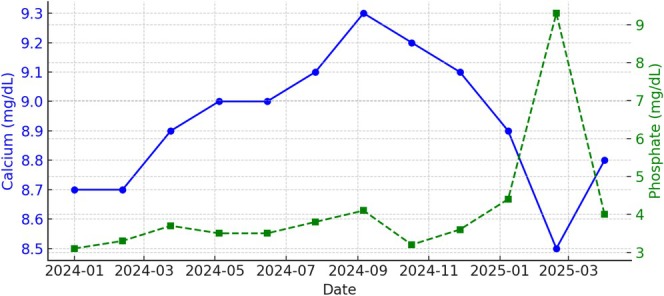 Figure 3
Peer Reviews
No public reviews on file for this paper yet. If you reviewed it on a platform where reviews are public (OpenReview, ICLR, NeurIPS, ICML), you can paste yours below so the community can read it here.
Videos
No videos yet. Explain this paper in a talk, walkthrough, or lecture? Add one.
Taxonomy
TopicsParathyroid Disorders and Treatments · Dialysis and Renal Disease Management · Potassium and Related Disorders