Tear Film and Keratitis in Space: Fluid Dynamics and Nanomedicine Strategies for Ocular Protection in Microgravity
Ryung Lee, Rahul Kumar, Jainam Shah, Joshua Ong, Ethan Waisberg, Alireza Tavakkoli

TL;DR
This paper reviews how nanomedicine could help prevent and treat eye problems caused by spaceflight conditions like microgravity.
Contribution
The paper introduces nanomedicine as a novel approach to address ocular health challenges in space.
Findings
Spaceflight-associated dry eye syndrome is a known issue for astronauts.
Microgravity and other space conditions worsen ocular surface disease.
Nanomedicine shows promise as a countermeasure for space-related eye conditions.
Abstract
Spaceflight-associated dry eye syndrome (SADES) has been reported among astronauts during both International Space Station (ISS) and Space Transportation System (STS) missions. As future missions extend beyond low Earth orbit, the physiological challenges of spaceflight include microgravity, radiation, and environmental stressors, which may further exacerbate the development of ocular surface disease. A deeper understanding of the underlying pathophysiology, along with the exploration of innovative countermeasures, is critical. In this review, we examine nanomedicine as a promising countermeasure for managing ophthalmic conditions in space, with the goal of enhancing visual health and mission readiness for long-duration exploration-class missions.
Genes, proteins, chemicals, diseases, species, mutations and cell lines named across the full text — each resolved to its canonical identifier and authoritative record.
Click any figure to enlarge with its caption.
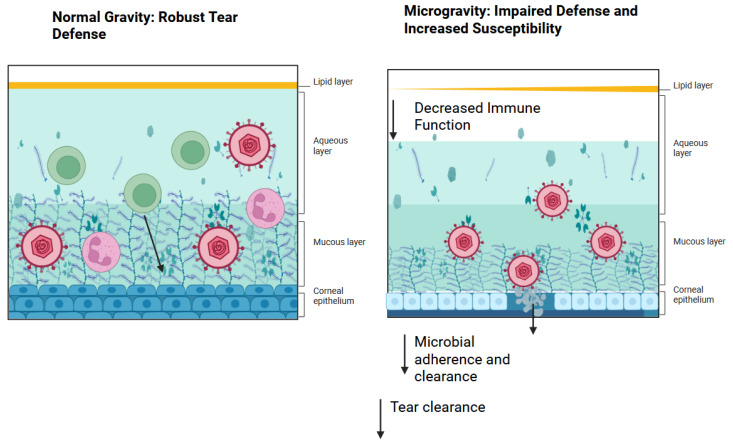 Figure 1
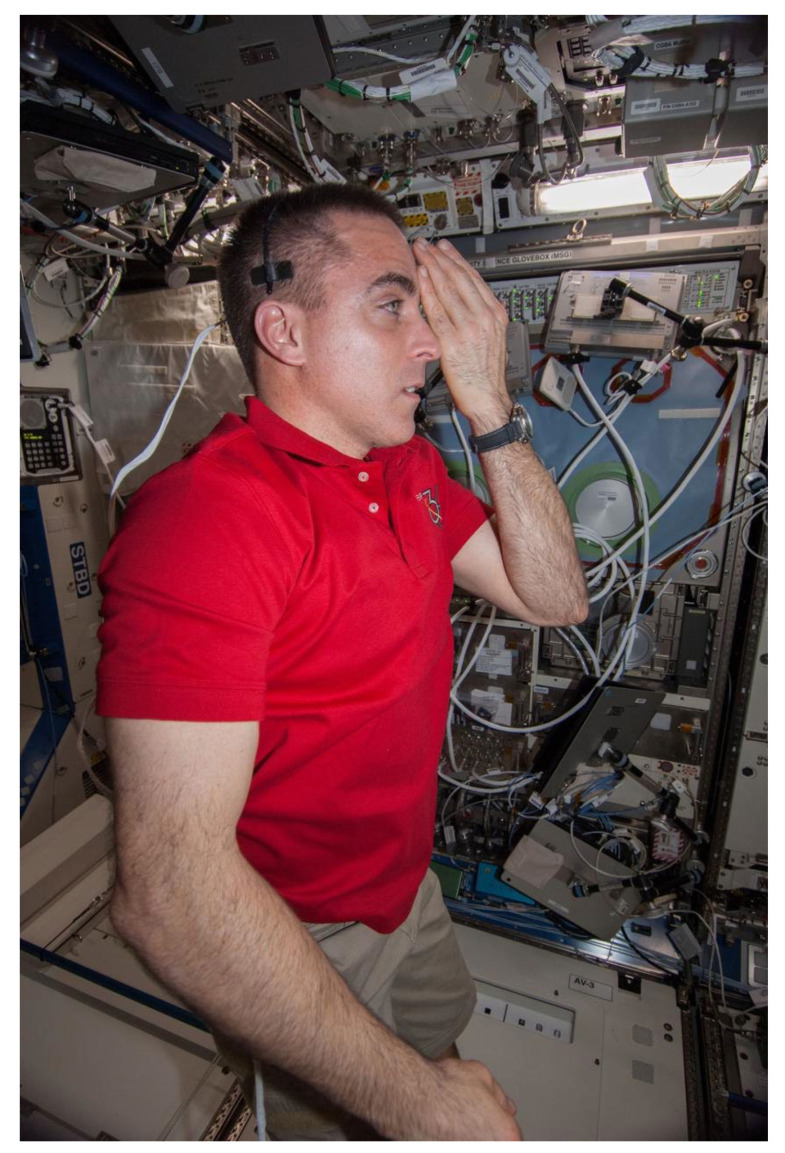 Figure 2
Peer Reviews
No public reviews on file for this paper yet. If you reviewed it on a platform where reviews are public (OpenReview, ICLR, NeurIPS, ICML), you can paste yours below so the community can read it here.
Videos
No videos yet. Explain this paper in a talk, walkthrough, or lecture? Add one.
Taxonomy
TopicsSpaceflight effects on biology · Medical and Biological Ozone Research · Circadian rhythm and melatonin