Insulin-like growth factor 2 reduces Huntington’s disease aggregates via AKT and NF-κB signaling in huntington’s disease
Yun-Shiuan Tung, Chih-Wei Tung, Siew Chin Chan, Yi-Ching Chen, Po-Ming Wu, Pei-Hsun Cheng, Chuan-Mu Chen, Shang-Hsun Yang

TL;DR
This study shows that IGF2 reduces harmful protein clumps in Huntington’s disease by activating AKT and NF-κB pathways, offering a potential new treatment approach.
Contribution
The study reveals a novel mechanism by which IGF2 reduces mutant Huntingtin aggregates via AKT and NF-κB signaling in Huntington’s disease.
Findings
IGF2 expression is significantly lower in symptomatic HD patients compared to presymptomatic individuals.
IGF2 reduces mutant Huntingtin aggregates in vitro by enhancing AKT phosphorylation and promoting NF-κB signaling.
IGF2 administration in HD mice improves motor functions and decreases mutant Huntingtin levels.
Abstract
Aggregation of misfolded mutant Huntingtin (mHTT) is a pathological characteristic in Huntington’s disease (HD), implying clearance of mHTT is a therapeutical direction for this neurodegenerative disorder. Based on previous studies, Insulin-like growth factor 2 (IGF2) enhances microfilament polymerization in HD models; however, the role of IGF2 against mHTT aggregates is still unclear. Here, we demonstrate that IGF2 expression is significantly lower in symptomatic HD patients compared to presymptomatic individuals, and IGF2 activation mechanistically enhances phosphorylation of Protein Kinase B(AKT; serine/threonine kinase), which subsequently reduces mHTT aggregates in vitro. Furthermore, IGF2 stimulates Nuclear factor kappa-light-chain-enhancer of activated B cells (NF-κB) signaling, promoting the secretion of mHTT within extracellular vesicles, thereby aiding cellular clearance. In…
Genes, proteins, chemicals, diseases, species, mutations and cell lines named across the full text — each resolved to its canonical identifier and authoritative record.
Click any figure to enlarge with its caption.
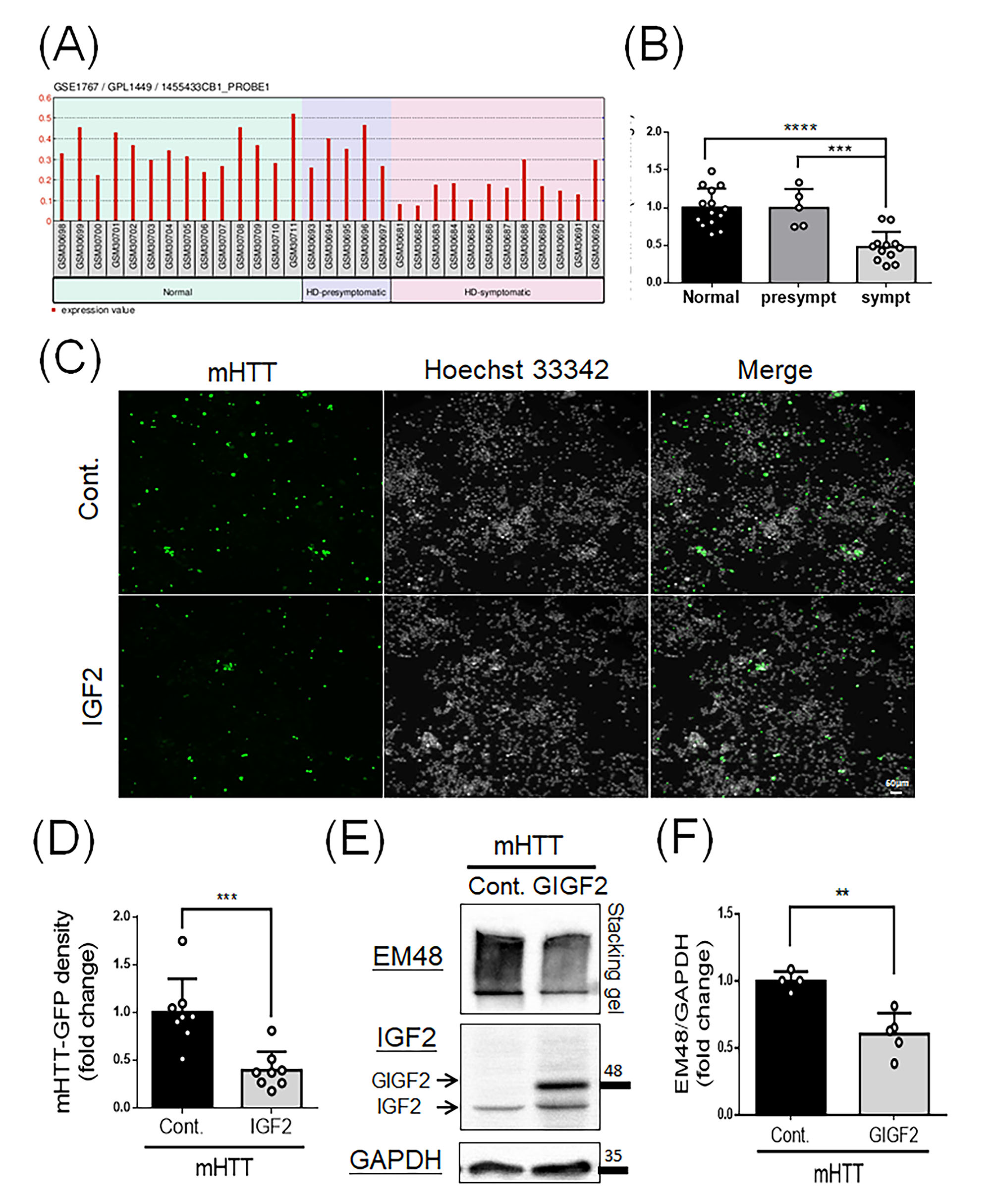 Figure 1
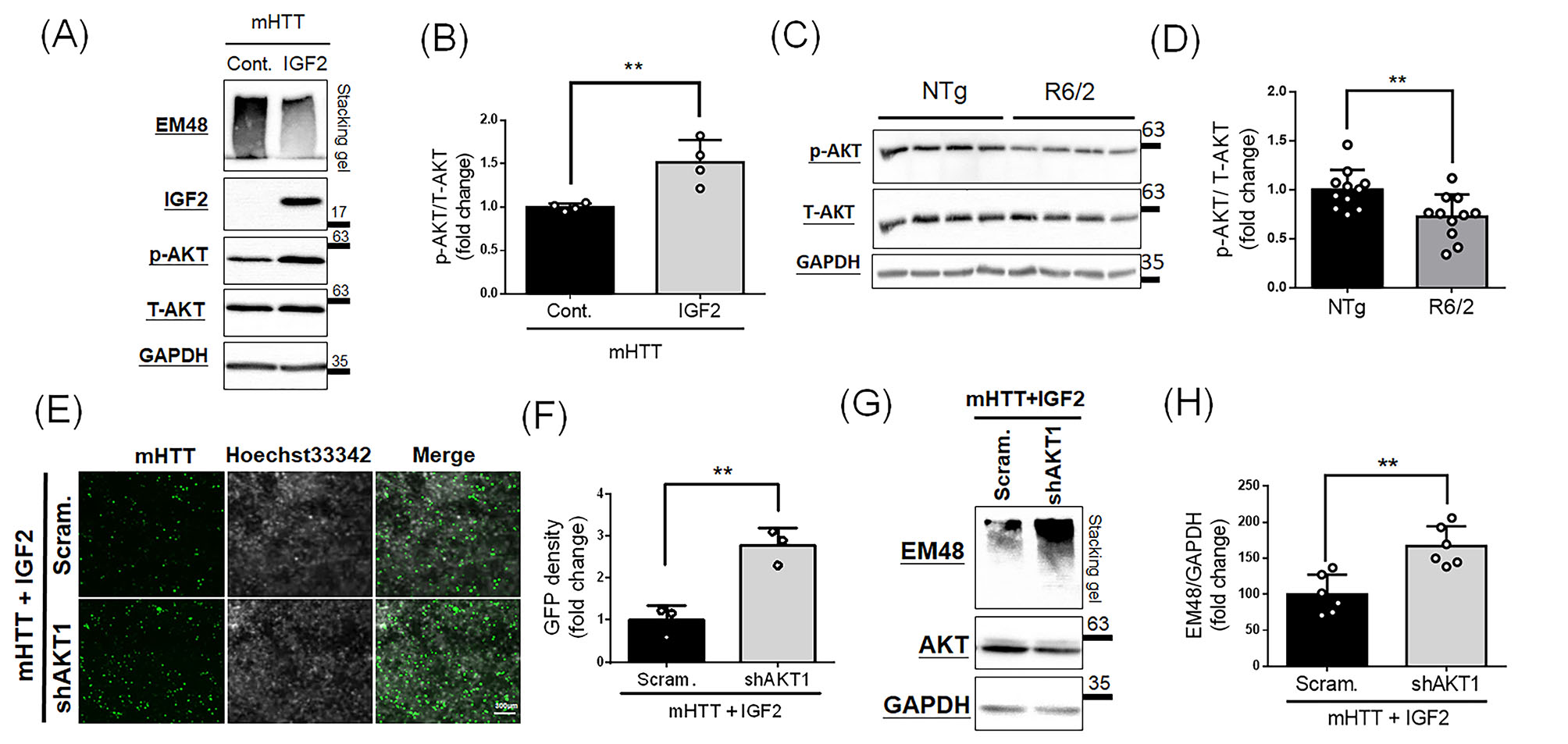 Figure 2
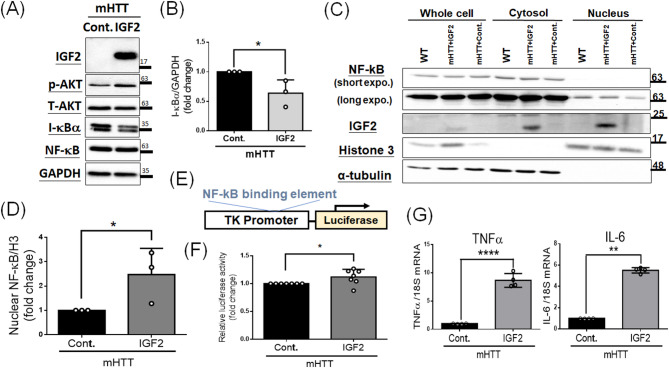 Figure 3
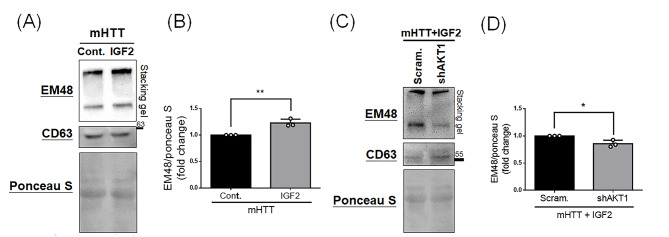 Figure 4
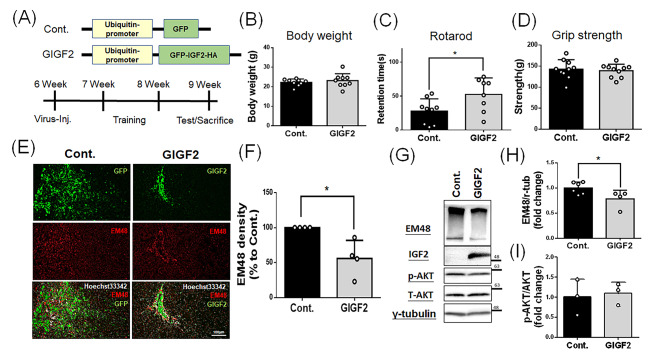 Figure 5
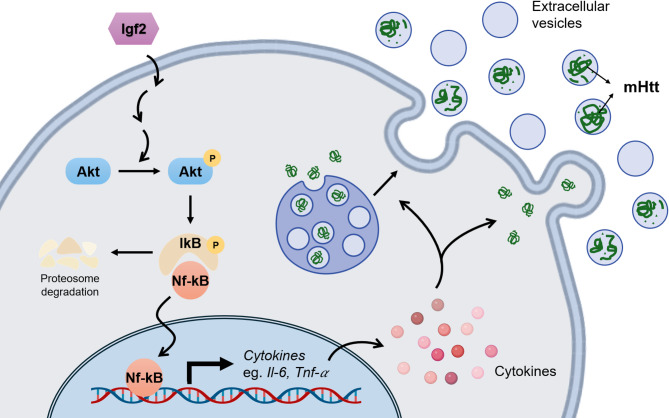 Figure 6
Peer Reviews
No public reviews on file for this paper yet. If you reviewed it on a platform where reviews are public (OpenReview, ICLR, NeurIPS, ICML), you can paste yours below so the community can read it here.
Videos
No videos yet. Explain this paper in a talk, walkthrough, or lecture? Add one.
Taxonomy
TopicsGenetic Neurodegenerative Diseases · Hereditary Neurological Disorders · Mitochondrial Function and Pathology