Binocular vs. monocular 3D cues in multiple object tracking: expertise differences between soccer players and non-athletes
Xiang Che, Jiayue Ma, Yu Zhang, Chen Zhou, Qian Zhou, Kun Zhang, Jijun Lan, Qi Hui, Jie Li

TL;DR
Soccer players outperform non-athletes in tracking moving objects using binocular 3D cues, but not in 2D or monocular 3D tasks.
Contribution
The study introduces a new 3D multiple object tracking task to distinguish the roles of binocular and monocular cues in tracking performance.
Findings
Soccer players showed significantly better tracking performance in stereo-3D tasks compared to non-athletes.
Monocular 3D cues did not lead to performance differences between soccer players and non-athletes.
Binocular 3D cues appear to be the key factor in the superior performance of soccer players.
Abstract
Classical two-dimensional multiple object tracking (2D-MOT) measures the cognitive ability to track multiple moving elements in real-life-like scenarios. Stereo-three-dimensional MOT (S-3D-MOT), a more ecologically valid form of 2D-MOT, shows better tracking performance in soccer players. Its unique feature is the additional binocular and monocular 3D cues compared to 2D-MOT, but their individual contributions to MOT performance are unclear. To fill this research gap, the current study introduced a three-dimensional MOT task on a flat screen (F-3D-MOT) to distinguish the roles of binocular and monocular 3D cues. F-3D-MOT provides additional monocular 3D cues compared to classical 2D-MOT but lacks binocular 3D cues compared to S-3D-MOT. Moreover, whether the effects of these 3D cues on MOT performance vary between soccer players and non-athletes remains unclear. Therefore, both groups…
Genes, proteins, chemicals, diseases, species, mutations and cell lines named across the full text — each resolved to its canonical identifier and authoritative record.
Click any figure to enlarge with its caption.
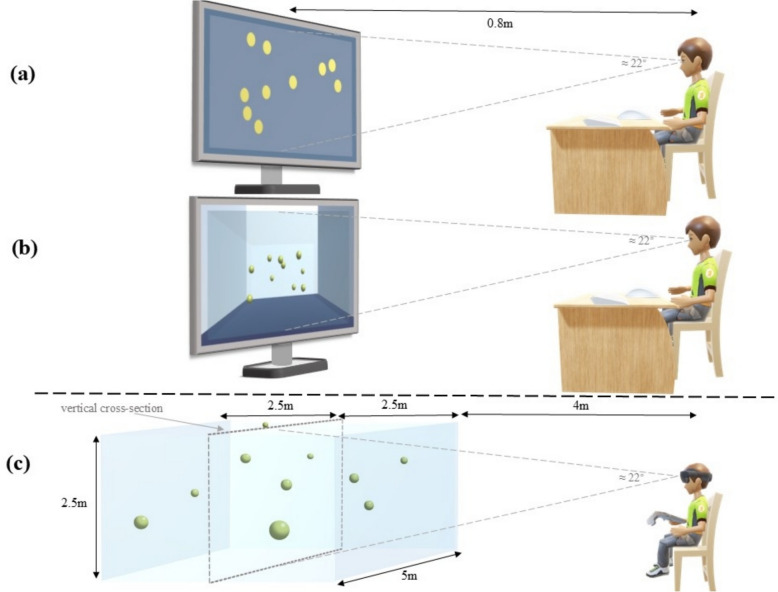 Figure 1
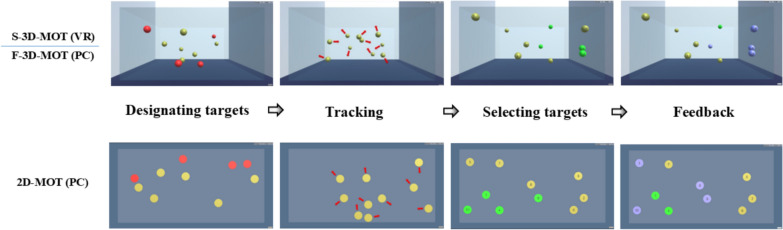 Figure 2
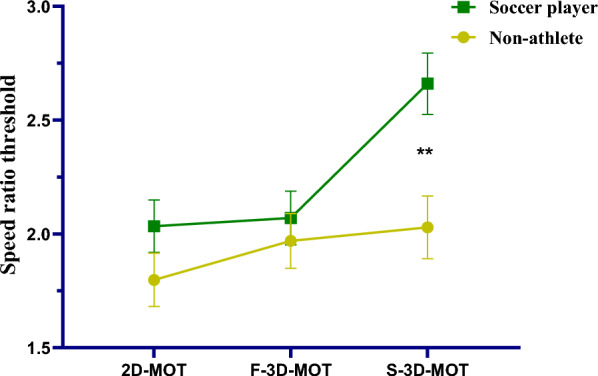 Figure 3
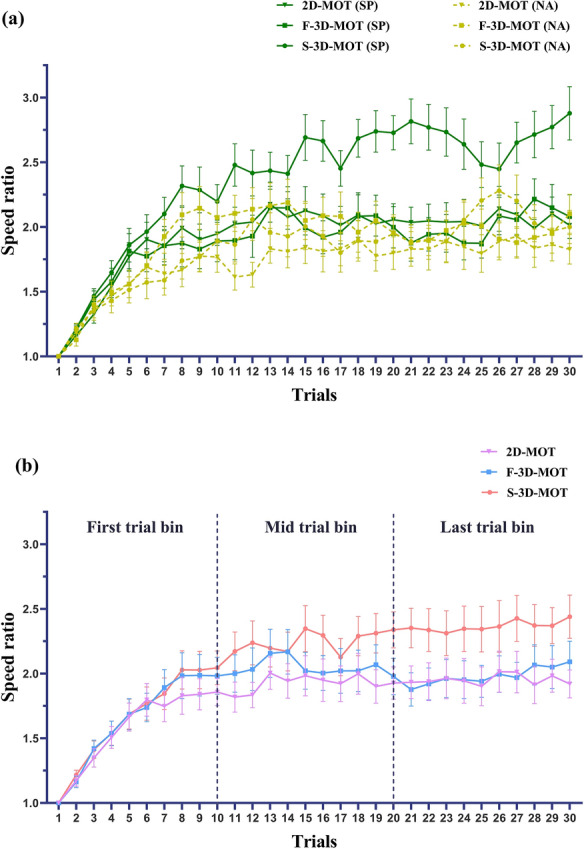 Figure 4
Peer Reviews
No public reviews on file for this paper yet. If you reviewed it on a platform where reviews are public (OpenReview, ICLR, NeurIPS, ICML), you can paste yours below so the community can read it here.
Videos
No videos yet. Explain this paper in a talk, walkthrough, or lecture? Add one.
Taxonomy
TopicsVisual perception and processing mechanisms · Ergonomics and Musculoskeletal Disorders · Sport Psychology and Performance