Short-Term Outcomes of Partial Upper Ministernotomy for Aortic Valve Replacement Within the Learning Curve Context
Tomáš Toporcer, Marián Homola, Anton Bereš, Michal Trebišovský, Tomáš Lopuchovský, Štefánia Mižáková, Lukáš Vajda, Štefan Lukačín, Adrián Kolesár

TL;DR
This study compares outcomes of aortic valve replacement using partial upper mini-sternotomy versus conventional sternotomy, finding similar results despite a learning curve.
Contribution
The study evaluates the effectiveness of partial upper mini-sternotomy during the learning curve phase for aortic valve surgery.
Findings
PUMS patients had longer cardiopulmonary bypass and cross-clamping times but similar survival and hospitalization outcomes.
Echocardiographic follow-up showed no differences in prosthetic valve performance between PUMS and MS groups.
PUMS offers cosmetic benefits without compromising surgical outcomes compared to conventional median sternotomy.
Abstract
Background: In recent decades, aortic valve surgery has transitioned from conventional median sternotomy (MS) to minimally invasive techniques, including partial upper mini-sternotomy (PUMS) and right anterolateral mini-thoracotomy (RAMT). This study retrospectively compares the outcomes of aortic valve replacement (AVR) using PUMS during the learning phase with those of standard MS. Methods: A retrospective analysis was conducted on patients (n = 211) who underwent AVR for aortic stenosis. They were divided into MS (n = 119) and PUMS (n = 92) groups. Various preoperative, surgical and postoperative parameters, including survival, were examined. Results: Preoperatively, the main difference was age, with PUMS patients being older (67.5 ± 7 vs. 66.5 ± 9.6; p = 0.010). PUMS patients also had longer cardiopulmonary bypass (CPB) and cross-clamping times (99 ± 25 vs. 80 ± 16 min; p < 0.002;…
Genes, proteins, chemicals, diseases, species, mutations and cell lines named across the full text — each resolved to its canonical identifier and authoritative record.
Click any figure to enlarge with its caption.
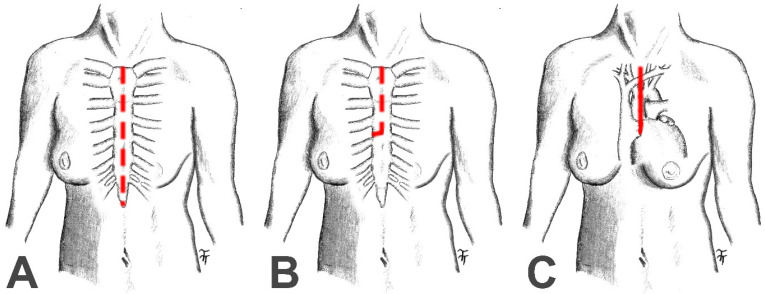 Figure 1
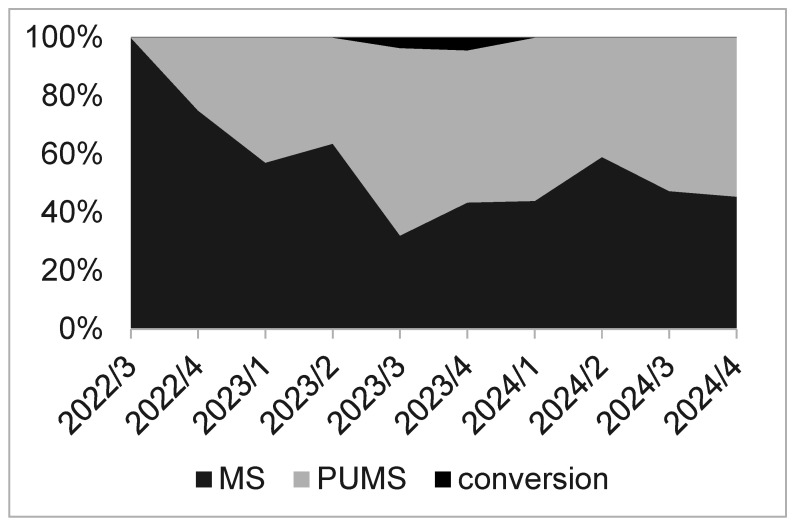 Figure 2
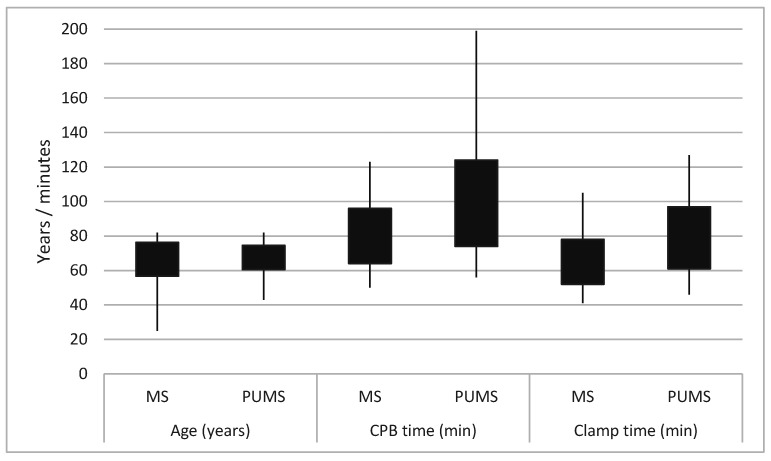 Figure 3
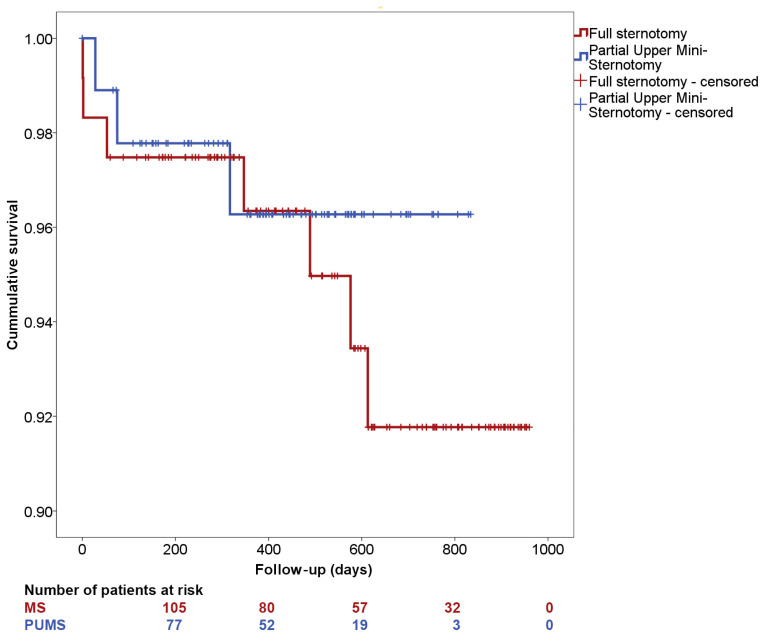 Figure 4
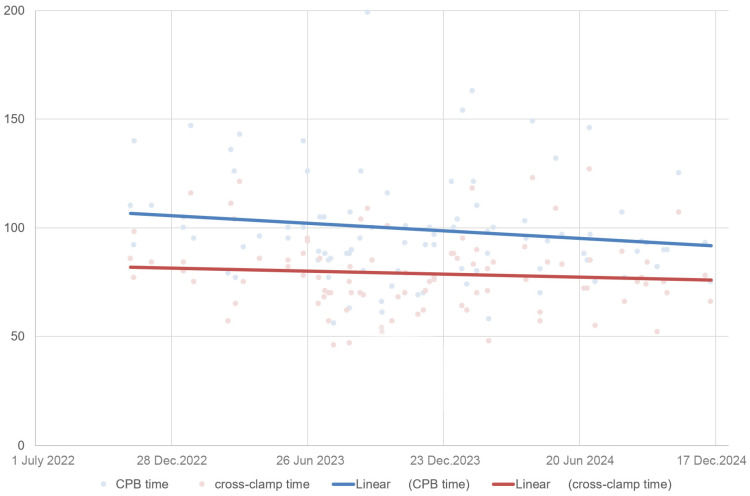 Figure 5
Peer Reviews
No public reviews on file for this paper yet. If you reviewed it on a platform where reviews are public (OpenReview, ICLR, NeurIPS, ICML), you can paste yours below so the community can read it here.
Videos
No videos yet. Explain this paper in a talk, walkthrough, or lecture? Add one.
Taxonomy
TopicsCardiac Valve Diseases and Treatments · Cardiac and Coronary Surgery Techniques · Aortic Disease and Treatment Approaches