Generative AI for Bayesian Computation
Nick Polson, Vadim Sokolov

TL;DR
This paper introduces a new Bayesian inference method using generative AI that works for both parametric and non-parametric models, offering advantages over traditional techniques.
Contribution
The novel contribution is a Quantile Neural Network approach for Bayesian computation that is density-free and uses summary statistics for feature selection.
Findings
The method is demonstrated on a normal–normal model and applied to real-world problems like traffic speed and satellite drag.
The approach outperforms state-of-the-art methods in certain scenarios.
The paper identifies future research directions for expanding the method's applicability.
Abstract
Generative Bayesian Computation (GBC) provides a simulation-based approach to Bayesian inference. A Quantile Neural Network (QNN) is trained to map samples from a base distribution to the posterior distribution. Our method applies equally to parametric and likelihood-free models. By generating a large training dataset of parameter–output pairs inference is recast as a supervised learning problem of non-parametric regression. Generative quantile methods have a number of advantages over traditional approaches such as approximate Bayesian computation (ABC) or GANs. Primarily, quantile architectures are density-free and exploit feature selection using dimensionality reducing summary statistics. To illustrate our methodology, we analyze the classic normal–normal learning model and apply it to two real data problems, modeling traffic speed and building a surrogate model for a satellite drag…
Genes, proteins, chemicals, diseases, species, mutations and cell lines named across the full text — each resolved to its canonical identifier and authoritative record.
Click any figure to enlarge with its caption.
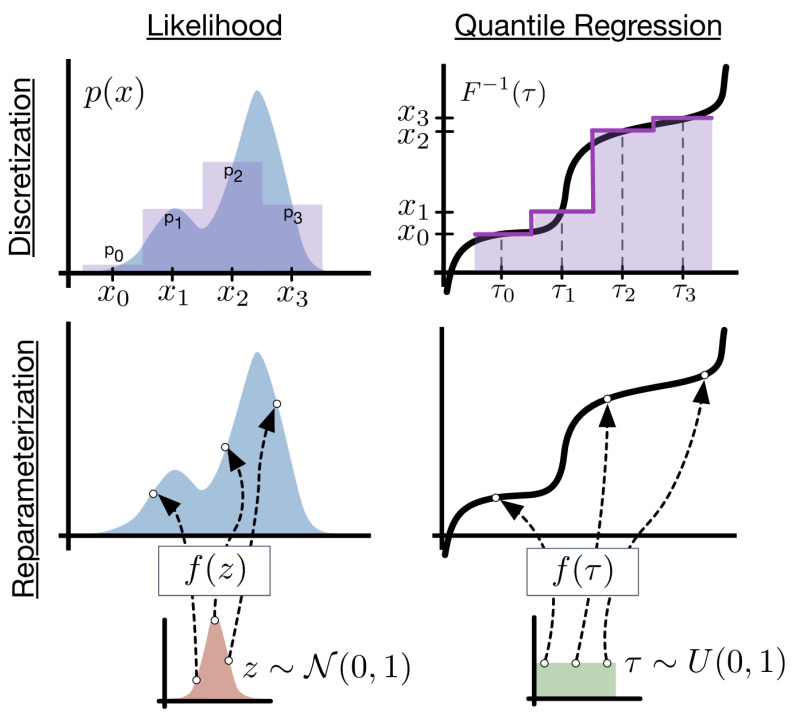 Figure 1
 Figure 2
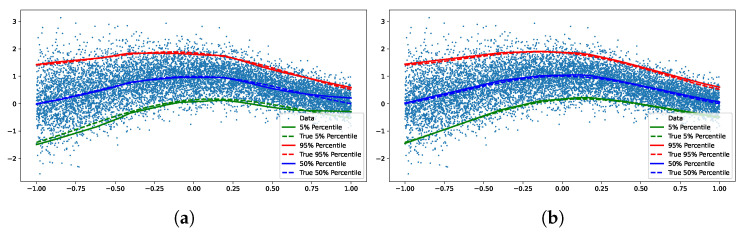 Figure 3
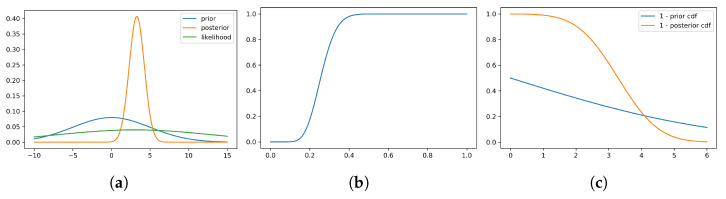 Figure 4
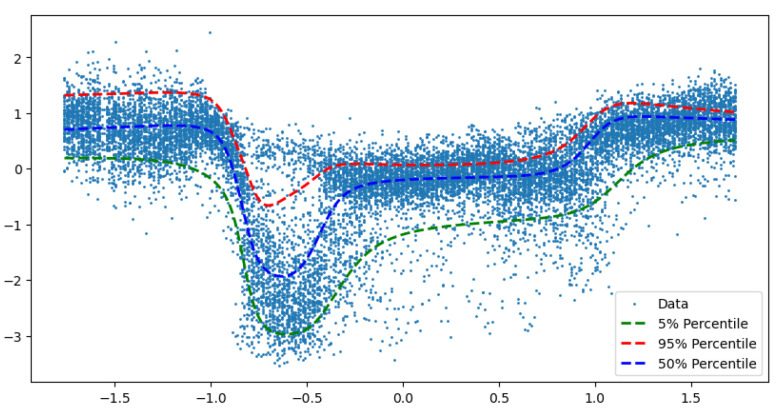 Figure 5
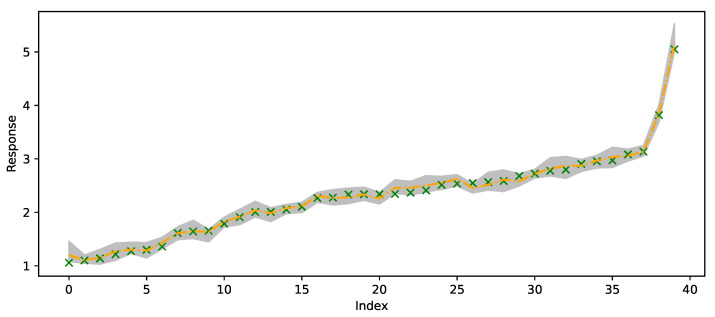 Figure 6
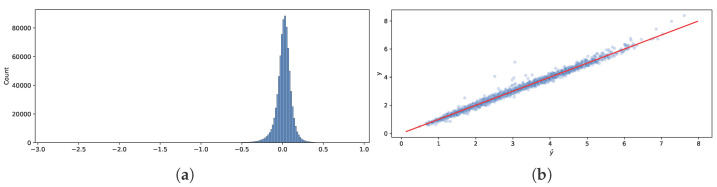 Figure 7
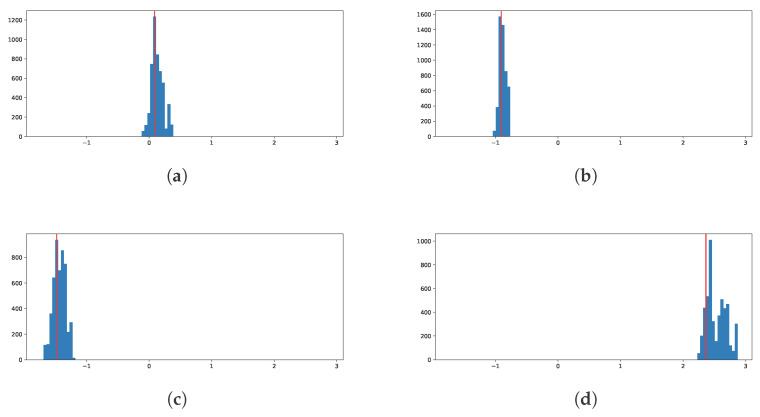 Figure 8
Peer Reviews
No public reviews on file for this paper yet. If you reviewed it on a platform where reviews are public (OpenReview, ICLR, NeurIPS, ICML), you can paste yours below so the community can read it here.
Videos
No videos yet. Explain this paper in a talk, walkthrough, or lecture? Add one.
Taxonomy
TopicsGaussian Processes and Bayesian Inference · Markov Chains and Monte Carlo Methods · Machine Learning and Algorithms