In Vitro Microbial Adhesion on the Surfaces of Various Polytetrafluoroethylene Membranes Used in Guided Bone Regeneration
Adel Al-Asfour, Maria G. Katsikogianni, Maribasappa Karched, Syed Saad Bin Qasim, Branko Trajkovski, Gregor-Georg Zafiropoulos

TL;DR
This study examines how different PTFE membranes used in bone regeneration affect the adhesion of oral microorganisms, finding that surface properties influence microbial attachment.
Contribution
The study provides new insights into how surface roughness and energy of PTFE membranes affect microbial adhesion in guided bone regeneration.
Findings
Membranes with low surface roughness and high surface free energy attracted the fewest microbes.
Surgitime attracted the highest number of S. mutans and P. gingivalis.
OsseoGuard-TXT attracted the lowest number of all three tested microorganisms.
Abstract
Aim: The aim of this study was to evaluate the adhesion of oral microorganisms on the surfaces of polytetrafluoroethylene (PTFE) membranes used in guided bone regeneration (GBR) procedures. Materials and Methods: In this study, three oral microorganisms (Streptococcus mutans, Porphyromonas gingivalis, and Candida albicans) were used, and six PTFE membranes were characterized by their surface roughness, contact angle (CA), and surface free energy (SFE). Microbial hydrophobicity was investigated, and adhesion was examined via DNA extraction and quantitative real-time PCR. Results: Significant differences were noted amongst the membranes with respect to SFE, CA, and roughness (p < 0.001). S. mutans was the most hydrophobic microorganism, followed by C. albicans and P. gingivalis. SEM analyses confirmed that the microorganisms adhered to all membranes, with Surgitime being the membrane that…
Genes, proteins, chemicals, diseases, species, mutations and cell lines named across the full text — each resolved to its canonical identifier and authoritative record.
Click any figure to enlarge with its caption.
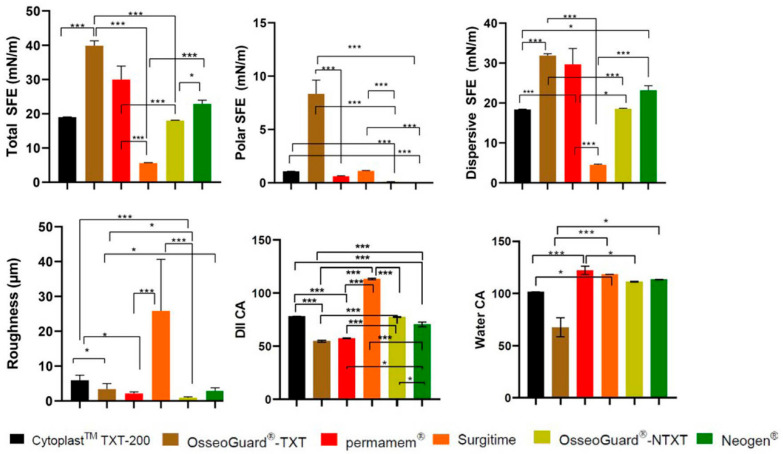 Figure 1
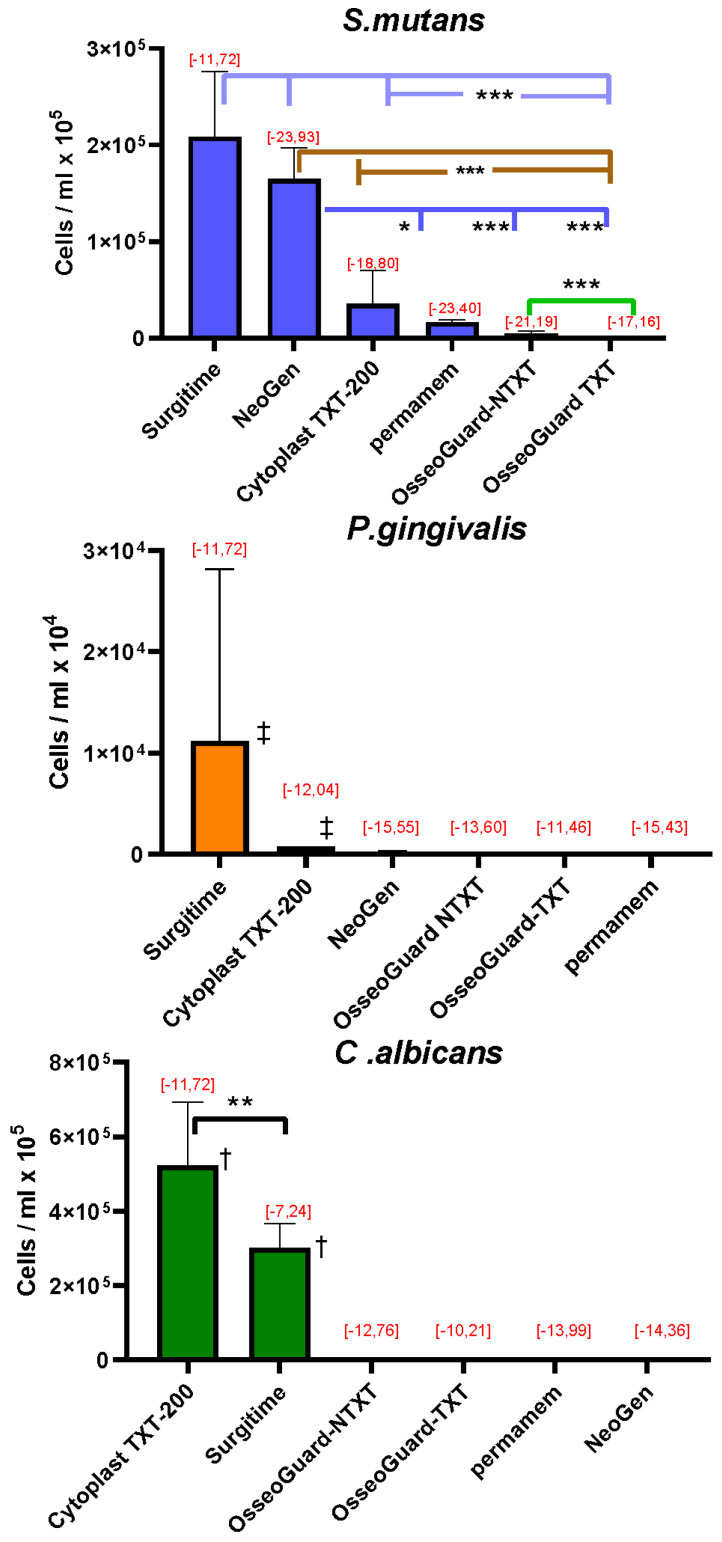 Figure 2
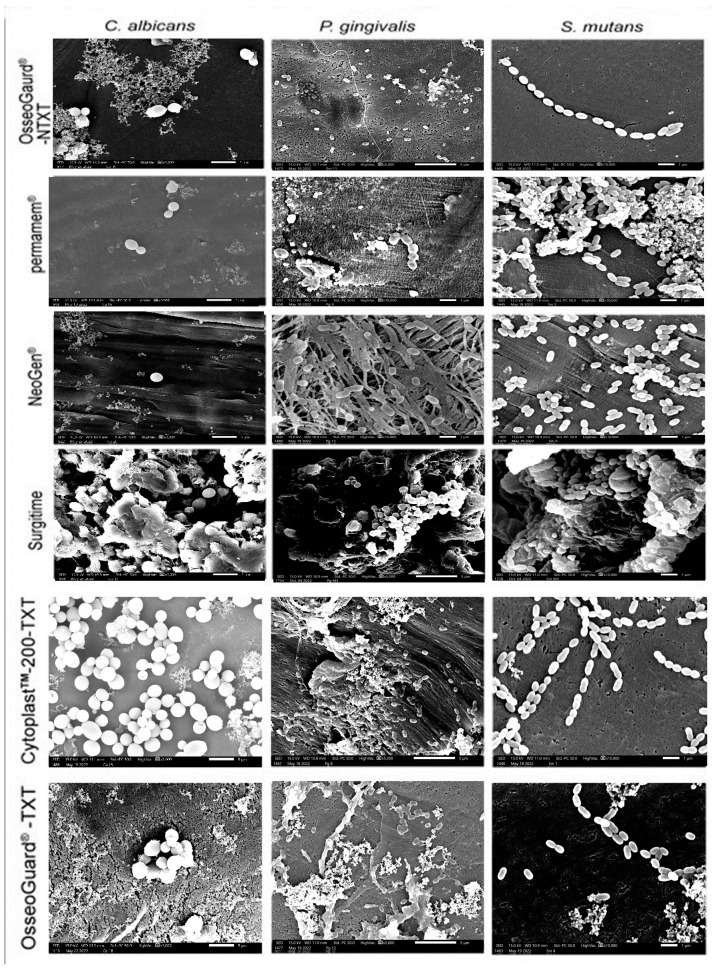 Figure 3
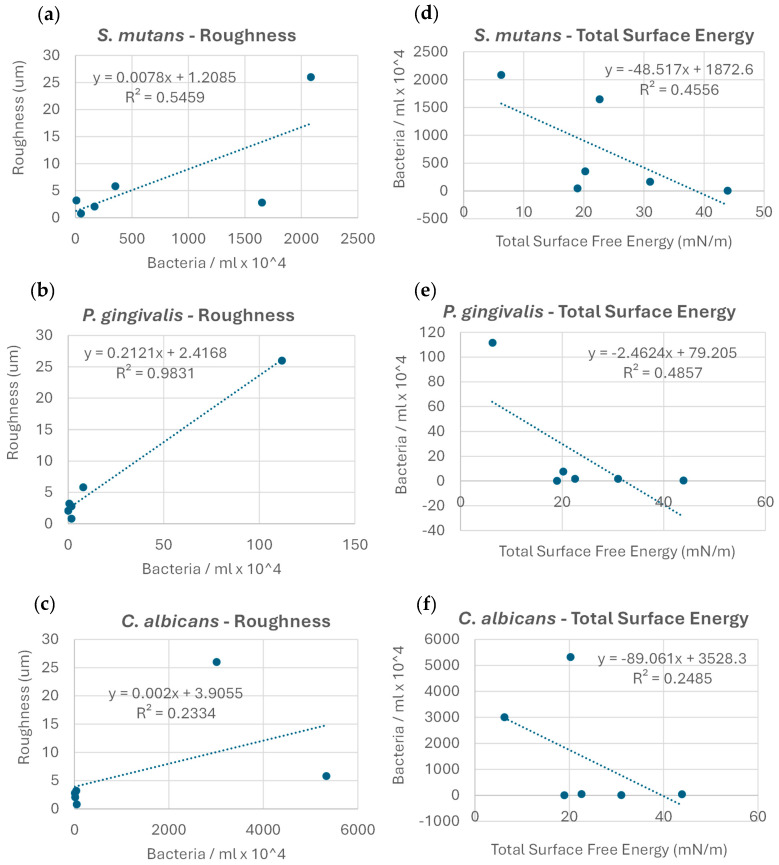 Figure 4
Peer Reviews
No public reviews on file for this paper yet. If you reviewed it on a platform where reviews are public (OpenReview, ICLR, NeurIPS, ICML), you can paste yours below so the community can read it here.
Videos
No videos yet. Explain this paper in a talk, walkthrough, or lecture? Add one.
Taxonomy
TopicsBone Tissue Engineering Materials · Electrospun Nanofibers in Biomedical Applications · Surface Modification and Superhydrophobicity