PSA in the extreme range—an expression of an unfavorable prognosis? A review of course and treatment of prostate cancer with prostate-specific antigen (PSA) values in the three-to-four-digit range
Christian Dirscherl, Thomas Ebert, Bernd J. Schmitz-Dräger, Peter J. Goebell

TL;DR
This study examines prostate cancer patients with extremely high PSA levels and finds that such levels alone do not guarantee a poor prognosis.
Contribution
The study identifies specific factors influencing survival and treatment outcomes in patients with very high baseline PSA values.
Findings
A 5-year overall survival rate of 68.5% was observed in patients with baseline PSA values ≥100 ng/ml.
Higher PSA nadir (<0.20 ng/ml) significantly improved 5-year survival compared to higher nadir values.
A PSA response of >90% was associated with better 5-year survival than a response of ≤90%.
Abstract
Extrem hohe Baseline-PSA-Werte (bPSA) im Bereich von 100 bis ≥ 1000 ng/ml vor Beginn der systemischen Therapie stellen eine Herausforderung dar, da der Eindruck einer sehr ungünstigen Prognose entstehen kann. Wir untersuchten Einflussfaktoren auf das 5‑Jahres-Gesamtüberleben (5-JGÜ) und die Therapiemodalitäten von Betroffenen mit bPSA-Werten von ≥ 100 ng/ml anhand retrospektiver Daten. Aus einem kleineren initialen Kollektiv legten wir Items fest, die wir für eine Abfrage aus der Datenbank UroCloud nutzten. Dabei wurden insgesamt 695 Betroffene eingeschlossen. Für das gesamte Kollektiv ergab sich ein 5‑JGÜ von 68,5 % ± 2,7 %. Der bPSA-Wert hatte in folgender Gruppierung signifikanten (p < 0,001) Einfluss auf das 5‑JGÜ: 100–149 ng/ml, 150–249 ng/ml, 250–649 ng/ml, ≥ 650 ng/ml (5-JGÜ: 77,0 % ± 4,9 % vs. 76,9 % ± 4,5 % vs. 61,4 % ± 6,0 vs. 57,4 %± 6,1 %). Ein Alter von ≤ 70 Jahren…
Genes, proteins, chemicals, diseases, species, mutations and cell lines named across the full text — each resolved to its canonical identifier and authoritative record.
Click any figure to enlarge with its caption.
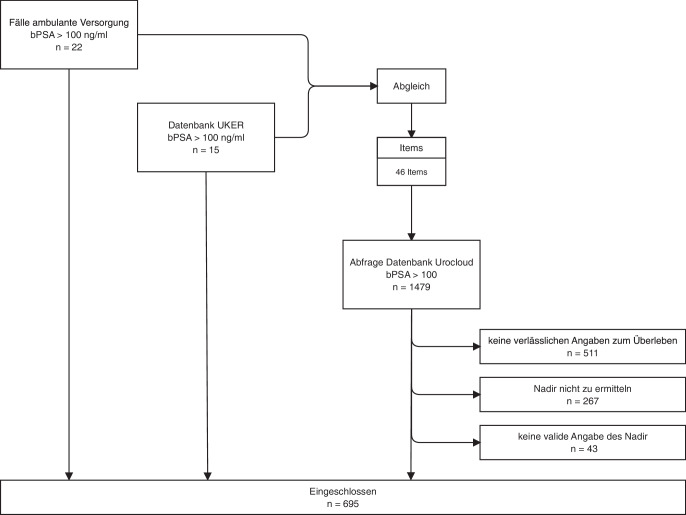 Figure 1
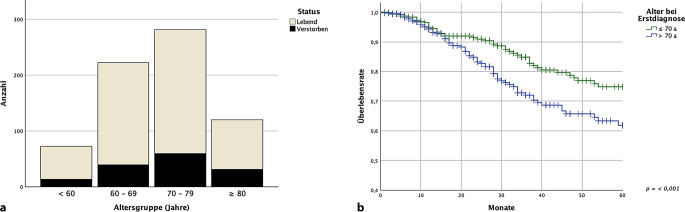 Figure 2
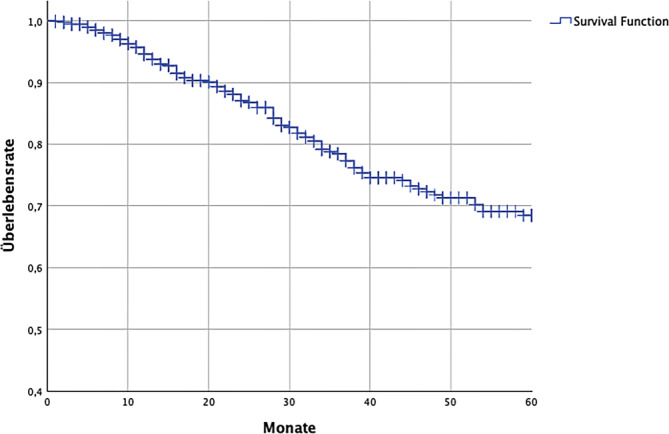 Figure 3
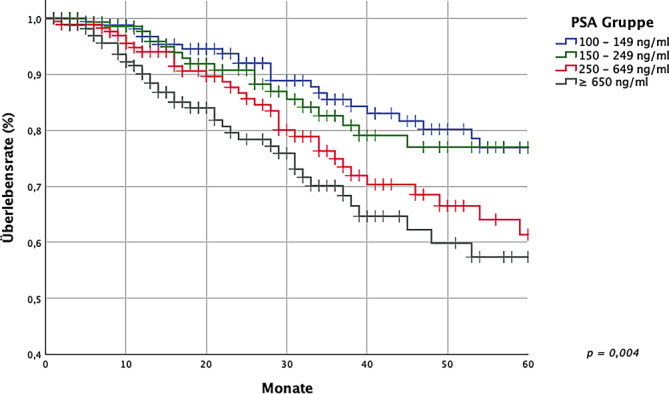 Figure 4
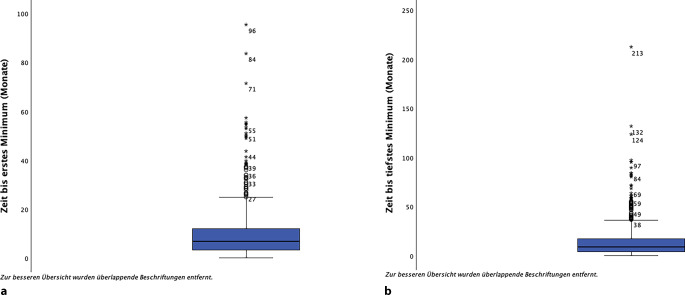 Figure 5
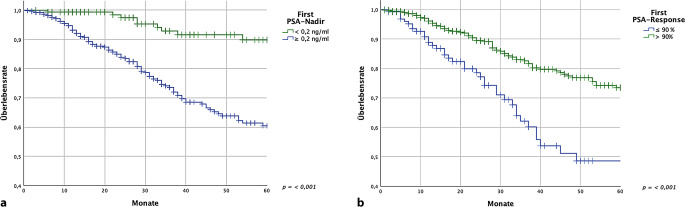 Figure 6
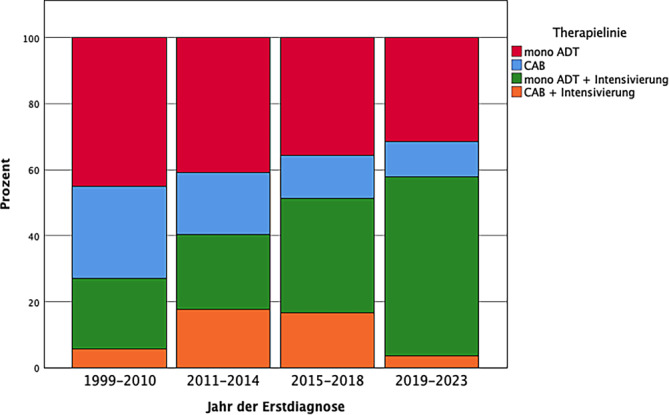 Figure 7
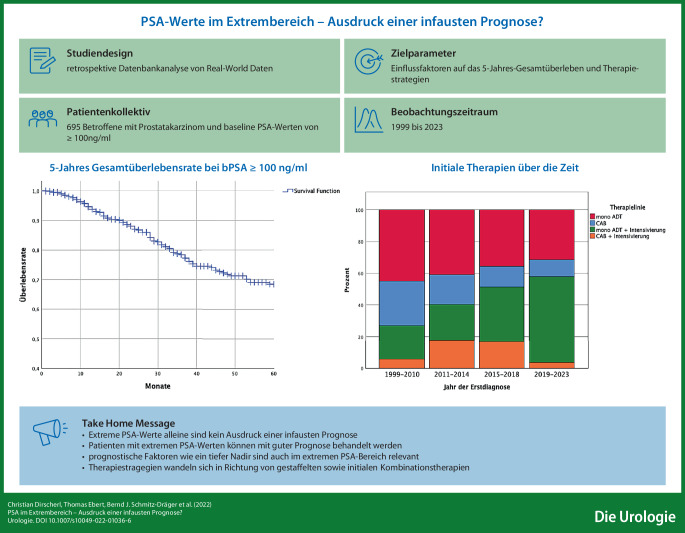 Figure 8
 Figure 9
Peer Reviews
No public reviews on file for this paper yet. If you reviewed it on a platform where reviews are public (OpenReview, ICLR, NeurIPS, ICML), you can paste yours below so the community can read it here.
Videos
No videos yet. Explain this paper in a talk, walkthrough, or lecture? Add one.
Taxonomy
TopicsProstate Cancer Diagnosis and Treatment · Prostate Cancer Treatment and Research · Bladder and Urothelial Cancer Treatments