Efficacy and Safety of Nifedipine Compared to Intravenous Hydralazine for Severe Hypertensive Disorders in Pregnancy: A Systematic Review and Meta-Analysis of Randmomized Controlled Trials
Vaisnavy Govindasamy, Mohammed Amer Kamel, Gabriele Volucke, Aashir Javed, Upayan Palchaudhuri, Sayed Irfan Kazi, Ahmad Albanna, Mays Akileh, Rohit Mukherjee, Rabia Nusrat, Tayyaba Qaiser, Eman Ibrahim Elzain Hassan, Muhammad Muneeb Azhar, Tallal Mushtaq Hashmi, Mushood Ahmed

TL;DR
This study compares nifedipine and hydralazine for treating severe hypertension in pregnancy and finds both drugs equally effective, but nifedipine causes fewer side effects.
Contribution
A systematic review and meta-analysis comparing the safety and efficacy of nifedipine and hydralazine in managing severe hypertensive disorders in pregnancy.
Findings
Nifedipine and hydralazine showed similar effectiveness in controlling blood pressure and maternal/neonatal outcomes.
Nifedipine was associated with significantly fewer maternal adverse events compared to hydralazine.
No significant differences were found in caesarean delivery rates, neonatal birth weight, or NICU admissions between the two drugs.
Abstract
Background: Severe maternal hypertension is linked to adverse perinatal outcomes. Both nifedipine and hydralazine are commonly used antihypertensive agents in this setting. Methods: A comprehensive literature search was conducted in PubMed, Cochrane Library, and EMBASE from inception to April 2024 to identify randomized controlled trials comparing oral or sublingual nifedipine with intravenous hydralazine for the management of severe hypertension, with or without preeclampsia/eclampsia. A random-effects meta-analysis was performed using RevMan. Results: Seven randomized controlled trials were included. The pooled analysis demonstrated no significant difference between the two agents regarding time to achieve optimal blood pressure control (MD = −1.08 min, 95% CI = −6.66 to 4.49), caesarean delivery (OR = 0.62, 95% CI = 0.38 to 1.03), neonatal birth weight (MD = 57.65 g, 95% CI = −209.09…
Genes, proteins, chemicals, diseases, species, mutations and cell lines named across the full text — each resolved to its canonical identifier and authoritative record.
Click any figure to enlarge with its caption.
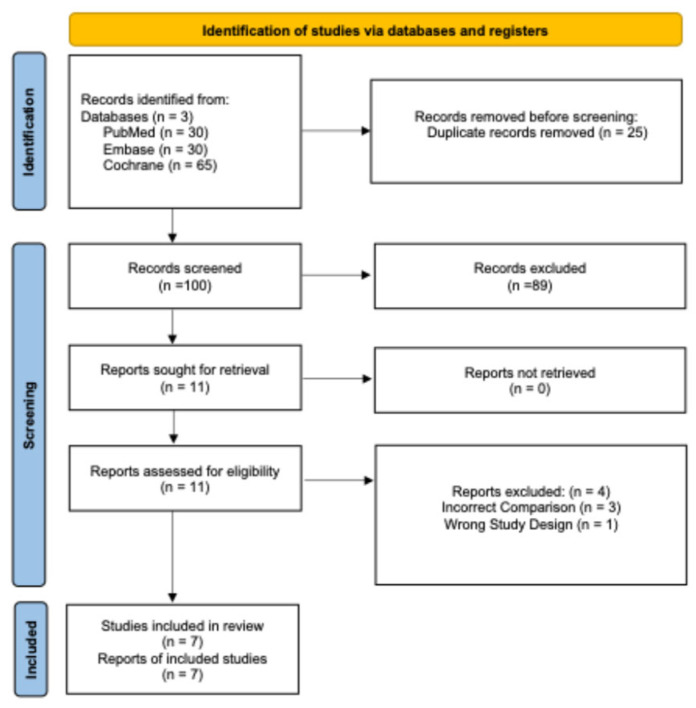 Figure 1
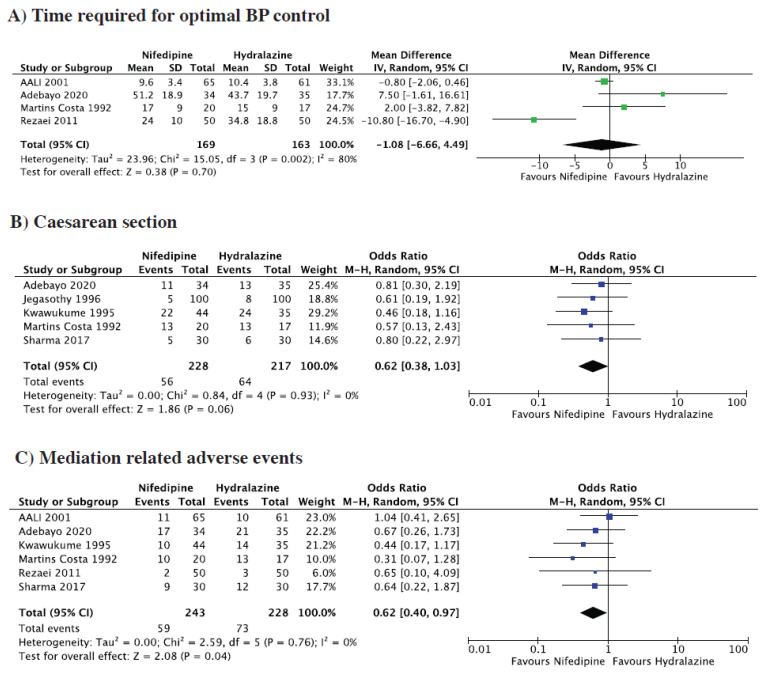 Figure 2
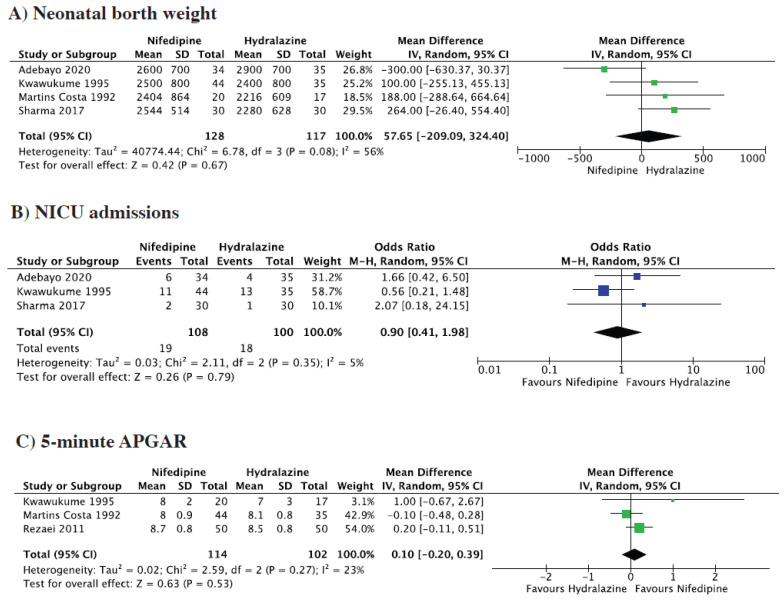 Figure 3
Peer Reviews
No public reviews on file for this paper yet. If you reviewed it on a platform where reviews are public (OpenReview, ICLR, NeurIPS, ICML), you can paste yours below so the community can read it here.
Videos
No videos yet. Explain this paper in a talk, walkthrough, or lecture? Add one.
Taxonomy
TopicsPregnancy and preeclampsia studies · Pregnancy and Medication Impact · Maternal and fetal healthcare