A Scary Tale of a Twisted Storm: A Case Report of Torsades De Pointes in Acquired Long QT Syndrome
Andrew S Dzebu, Edem Draffor, Orlando Henriquez Italin

TL;DR
A 64-year-old woman with a heart condition experienced dangerous heart rhythm episodes, which were managed by adjusting her electrolyte levels.
Contribution
This case report highlights the importance of recognizing and managing torsades de pointes in acquired long QT syndrome.
Findings
A 64-year-old woman presented with syncope and prolonged QT interval leading to torsades de pointes.
Electrolyte modulation was effective in preventing sudden cardiac death in this case.
Abstract
Torsade de pointes (TdP, meaning “twisting of the points”) is a polymorphic ventricular tachycardia (VT) characterized by twisting QRS complexes around the isoelectric line, typically associated with prolonged QT intervals from congenital or acquired causes. A 64-year-old woman with hypertension presented with recurrent syncope and bradycardia. A 12-lead electrocardiogram (ECG) revealed a 2:1 atrioventricular block (AVB) and a prolonged corrected QT (cQT) interval (544 ms). Holter monitoring showed repeated episodes of TdP correlating with her symptoms. This case underscores prompt recognition and treatment to prevent sudden cardiac death - in this case, by electrolyte modulation.
Genes, proteins, chemicals, diseases, species, mutations and cell lines named across the full text — each resolved to its canonical identifier and authoritative record.
Click any figure to enlarge with its caption.
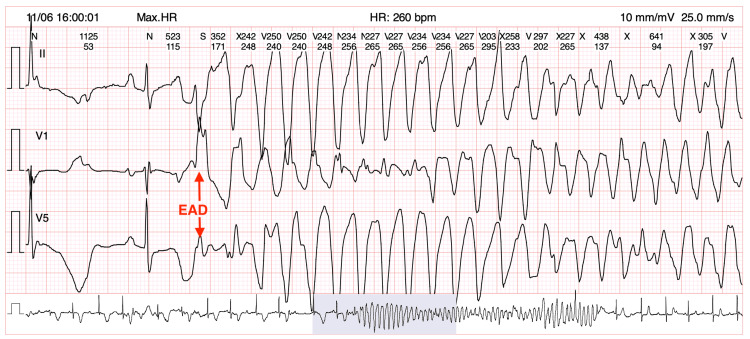 Figure 1
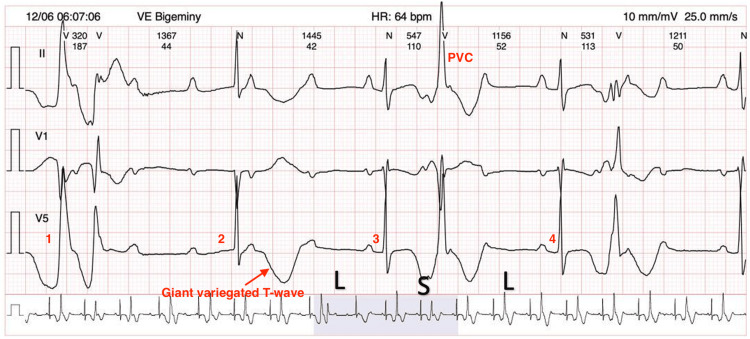 Figure 2
Peer Reviews
No public reviews on file for this paper yet. If you reviewed it on a platform where reviews are public (OpenReview, ICLR, NeurIPS, ICML), you can paste yours below so the community can read it here.
Videos
No videos yet. Explain this paper in a talk, walkthrough, or lecture? Add one.
Taxonomy
TopicsCardiac electrophysiology and arrhythmias · Ion channel regulation and function · ECG Monitoring and Analysis