Short- and long-term impact of aseptic bathing strategies on the skin microbiome in ICU patients
Tilman E. Klassert, Cristina Zubiria-Barrera, Luisa A. Denkel, Mercedes Lopez, Robert Neubert, Amelya Keles Slevogt, Frank Bloos, P. Christian Schulze, Jörg Epstude, Petra Gastmeier, Christine Geffers, Hortense Slevogt

TL;DR
This study examines how antiseptic bathing affects the skin microbiome of ICU patients over time, finding no significant changes in microbial structure or antibiotic resistance.
Contribution
The study provides longitudinal evidence on the impact of antiseptic bathing on ICU patients' skin microbiome and antibiotic resistance.
Findings
Chlorhexidine bathing reduced bacterial biomass without altering microbial diversity or composition.
Antiseptic strategies did not increase antibiotic resistance gene accumulation on skin sites.
Loss of microbiome site-specificity persisted regardless of the bathing strategy used.
Abstract
Bathing strategies with antiseptic agents, such as Chlorhexidine and Octenidine, have been widely adopted to mitigate infection risks in intensive care units (ICU). However, concerns exist regarding their long-term effects on skin microbiome structures and potential unintended consequences, including antibiotic cross-resistance. This longitudinal study characterized the compositional changes of the skin microbiome of ICU patients upon these two antiseptic bathing strategies when compared to standard water and soap bathing. Samples were collected in a three-armed cluster randomized decolonization trial (registration number DRKS00010475). Skin swabs from 5 different sites and three time points were analyzed by culture-based methods, 16S rRNA-gene amplicon sequencing and multiplex Taq-Man assays for detection of antimicrobial resistance genes (ARG). Our results show that Chlorhexidine…
Genes, proteins, chemicals, diseases, species, mutations and cell lines named across the full text — each resolved to its canonical identifier and authoritative record.
Click any figure to enlarge with its caption.
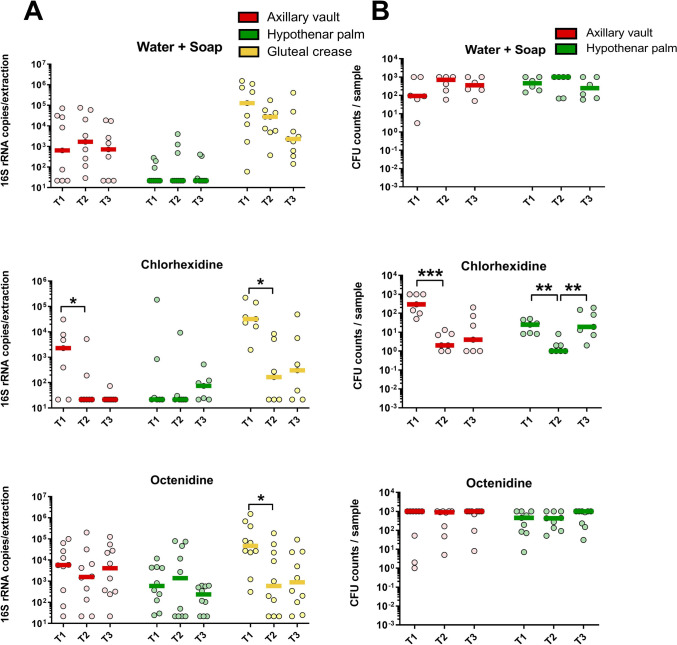 Figure 1
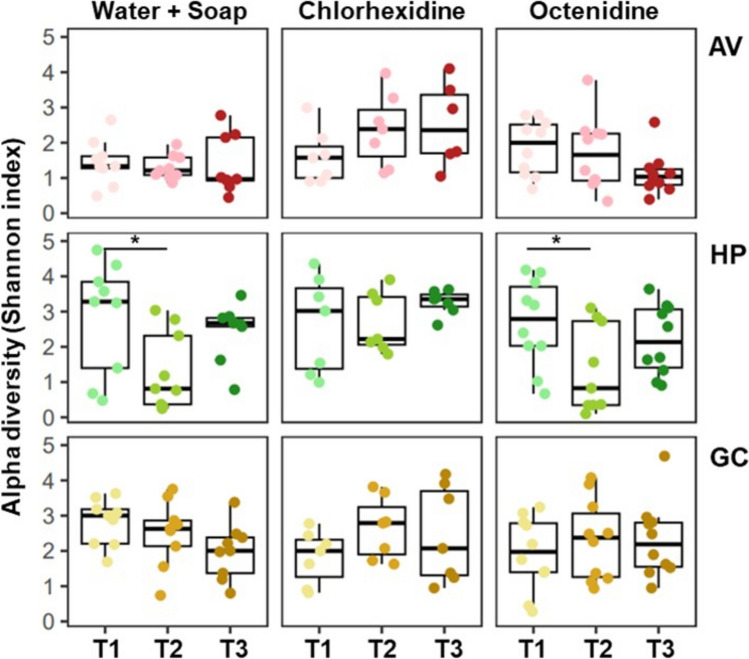 Figure 2
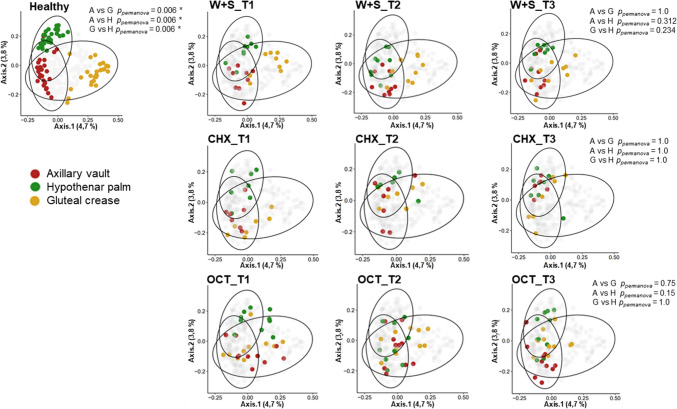 Figure 3
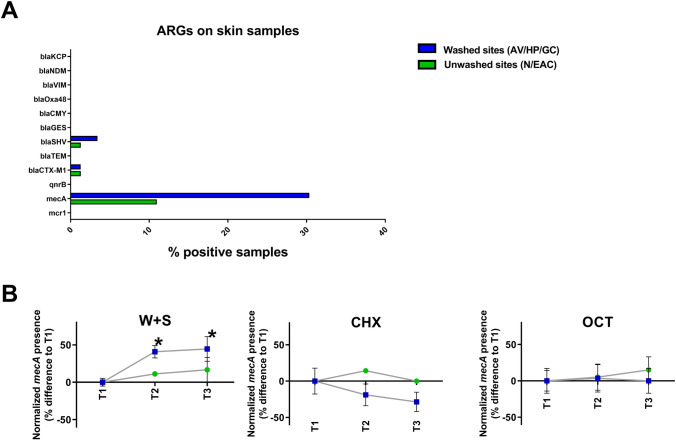 Figure 4
Peer Reviews
No public reviews on file for this paper yet. If you reviewed it on a platform where reviews are public (OpenReview, ICLR, NeurIPS, ICML), you can paste yours below so the community can read it here.
Videos
No videos yet. Explain this paper in a talk, walkthrough, or lecture? Add one.
Taxonomy
TopicsDermatology and Skin Diseases · Gut microbiota and health · Bacterial Identification and Susceptibility Testing