Risk factors for catheter-related bloodstream infections in a high-risk cancer patient population
Andrea Haddad, Rita Wilson Dib, Anne-Marie Chaftari, Ying Jiang, Mohamed Moussa, Hiba Dagher, Ann Philip, Ray Hachem, Issam Raad

TL;DR
This study identifies risk factors for catheter-related bloodstream infections in cancer patients and suggests that catheter site selection can help reduce infection risk.
Contribution
The study identifies specific risk factors for CRBSI in high-risk cancer patients and highlights the protective effect of jugular catheter insertion.
Findings
Neutropenia, transplants, and multiple catheters increase CRBSI risk.
Jugular insertion is associated with a lower risk of CRBSI.
Catheter site selection can be a strategy to reduce infection risk.
Abstract
To identify risk factors for catheter-related bloodstream infections (CRBSI) in cancer patients, we compared 200 CRBSI cases to 400 controls. Neutropenia, transplants, multiple catheters, blood products, and basilic/cephalic PICCs increased CRBSI risk, while jugular insertion was protective. Catheter site selection can reduce risk. Other targeted strategies are warranted.
Genes, proteins, chemicals, diseases, species, mutations and cell lines named across the full text — each resolved to its canonical identifier and authoritative record.
Click any figure to enlarge with its caption.
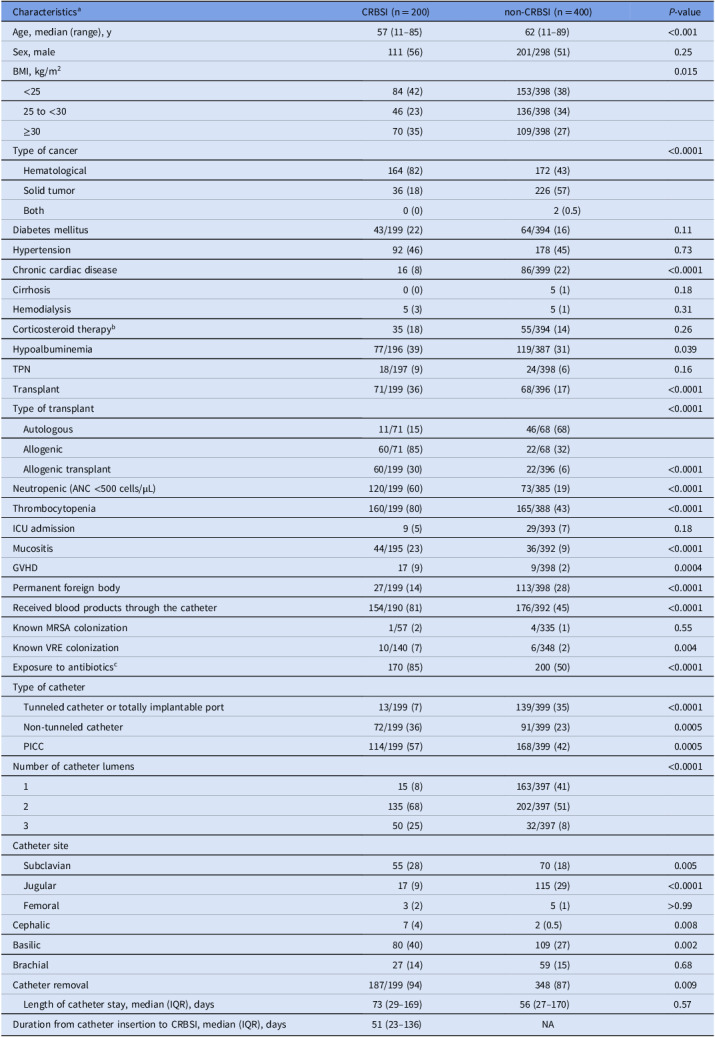 Figure 1
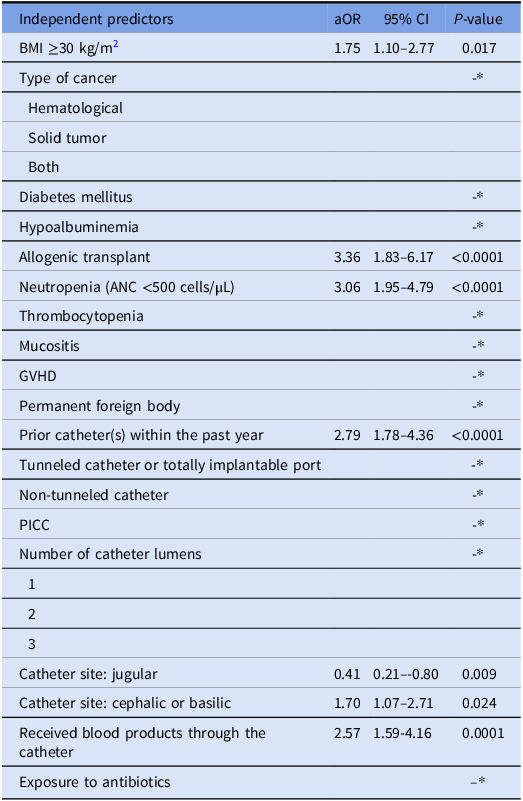 Figure 2
Peer Reviews
No public reviews on file for this paper yet. If you reviewed it on a platform where reviews are public (OpenReview, ICLR, NeurIPS, ICML), you can paste yours below so the community can read it here.
Videos
No videos yet. Explain this paper in a talk, walkthrough, or lecture? Add one.
Taxonomy
TopicsCentral Venous Catheters and Hemodialysis · Venous Thromboembolism Diagnosis and Management · Infective Endocarditis Diagnosis and Management